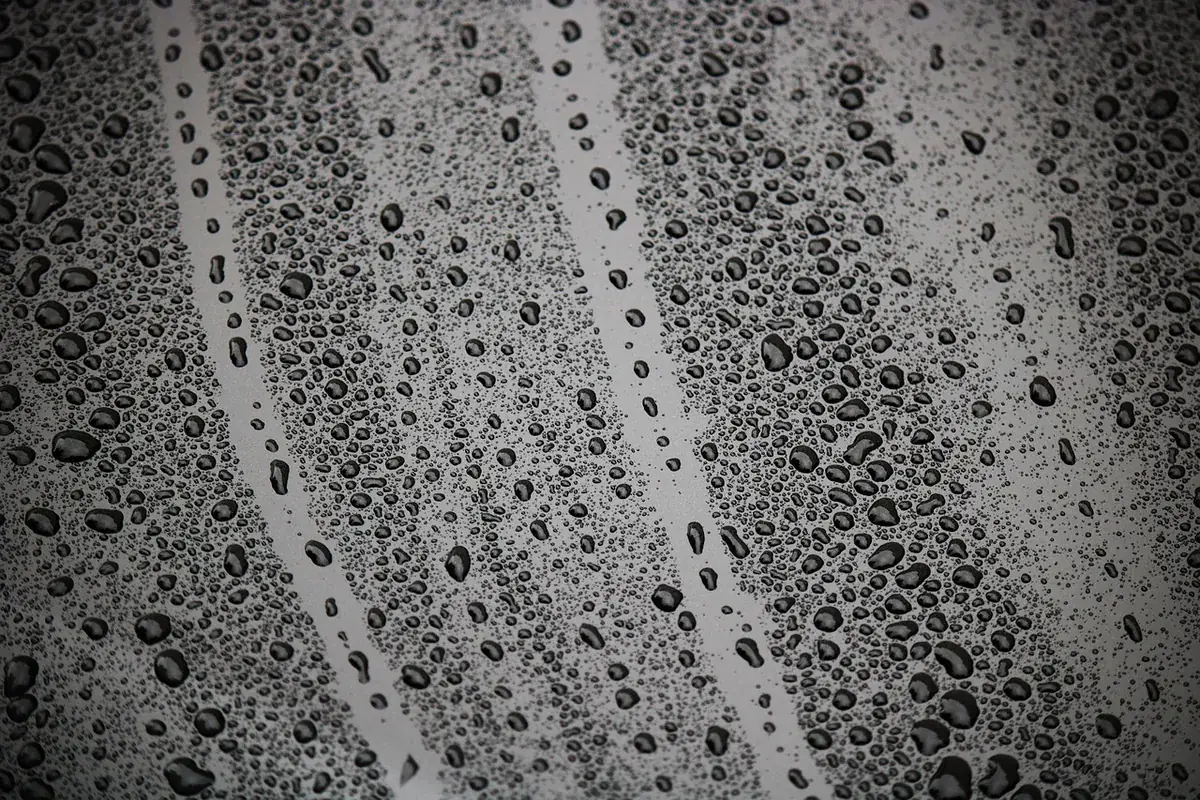
Scratches that appeared after cleaning: fabricating debris and the dirty secret of tempered glass
Fine, hairline scratches that appear after a single cleaning — usually after using a razor blade — are almost always not your fault. They are evidence of a manufacturing defect that the glass industry has known about for forty years and quietly refuses to fix.
PUB. MAY 3, 2026
If your tempered glass shows fine scratches after a single cleaning, here is what is almost certainly true:
- You did not cause the underlying defect — the glass left the factory with debris fused to its surface
- The scratches are 'comets,' a specific signature pattern with a fused particle at the head and a drag mark behind it
- It only happens on tempered or heat-strengthened glass, never annealed glass — and only on the side that touched the furnace rollers
- The industry has resisted fixing this since the 1980s and continues to put the liability on installers and cleaners
Restoration is possible but expensive, and the realistic outcome is that you (or your contractor) live with the damage and learn the warning signs. Jan thinks I am too tough on razor blades. He is wrong, but only slightly.
The scratches always look exactly the same.
A constellation of fine, parallel hairlines, all running in the direction the cleaner was pulling the blade. Each scratch starts with a tiny pinpoint at one end — the "head" — and trails away into a thinner, fading "tail" that disappears into the glass surface. Under magnification, the head is a small pit; the tail is a microscopic furrow. Glass restoration specialists call them "comets," and once you've seen one, you cannot unsee it on every other piece of tempered glass it appears on.1
These scratches are evidence of a specific manufacturing defect called fabricating debris. The defect occurs at the glass factory, weeks or months before the window arrives at your house. It is invisible until someone runs a hard tool across the surface, at which point the latent defect is converted into visible damage almost instantly.
I am writing this article because the standard homeowner experience with these scratches — and frankly, the standard contractor experience too — is to assume the cleaning was done badly. It usually wasn't. The scratches are real, the scrape is real, but the responsibility for the damage lies with a glass fabrication industry that has been quietly tolerating this defect for at least forty years.
How tempered glass actually gets made
Most safety glass installed in modern construction is tempered. By code, all glass within 18 inches of the floor, all glass in shower enclosures, all glass in doors, and most large architectural panels are tempered. If your house was built or remodeled in the last thirty years, the majority of your windows are probably tempered.
The tempering process is sequential and unforgiving. A piece of annealed (untempered) glass is cut to the final size — tempered glass cannot be cut after tempering, because cutting it causes the entire pane to shatter. The cut edges are then ground or seamed, which produces fine glass dust as a byproduct. The piece is run through an industrial washer to remove that dust. The piece then passes through a tempering furnace at approximately 1,150°F (620°C), where it is reheated and then rapidly cooled by jets of air on both faces. The rapid cooling produces a compressive stress layer on both surfaces while the interior cools more slowly into a tensile stress layer. That balance of internal stresses is what gives tempered glass its strength and its characteristic shatter pattern.2
Inside the tempering furnace, the glass rides on a series of metal or ceramic rollers. The "roller side" — the bottom face of the glass during tempering — is in direct contact with these rollers. The "air side" — the top face — touches nothing. When the glass exits the furnace and is rapidly cooled, the roller side has the slight thermal disadvantage of being in contact with hardware that is hundreds of degrees colder than the air side at the moment cooling begins. The result is that the roller side is, in nearly all cases, the side that ends up facing inward (toward your house's interior) for low-E coated glass in cold climates, or outward in warm climates. There are technical reasons for this orientation that are not relevant to our purpose. What is relevant is that one specific side of every tempered pane — the roller side — is the only side where fabricating debris can occur.
The defect, in plain language
Here is what goes wrong.
The washer step is supposed to remove all glass fines and dust before the piece enters the furnace. In practice, the washer is a maintenance-intensive piece of equipment. The brushes load up with glass particles. The water becomes contaminated with glass dust. If the washer is not cleaned, drained, and refilled at the manufacturer's recommended interval, the glass coming out of it is not clean — it has a film of glass fines and dust on the roller-side surface that the washer was supposed to remove.3
When that glass enters the tempering furnace and is heated to 1,150°F, the fine particles do not burn off. Glass does not burn. Instead, they soften slightly and fuse permanently to the parent glass surface, becoming a part of the glass itself. The resulting surface looks identical to clean tempered glass under casual inspection. Optically, the difference is invisible. But the surface now has a microscopic "studded" texture, with thousands of fused particles per square foot, each one a tiny abrasive bump on what should be a smooth surface.
When a contractor or homeowner runs a hard tool across this surface — a razor blade, a metal scraper, a piece of fine steel wool — those fused particles get caught. The tool drags them along the surface, and as they break free, they cut into the glass behind them. Each particle becomes a microscopic plow. The result is a comet scratch.
The defect is invisible until it is exercised. Window cleaners — even meticulous ones — often have no warning that they are about to scratch a window. The first scrape produces the first scratch. By the time the cleaner notices the gritty sound and stops, fifty scratches may already be present.
There is one warning sign you can listen for. When dragging a scraper across glass that contains fabricating debris, the sound changes. Clean glass produces a smooth, quiet glide. Glass with fines produces a faint gritty whisper, like very fine sandpaper. If you hear that sound, stop immediately. The damage is already starting. Jan Davenport, who is far more experienced with razor blades on residential glass than I am, has told me he can identify a defective tempered pane within an inch of starting a scrape, by sound alone. I believe him.
Why this hasn't been fixed
The answer is regulatory and economic, not technical.
There is no industry standard requiring tempered glass to be free of fabricating debris. The Glass Association of North America (GANA, which has since merged into the National Glass Association) has been petitioned multiple times by professional cleaning organizations to address the issue at the manufacturing level.4 The petitions have not produced a binding standard. The argument from the glass industry has consistently been that fabricating debris does not affect the structural performance of the glass, does not affect optical clarity, and does not affect the safety properties of the tempering. By those metrics, the glass meets specification. The fact that it scratches the moment a tool touches it is, in industry framing, a problem for the cleaner, not the manufacturer.
I find this position infuriating in a polite, academic way. It is the same logic as a tire manufacturer claiming that a steering defect that only manifests during turns is not a defect because the tire is fine when driving in a straight line. The whole point of tempered glass is that it goes in places where people will touch and clean it. A tempered glass surface that cannot be cleaned with industry-standard tools without scratching is, in any reasonable engineering definition, defective.
Some manufacturers do produce consistently clean tempered glass. The fabrication industry knows which factories have a fabricating debris problem and which do not. The information is not publicly available. Specifiers and contractors can sometimes get private guidance, but the homeowner buying a new window has no way to know whether the tempered pane in their kitchen came from a careful manufacturer or a careless one.
The legal consequence is that contractor agreements for new construction routinely include "scratched glass waivers" that shift liability onto the building owner. If your contractor cleans your new house's windows and discovers fabricating debris, the resulting damage is, by contract, your problem. Not the contractor's. Not the manufacturer's.
How to identify it
The diagnostic signs of fabricating debris damage are unusually consistent:
Pattern. Scratches run parallel to each other, in the direction the tool was moving. They are concentrated in the area that was scraped. If you cleaned in a "Z" pattern, the scratches form a Z. The pattern follows the cleaning motion.
Distribution. Damage is on one specific side of the glass — always the same side — and absent from the other. Scratches on both faces of the pane are not fabricating debris; they are something else (improper handling, incorrect cleaning method, intentional damage).
Geometry. Each individual scratch has a head and a tail. Under a 10× loupe, the head is a small pit or fragment. The tail is a thinning furrow. This geometry is essentially diagnostic. Random surface scratches from a sharp object dragged across glass have a different signature: uniform width, no pit at either end.
Density. Fabricating debris produces many scratches at once — typically dozens to hundreds — because the underlying defect is distributed across the entire surface. A single isolated scratch is not fabricating debris damage. A field of fifty parallel hairlines almost certainly is.
Location. The damage is on tempered glass only. Annealed glass cannot have fabricating debris because it does not go through the tempering furnace. If you have damage on a window that you can confirm is annealed (no tempered stamp in any corner; cuttable to size at the local glass shop without shattering), you have a different problem.
If the damage you are looking at meets all five criteria, you are looking at fabricating debris. The contractor (or you, if you cleaned it yourself) is not to blame.
Restoration options
The cleaning industry's position on fabricating debris damage is, broadly: prevent it (with waivers and pre-clean inspections), and if damage occurs, the homeowner pursues replacement or restoration as their problem.
In practice, three options exist:
Option 1: Glass replacement
This is the most expensive option and the cleanest result. A glazier removes the damaged pane and installs a replacement. For a single-pane installation, this is straightforward; for an IGU, the entire glass unit is replaced (see Article 006 for the IGU replacement discussion). Costs depend on size, glass type, and whether it's tempered: residential single-pane tempered runs $250–$600 installed; large architectural units run substantially more.
There is a real catch with replacement. There is no guarantee the new pane is from a manufacturer with better quality control. I have seen replacement panes that exhibited the same defect within their first cleaning. If you are pursuing replacement specifically because of fabricating debris damage, talk to the glazier about specifying glass from a fabricator with a clean record. Most reputable glaziers know which suppliers have the problem and which don't, but they will only tell you if you ask directly.
Option 2: Professional polishing
There is an industry of glass restoration specialists who polish out scratches mechanically. The technique uses a series of progressively finer cerium oxide compounds and rotary polishing tools to remove the surface layer of glass containing the scratch, then re-polish to optical clarity. Done correctly, the restored area is indistinguishable from new.
The catch: it is slow, expensive, and requires significant skill. For a single small scratch on residential glass, the work may not be cost-effective compared to replacement. For a large commercial pane that would cost $5,000+ to replace, polishing at $1,500–$2,500 may be a reasonable choice. There are perhaps two dozen highly competent commercial-scale glass restoration companies in North America. Smaller-scale operators exist for residential work but quality varies dramatically.
Option 3: Live with it
For minor damage on glass that is not in a high-visibility location, this is sometimes the right answer. Hairline scratches in tempered glass do not propagate into larger fractures, do not affect the structural integrity of the pane, and are often only visible at certain angles or under certain lighting. The damage is cosmetic.
I would not recommend this for clearly visible damage in primary living spaces, but for, say, a transom window above a bedroom doorway that no one ever looks closely at, the practical cost of damage is low.
How to prevent this on glass you haven't cleaned yet
If you have a new house, or new windows in an existing house, and you are about to clean tempered glass for the first time, two precautions:
1. Do not use a razor blade on a first cleaning. This is the single highest-risk operation for fabricating debris damage — and post-construction paint is the commonest reason somebody picks one up, so read how to get paint off glass before you do. If your contractor's cleaner did the post-construction cleaning and produced no damage, that's a positive signal — but if you have any reason to doubt the glass quality, save razor blade use for absolute necessities (hardened paint or adhesive that no other method touches).
2. Test before scraping. If you must scrape, do a small test scrape in an inconspicuous corner first. Pull the blade slowly, listen for any gritty sound, and feel for any roughness. Stop immediately if you sense either. The gritty sound is fabricating debris making contact. If you hear it on the test scrape, do not proceed elsewhere.
3. Use the alternatives. For most things people use razors to remove — paint overspray, hardened sap, sticker residue, post-construction caulk — there are non-abrasive alternatives. A bronze wool pad (Mohs 3, softer than glass) will remove most adhesive residue without scratching. A solvent (alcohol, naphtha, citrus-based degreaser) will lift paint and oily residues. An overnight soak with a wet rag is sometimes more effective than a razor for stubborn organic deposits. Jan wrote a cleaning protocol for window-adjacent gunk that runs through the alternatives properly. He advocates more for razor blades than I do; we disagree on this productively. Read his piece on rain spots if you want a more pragmatic blade discussion than I am giving you here.
A closing note on industry accountability
The fabricating debris problem could be solved at the manufacturing level. Several premium glass fabricators have already solved it, by maintaining their washing equipment to higher standards and adopting tighter production protocols. The fact that the lower-quality manufacturers continue to produce defective glass — and that the industry as a whole continues to allow it — is, in my opinion, a quiet ongoing scandal in architectural glass.
Until the regulatory environment changes, this falls on you. Know the warning signs. Insist on quality glass when specifying for new construction. Push back on contractors who try to make you sign waivers without explaining what you are signing. And when in doubt, do not run a hard blade across tempered glass without testing first.
The scratches are not your fault. But they are now, unfortunately, your problem.
Glossary terms in this piece
- Aftermarket window film — polyester film applied to surface 4 with adhesive; ammonia and razors kill it
- Annealed glass — standard float glass; the glass a razor blade is safe on
- Comet scratch — the long parallel scratch pattern from a razor dragging fabricating debris
- Fabricating debris — microscopic glass particles fused to tempered glass during manufacture
- Low-angle scrape — the razor technique: 30 degrees or less, push only, always wet
- Razor blade (single-edge) — the disposable single-edge razor in a scraper holder
- Razor scraper — the sharpest disagreement on the site — Jan's daily tool, Easton's nightmare
- Tempered glass — heat-strengthened glass; the glass a razor blade is not safe on
- Tempered stamp — the etched corner mark that's your only certain ID for tempered glass
Footnotes
Sources
-
National Glass Association, FB02-02 (2023): Heat-Treated Glass Surfaces Are Different — updated technical paper — the industry paper on fabricating debris and why heat-treated surfaces scratch under a blade; free download from the NGA store
-
National Glass Association, Glass Technical Paper FB01-00 (2023) — razor blades and metal scrapers are not part of routine cleaning; where a blade is used, one direction only, new blade, affected area only
-
ASTM International, C1048 — Standard Specification for Heat-Strengthened and Fully Tempered Flat Glass — the specification tempered glass is made to, including surface and edge requirements
-
ASTM International, Standard Specification for Heat-Treated Flat Glass, ASTM C1048-18
-
GlassRenu, Field Guide to Glass Defect Identification, professional reference, 2022.
-
Cardinal Glass Industries, Technical Service Bulletin CG06: LoĒ-i89® Coated Glass — the manufacturer's own care and cleaning limits for coated glass: soap solution or standard glass cleaner is fine, hydrofluoric-acid rust removers and abrasives are not, and a squeegee must have no exposed metal edge
Footnotes
-
The "comet" terminology originates with the glass restoration industry, where the geometric signature of fabricating-debris-induced scratches is well-known and routinely diagnostic. The head pit corresponds to where the fused fabricating debris particle was located on the glass surface; the tail furrow corresponds to the path of the dislodged particle as it was dragged across the surface by the cleaning tool. ↩
-
The strength of tempered glass — typically 4 to 5 times that of annealed glass — comes from the residual surface compression. Surface flaws (the starting point for nearly all glass fractures) cannot easily propagate inward through a region of compressive stress. The tradeoff is the characteristic shatter pattern: when the compression layer is finally breached, the entire pane releases its stored stress energy at once, fragmenting into cubic pieces. ↩
-
This is well-documented in trade publications. The window cleaning industry has been writing about fabricating debris since at least the 1980s, and several major equipment manufacturers (Ettore, Unger, Sörbo) have published their own technical guidance on the issue. The defect is not obscure within the trade; it is obscure to homeowners and to the glass industry's public-facing communications. ↩
-
Petitions to GANA from window cleaning industry groups, including the International Window Cleaning Association (IWCA) and the Window Cleaning Network, have requested industry standards addressing fabricating debris going back to the early 2000s. A standard has not been adopted. Some manufacturers have voluntarily improved their quality control; the industry as a whole has not. ↩
Easton Giordano
Editorial team contributor covering the Pacific Northwest and broader West Coast beat. Articles bylined by Easton are researched and reviewed in collaboration with the Giordano Inc. editorial team and informed by interviews with practicing window-washing operators in the region, plus published materials-science and trade references.