Window Washing in Chicago
Chicago's unsoftened Lake Michigan supply stays hard at 126 to 143 mg/L all year, and lead service line work stirs up main sediment on some streets.
Chicago's Lake Michigan water is hard in every season and the city does not soften it, so any rinse left to dry on glass leaves white spots; squeegee panes dry rather than letting them air-dry. July, September and October give the most reliable weather for exterior work. Multi-flats hide half their glazing from the street, so count every pane before trusting a quote; a single-story exterior runs $340 to $570.
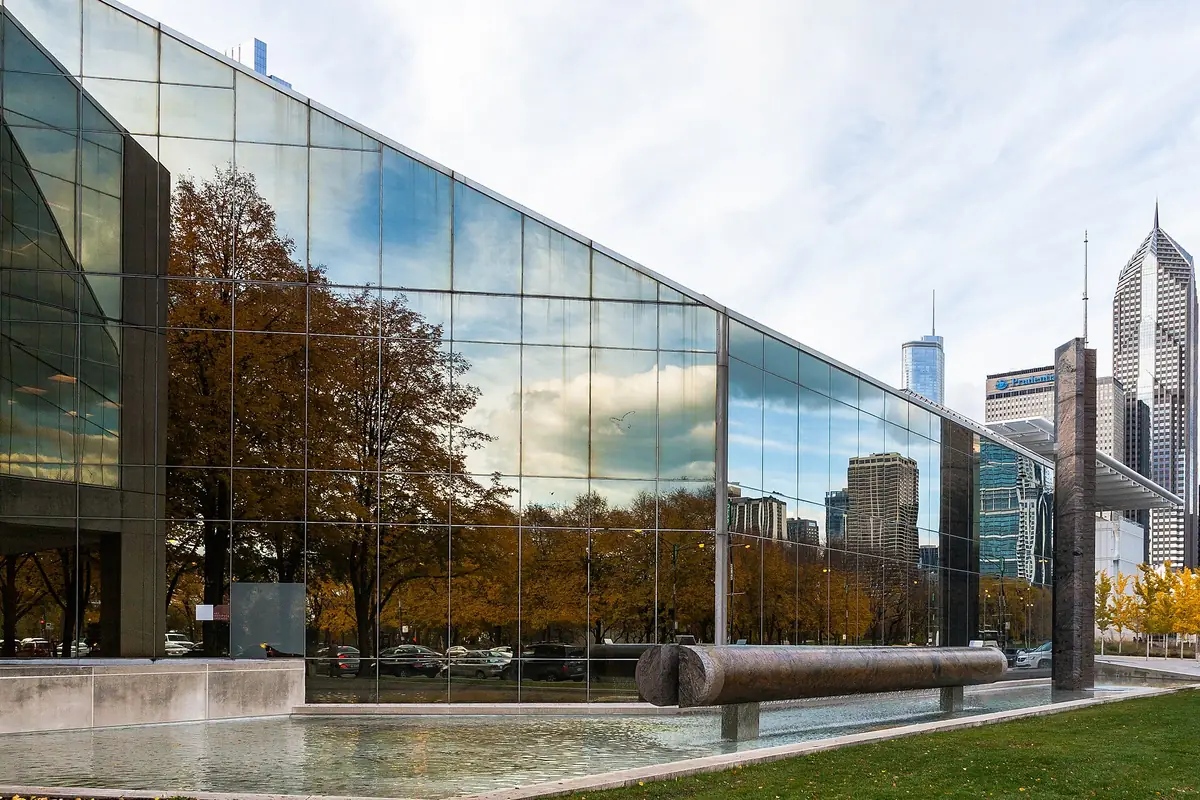
What the water means for the glass
The Department of Water Management's 2025 quarterly chemical analyses give hardness at both plants' outlets and in distribution: 141 to 143 mg/L in January, 142 to 143 in April, 134 to 142 in July and 126 to 140 in October. That is hard water in every quarter — unsoftened open-lake supply that deposits on evaporation rather than etching — and it barely moves across the year. Figures you may see quoted online vary; the department's own quarterly sheets are the ones to plan from.
Chicago tap water, by the numbers
Figures by plant, as reported.
| Hardness | 126–143 mg/L as CaCO₃ Hard at every treated sampling point in all four quarters of 2025, as published by City of Chicago Department of Water Management. |
|---|---|
| pH | 7.9 (range 7.7–7.9) |
| Alkalinity | 100 mg/L as CaCO₃ (range 99.5–101) |
| Corrosion index | Langelier index -0.44 (range -0.88 to -0.34) — undersaturated: this water dissolves scale rather than depositing it |
| Iron | 0.0012–0.0229 mg/L |
| Manganese | 0–0.00125 mg/L |
| Sodium | 8.22–8.56 mg/L |
| Chloride | 15.6–16.3 mg/L |
| Total dissolved solids | 174–180 mg/L |
| Disinfectant | free chlorine |
| Source and treatment | Surface water, per the EPA SDWIS federal record · Powdered activated carbon and pre-chlorination for taste and odour, coagulation, flocculation, sedimentation and rapid sand filtration, post-chlorination, fluoridation and an orthophosphate corrosion inhibitor · No softening step. |
SOURCE · City of Chicago Department of Water Management, Comprehensive Chemical Analysis, first quarter 2025, South Water and Jardine purification plants — outlets and distribution · How we source these numbers
When a wash holds
What sets the cleaning clock
Traffic and transit particulate dominate along the corridors and reload within weeks regardless of season. Residential streets follow the regional calendar of spring pollen, ragweed from August until frost, and a long salt season. East-facing elevations dry more slowly whenever there is onshore flow, which is often. Main replacement work is the unpredictable input and runs on a contractor's schedule.
ILLINOIS SEASON BY SEASON →What's specific to Chicago
Chicago is where this trade got a named window, and the Chicago window is still a live cleaning problem — a wide fixed central light flanked by two narrow openers, developed in the Chicago School to pull daylight through a steel frame, and unreachable from inside at its centre. The water is Lake Michigan and nothing else, taken from cribs miles offshore into two plants, one of them the largest conventional works in the world, with free chlorine rather than chloramine. The department's own quarterly analyses put treated hardness between 126 and 143 mg/L through 2025 — hard at every sampling point, and steady, because an open-lake supply does not swing the way a river does. What governs the work is housing form. The bungalow belt is the most efficient residential territory in this cohort, uniform enough to quote by type. The two-flat and three-flat hide half their glass from the kerb. And wind closes high-rise work on days the ground forecast calls fine.
Chicago gave this trade a named window and it is still on the buildings. The Chicago window — a wide fixed central pane flanked by two narrow operable sash — was developed in the commercial blocks of the Chicago School to get maximum daylight through a steel frame, and it remains a distinct cleaning proposition: one large fixed light that cannot be reached from inside, with two small openers either side of it.
The supply is Lake Michigan and nothing else. Intake cribs sit miles offshore and feed two purification plants, one of them the largest conventional treatment works in the world, and the city disinfects with free chlorine rather than the chloramine most large utilities have moved to.
The department's own quarterly sheets put treated hardness between 126 and 143 mg/L through 2025. That matters in Chicago because the numbers quoted around the web for this city vary widely: the same range shows up as a single value, an average or a seasonal spread, all credited to the city.
Lead service lines are the city's live water issue and they exist at a scale no other American city matches, because the municipal plumbing code required them until the mid-nineteen-eighties. The relevance to glass is indirect but real: replacement work disturbs mains, and a disturbed main puts sediment into the rinse water on the day the street is dug.
The bungalow belt is the single most efficient residential territory in this cohort. Tens of thousands of brick bungalows built to a small number of patterns across two decades means consistent sash, consistent heights and consistent replacement waves, so a crew that learns the type has effectively learned a third of the city's housing.
Wind is a genuine operational constraint here rather than a nickname. High-rise work downtown closes on days when the ground-level forecast reads workable, because gust conditions at height are a different number entirely, and the honest scheduling practice is to treat elevated work as weather-dependent in a way residential work is not.
The two-flat and three-flat are the other dominant residential forms, and they inflate surface counts the same way a duplex does elsewhere — two or three full floors of equivalent glazing on a narrow lot, with the upper storeys frequently tenanted and therefore an access negotiation rather than a simple booking.
How old the glass is
- Before 1940 · 39%wood sash and older glass
- 1940–1959 · 19%steel casements, early aluminium
- 1960–1979 · 17%aluminium sliders, often single-pane
- 1980–1999 · 10%double-pane units become standard
- 2000–2009 · 9%vinyl frames, low-E spreading
- 2010 or later · 6%low-E common: gentle cleaners only
The city, by neighborhood
What window cleaning costs in Chicago
Surface count first, because multi-flat stock conceals half its glazing from the street. Access second, on narrow lots with shared gangways. Route density is what makes the bungalow belt profitable at competitive rates, and downtown contract work is priced on access equipment, insurance and weather risk rather than on glass area at all.
Doing it yourself
Bungalow-belt single-storey work is genuinely approachable, and the uniformity means advice that works on one house works next door. Two-flats and three-flats are not, mostly because the storey needing the ladder belongs to someone else. Anything above three storeys downtown is a rope and rigging trade with its own licensing, and the wind alone should end the conversation.
OPEN COST ESTIMATOR →2025 annual mean at the Village Hall monitor, 50TH ST. and Glencoe, 12.9 km west of the city (EPA site 17-031-1016).
2025 annual mean at the Springfield Pump Station monitor, 1745 N. Springfield, 9 km north of the city (EPA site 17-031-0057).
Largest air release: Ingredion Inc Argo Plant, 6400 S Archer AVE (food), inside the city limits, 429,407 lb in 2024.
Chicago's water code forbids anyone to break or damage a public or private hydrant, or to pollute or needlessly waste its water, and bars parking or leaving material within five feet of either side of one. Taking control of a hydrant or its parts without city authority brings fines of up to $1,000.
Chicago Municipal Code 11-12-080 and 11-12-085: hydrants · checked September 2026
Chicago's Department of Water Management stormwater regulations define an illegal discharge as any non-stormwater entering a storm sewer that isn't on an allowed list. Routine exterior building washdown is on that list only if no detergents are used, and wash water is named among the flows an illicit connection must not carry. Soapy rinse from a façade or glass job has to be captured.
Chicago Department of Water Management, 2026 Stormwater Regulations, Chapter IV: prohibition of illicit connections · checked September 2026
The Commission on Chicago Landmarks, staffed by the Department of Planning and Development's Historic Preservation Division, reviews proposed alterations to existing landmarks and to buildings in landmark districts, as well as demolitions of significant structures. Window replacement on a listed building or in a district therefore goes through that review before permits issue.
City of Chicago: Commission on Chicago Landmarks · checked September 2026
What actually shows up on Chicago glass
Atomized chloride from winter road treatment. Migrates onto residential glass for blocks downwind of any salted artery. The post-winter cleanup pass in March or April is the largest single residential cleaning category in Chicago.
The first warm weeks after ice-off produce a thin algal-bloom aerosol on the Chicago lakeshore. Local to within a mile of the water. Manifests as a faint green tint at the glazing edge.
Chicago, answered
How hard is the water in Chicago, Illinois?+
The Department of Water Management's 2025 quarterly chemical analyses give hardness at both plants' outlets and in distribution: 141 to 143 mg/L in January, 142 to 143 in April, 134 to 142 in July and 126 to 140 in October. That is hard water in every quarter — unsoftened open-lake supply that deposits on evaporation rather than etching — and it barely moves across the year.
How much does window cleaning cost in Chicago?+
Residential window cleaning in Chicago typically runs $12–17 per pane or $340–570 for a standard single-story exterior. Surface count first, because multi-flat stock conceals half its glazing from the street.
When is the best time of year to clean windows in Chicago?+
Chicago's drier, frost-free months are July and September and October, by NOAA's 1991–2020 normals for the Chicago Midway Airport station, where May brings the most rain. The calendar on this page marks July (after the May 1 bloom) and October (after smoke season and before frost). Frost nights usually run from October 31 to April 11.
Can I rinse windows with Chicago tap water?+
Yes, if the rinse is squeegeed off before it dries: City of Chicago Department of Water Management publishes dissolved solids of 174–180 mg/L, between this site's two dissolved-solids flags. Water left to dry leaves mineral scale; fresh spots lift with a mild acid. Treatment starts with powdered activated carbon, pre-chlorination for taste, odour and coagulation.
Why do my windows look dirty so quickly in Chicago?+
In Chicago the dominant residue patterns include unsoftened lake michigan supply at 126 to 143 mg/l — hard, and steady across the year and disturbed main sediment on streets undergoing lead service line replacement. Traffic and transit particulate dominate along the corridors and reload within weeks regardless of season.
Do I need a professional to clean my windows in Chicago?+
Bungalow-belt single-storey work is genuinely approachable, and the uniformity means advice that works on one house works next door. Two-flats and three-flats are not, mostly because the storey needing the ladder belongs to someone else. Anything above three storeys downtown is a rope and rigging trade with its own licensing, and the wind alone should end the conversation.
What sets The Loop apart for window cleaning in Chicago?+
Dense high-rise commercial glazing including the buildings that invented the form. Rope descent and building maintenance units rather than ladders, and wind conditions that close the work on days a forecast would call fine. The bungalow belt and Pilsen and the near south-west have their own housing stock and glazing as well.
Other cities we cover in Illinois
Nearby cities in neighboring states
Just over the Illinois line