Window Washing in Vermont: A Three-Zone Operator's Field Notes
PUB. MAY 11, 2026
Vermont runs as three working zones. Burlington and the Champlain Valley corridor on Champlain Water District Lake Champlain-source surface supply. Central Vermont and the Connecticut River Valley corridor (Montpelier, Barre, White River Junction, Brattleboro) on mixed municipal supplies. Northern Vermont and the Northeast Kingdom rural corridor on local aquifer and well-water systems. Rural Vermont well-water statewide variable depending on aquifer source and geology.
- How Vermont Works in Practice
- The Burlington and Champlain Valley Profile
- Central Vermont and the Connecticut River Corridor
- The Northeast Kingdom and Green Mountain Rural Belt
- Maple-Syrup Season, Ice-Dam Meltwater, and the Compressed Calendar
- Foliage-Season and Ski-Corridor Commercial
- Heritage Residential Through Burlington, Old Bennington, and Woodstock
- What I Tell Crews About Working This State
Need a window cleaner in Vermont?
We're building a local pro directory. Join the free waitlist.
By Abby Giordano, for the Northeast and New England beat at Window Washing Guide
How Vermont Works in Practice
Vermont is the New England state most often misread from outside the region as a single uniform working market. It is not. Vermont runs as three distinct working zones, with a seasonal-disruption pattern shaped by ice-dam meltwater handling, maple-syrup-season residue, foliage-season tourism-corridor commercial, ski-corridor seasonal commercial, and a heritage-residential concentration that is among the deepest pre-1880 in New England outside of coastal Massachusetts, Connecticut, and Rhode Island.
Burlington and the Champlain Valley corridor — Burlington proper plus South Burlington, Colchester, Essex, Williston, Shelburne, and the surrounding Chittenden County residential — operates on Champlain Water District Lake Champlain-source surface supply, and Burlington sits at a published 64 mg/L (moderately hard). South Burlington, Colchester and Essex, on the same district, sit at a published 60 mg/L (soft), right at the soft edge. The chemistry-handling baseline is the standard alkaline-soap protocol without citric-rinse defaults.
Central Vermont and the Connecticut River Valley corridor — Montpelier, Barre, White River Junction, Hartford, Norwich, Hanover-adjacent, Brattleboro, and the surrounding Washington, Windsor, and Windham County residential — operates on mixed municipal supplies, none of them a covered city with a published figure. The protocol-handling baseline is standard.
Northern Vermont and the Northeast Kingdom rural corridor — St. Johnsbury, Newport, Hardwick, Lyndonville, Derby, Island Pond, and the surrounding Caledonia, Essex, and Orleans County residential — operates on local aquifer and well-water systems. The Northeast Kingdom runs on rural well-water with a different aquifer mineral fingerprint, and no utility publishes a figure for it.
Operators serving rural Vermont residential statewide carry chemistry verification on individual properties as routine practice.
The seasonal-disruption pattern bridges all three zones. The maple-syrup-season residue handling from February through April is the most operationally distinctive seasonal contaminant in the state. The ice-dam meltwater handling from mid-January through April is operationally similar to what Linnea Jorgensen documents for Minnesota — the heavy snowfall in the Green Mountain corridor produces ice-dam meltwater residue at densities that require percarbonate-citric ladder protocol. The foliage-season commercial concentration in October drives a substantial seasonal-tourism commercial book. The ski-corridor seasonal commercial through Stowe, Killington, Sugarbush, Stratton, Mount Snow, Jay Peak, and Smugglers Notch peaks January through March. The pre-1880 heritage residential concentration is operationally distinctive across the state.
The Burlington and Champlain Valley Profile
The Lake Champlain surface-source treatment delivers cleaner mineral chemistry than most operators outside the region expect for a northeastern state. Iron content moderate. Organic-load fraction low. The protocol-handling baseline is the standard alkaline-soap protocol without extended citric handling on most residential stock.
The Burlington pre-1880 Hill Section heritage residential is the deepest pre-1880 heritage concentration in northern New England outside of coastal Maine and New Hampshire. Pre-1860 Greek Revival, Italianate, and Queen Anne single-family residential at meaningful density. Original-glass survival rates on the better-preserved properties are high. The heritage-handling baseline is conservation-grade on the most-preserved properties — water-fed pole or hand-detail only, no scraping, conservative alkaline-soap dwell, citric finish only on lower-sash mineral residue.
The Old North End pre-1860 working-class heritage residential carries pre-Civil-War and post-Civil-War single-family and multi-family residential at substantial density. The original-glass survival rates are moderate. The heritage-handling baseline is standard heritage handling with selective conservation-grade application on the most-preserved properties.
The downtown Burlington pre-1880 commercial heritage through Church Street Marketplace and the surrounding pre-1880 commercial-conversion stock operates on heritage-handling protocol. The Church Street Marketplace pedestrian-corridor commercial — pre-1880 commercial heritage with substantial post-1980 restoration-and-conversion stock — is the most operationally distinctive commercial heritage corridor in Vermont.
The University of Vermont campus heritage stock operates on institutional-procurement-grade handling. The Old Mill (1825), Williams Hall, and the surrounding pre-1900 campus architecture carry pre-1900 institutional heritage at meaningful concentration.
Suburban Burlington — South Burlington, Essex, Williston, Shelburne, Colchester — is post-1985 production-suburban dominant with limited post-2010 luxury concentration. The IBM Burlington campus commercial (now operating as GlobalFoundries) through the Essex Junction corridor drives a substantial coated-glass IGU commercial book that operates on quarterly-to-monthly maintenance scheduling with surface-sensitivity protocol requirements.
The Champlain Valley summer-organic-load on the Champlain Water District supply is modest — summer low-flow stretches in the lake produce a faint algal-organic residue fraction that requires slightly extended citric dwell on the heaviest July-September weeks. Same handling pattern Cal Hatcher documents for the Cumberland River supply in Nashville during similar summer low-flow stretches.
Central Vermont and the Connecticut River Corridor
Central Vermont and the Connecticut River Valley operate on mixed municipal supplies. The protocol-handling baseline is the standard alkaline-soap-with-citric-finish framework that I cover for the broader New England market.
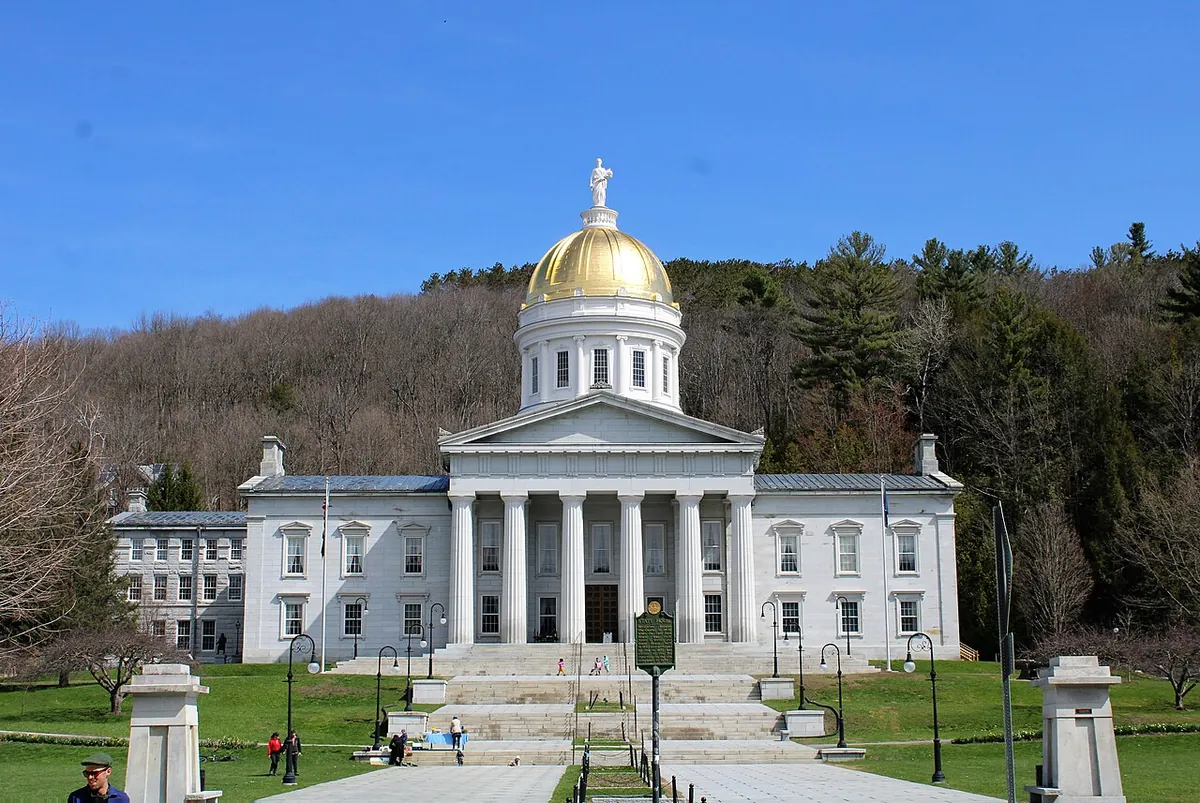
Montpelier operates on Montpelier Water surface-source supply. Pre-1860 State Capitol heritage commercial — the smallest U.S. state capital by population. The Vermont State Capitol building (completed 1859 with substantial Italianate detail and original glazing) operates on conservation-grade pacing on the surviving original glazing. The surrounding pre-1900 government-district institutional commercial parallels the State Capitol heritage handling. Pre-1900 heritage residential through the surrounding State Street corridor at meaningful density.
Barre operates on Barre Water mixed supply. Pre-1880 Downtown commercial heritage — Barre is the historical center of the U.S. granite industry, and the pre-1880 commercial heritage reflects the granite-industry-economy. The granite-quarry industry historical commercial book is largely converted-and-restored stock at this point. The Hope Cemetery institutional heritage — among the most operationally distinctive cemetery-grade architectural granite concentrations in the country — is a smaller specialty commercial book.
Brattleboro operates on Brattleboro Water Connecticut River-source supply. Pre-1860 Downtown commercial heritage at substantial density — Brattleboro is one of the operationally distinctive small-city commercial heritage corridors in New England. Pre-1900 heritage residential through the surrounding Main Street and Western Avenue corridors at meaningful density. The southern Vermont arts-and-craft-economy commercial book operates on a smaller but coherent regional commercial concentration.
The White River Junction, Hartford, Norwich, and Hanover-adjacent corridor — sharing the Connecticut River with the New Hampshire side and operationally similar to the Upper Valley commercial book that I cover for New Hampshire — operates on standard commercial-and-residential cleaning. The Dartmouth-Hitchcock Medical Center institutional commercial overlay produces a meaningful institutional commercial concentration.
Rutland operates on Rutland Water mixed supply. Pre-1880 Downtown commercial heritage — Rutland is the historical center of the U.S. marble industry. Pre-1900 heritage residential at meaningful density. The ski-corridor commercial spillover from Killington and the surrounding ski-resort commercial drives a substantial seasonal commercial book.
Bennington operates on Bennington Water mixed supply. Pre-1761 Old Bennington heritage residential — Old Bennington is one of the oldest continuously-inhabited communities in Vermont, with original-glass survival on the better-preserved pre-1800 properties. The heritage-handling baseline on Old Bennington pre-1800 residential is conservation-grade — water-fed pole or hand-detail only, no scraping, conservative alkaline-soap dwell, no acid contact on the most-preserved original glazing. The Bennington Battle Monument heritage and the surrounding Old Bennington National Historic Landmark District operate on parallel conservation-grade pacing. Bennington College campus heritage at meaningful density.
The Northeast Kingdom and Green Mountain Rural Belt
Northern Vermont and the Northeast Kingdom rural corridor — St. Johnsbury, Newport, Hardwick, Lyndonville, Derby, Island Pond, and the surrounding Caledonia, Essex, and Orleans County residential — operate on local aquifer and well-water systems. The Northeast Kingdom rural well-water comes from different Green Mountain and Appalachian geology, and no utility publishes a figure for it.
The protocol-handling for Northeast Kingdom rural residential requires extended citric dwell (2 to 4 minutes) plus citric-rinse finish where a test pane shows heavy scale. Operators porting Burlington municipal protocols into Northeast Kingdom rural residential without recalibration produce streaked work on the harder-water stock.
St. Johnsbury operates on St. Pre-1880 heritage residential at meaningful density — St. Johnsbury carries one of the more operationally distinctive small-city heritage residential concentrations in northern Vermont. The Fairbanks Museum and Planetarium building (1891 Richardsonian Romanesque) and the surrounding pre-1900 institutional commercial operate on conservation-grade pacing on the surviving original glazing.
Newport, Hardwick, Lyndonville, Derby, Island Pond, and the surrounding small-town Northeast Kingdom corridor operate on standard small-town residential and commercial cleaning. Pre-1900 small-town heritage residential at modest density through their respective downtown corridors. Rural Northeast Kingdom residential is overwhelmingly pre-1925 farmhouse-and-village construction with substantial pre-1900 stock.
The Green Mountain corridor rural residential — the corridor through the Green Mountain National Forest and the surrounding higher-elevation residential — operates on local aquifer and well-water. The handling pattern parallels the Northeast Kingdom rural residential. The Green Mountain corridor also carries the substantial ski-corridor seasonal-residential and second-home book that drives the seasonal commercial concentration through Stowe, Killington, Sugarbush, Stratton, Mount Snow, Jay Peak, and Smugglers Notch.
The Stowe ski-corridor commercial concentration is the most operationally distinctive in northern Vermont. The Stowe pre-1900 village heritage and the surrounding post-1980 luxury second-home-and-vacation residential drive a substantial high-end commercial-and-residential book. The Killington, Sugarbush, Stratton, Mount Snow, Jay Peak, and Smugglers Notch ski-corridors parallel the Stowe pattern at varying scale.
The Worst-affected rural systems in the Green Mountain corridor exceed anything in the Burlington or Brattleboro municipal range. Operators serving rural Vermont residential statewide carry chemistry verification on individual properties as routine practice.
Maple-Syrup Season, Ice-Dam Meltwater, and the Compressed Calendar
Vermont operates on a more seasonally compressed working calendar than most operators outside the region expect. The maple-syrup-season residue handling from February through April is the most operationally distinctive seasonal contaminant in the state. The ice-dam meltwater handling from mid-January through April drives substantial commercial-and-residential workload. The mud-season working-condition disruption from mid-March through mid-April produces operational complications that limit field-work capacity. The winter exterior work effectively shuts down December through February statewide because of the severe cold (regularly -10 to -25°F in the Northeast Kingdom and Green Mountain corridor).
The maple-syrup-season residue is operationally distinctive Vermont contaminant that operators outside the region do not encounter. Sugar-house steam emissions during the February-through-April boiling season produce a distinctive sticky organic residue on glass — sugar-and-mineral composite — that deposits on commercial and residential adjacent to sugaring operations. The residue is heavier than what one might expect from a "natural product" steam emission, because the long boil and the high sugar concentration produce a concentrated steam residue that adheres to glass at densities requiring extended alkaline-soap dwell plus light citric finish.
Operators serving Vermont commercial and residential need local-knowledge handling on the maple-syrup-season residue — knowing which sugar-houses are active, which residential properties sit downwind of active sugaring operations, and which commercial properties carry elevated residue concentration during the boiling season. The Vermont Maple Sugar Makers' Association published guidance on sugar-house emissions is a useful reference for operators serving sugar-house-adjacent properties.
The ice-dam meltwater handling from mid-January through April is operationally similar to what Linnea Jorgensen documents for Minnesota ice-dam meltwater. The heavy snowfall in the Green Mountain corridor produces ice-dam meltwater residue at densities that require percarbonate-citric ladder protocol on the worst-affected upper-pane and sash-perimeter stock. The chloride-residue-plus-mineral-residue-plus-organic-residue composite from ice-dam meltwater is distinctively different from standard road-salt residue.
The mud-season working-condition disruption from mid-March through mid-April produces operational complications. The post-winter thaw produces working-condition problems — saturated yards, equipment-transit difficulty, and substantial-debris-and-dust deposition on lower-pane stock — that limit field-work capacity during the mud-season window. Operators serving the residential book typically run commercial-priority scheduling through the mud-season window and resume full residential pacing once the mud-season window closes.
The pre-foliage-season commercial preparation cleaning from late August through early September is a meaningful concentration on hospitality and retail commercial across the foliage-season tourism-corridor. Operators serving the foliage-season commercial book extend operating hours through the late-August-through-early-September window.
Foliage-Season and Ski-Corridor Commercial
The foliage-season commercial concentration in October is the most operationally distinctive commercial pattern in the state. The foliage-season tourism-corridor commercial through Stowe, Woodstock, Killington, Manchester, Brattleboro, Burlington, Montpelier, and the surrounding heritage-and-tourism commercial book drives substantial elevated commercial-residue concentration during the foliage-season visitor surge. The pre-foliage-season commercial preparation cleaning in late August through early September on hospitality and retail commercial is heavy.
The foliage-season commercial peak runs from late September through mid-October statewide, with operationally meaningful regional variation — northern Vermont peak runs late September, southern Vermont peak runs mid-October. Operators serving the foliage-season commercial book extend operating hours through the peak-foliage window and resume standard pacing once the foliage season closes.
The ski-corridor seasonal commercial through Stowe, Killington, Sugarbush, Stratton, Mount Snow, Jay Peak, Smugglers Notch, Okemo, Pico, Bromley, Magic Mountain, and Burke peaks January through March. The hospitality-and-retail commercial concentration through the ski-village corridors drives a substantial seasonal commercial book. The salt-and-snow residue on ground-floor commercial through the ski-village corridors requires wet-rinse-first protocol on commercial-grade glazing.
The protocol-handling baseline on ski-corridor commercial is the same standard ski-corridor commercial pattern that Easton Giordano documents for Park City and Deer Valley in Utah and that I cover for the Lake Tahoe and Aspen ski-corridor commercial in Colorado. Quarterly-to-monthly maintenance scheduling on ski-resort property-management commercial. Surface-sensitivity protocol on post-2000 coated-glass IGU through the high-end ski-corridor commercial.
The Stowe high-end residential book is the operationally most distinctive in northern Vermont. Pre-1900 village heritage residential combined with post-1980 luxury second-home-and-vacation residential. The high-end Stowe residential market segments aggressively from the standard residential market and refers consistently. Operators serving the high-end Stowe book carry conservation-grade heritage handling on the pre-1900 village residential and standard surface-sensitivity protocol on the post-1980 luxury residential.
The Killington, Sugarbush, Stratton, Mount Snow, Jay Peak, and Smugglers Notch ski-corridor commercial parallels the Stowe pattern at varying scale and operates on similar protocol-handling baselines.
Heritage Residential Through Burlington, Old Bennington, and Woodstock
Vermont carries one of the deepest pre-1880 heritage residential concentrations in New England outside of coastal Massachusetts, Connecticut, and Rhode Island. The principal heritage corridors — Burlington Hill Section, Old Bennington, Woodstock, Manchester Village, Middlebury, Brattleboro, St. Johnsbury, and Montpelier — each operate on distinct heritage-handling logic.
The Burlington Hill Section pre-1880 heritage residential at meaningful density operates on conservation-grade pacing on the most-preserved properties. Pre-1860 Greek Revival, Italianate, and Queen Anne single-family residential. Original-glass survival rates on the better-preserved properties are high. The heritage-handling baseline is water-fed pole or hand-detail only, no scraping, conservative alkaline-soap dwell, citric finish only on lower-sash mineral residue.
Old Bennington pre-1761 heritage residential is one of the oldest continuously-inhabited communities in Vermont and operates on the most operationally demanding heritage-handling pacing in the state. The pre-1800 heritage residential through the Old Bennington National Historic Landmark District carries original-glass survival on the better-preserved properties at rates that justify conservation-grade pacing. No acid contact on the most-preserved original glazing. The Bennington Battle Monument heritage and the surrounding Old Bennington heritage parallel the residential heritage handling.
Woodstock pre-1880 heritage residential is operationally one of the more distinctive heritage corridors in central Vermont. The Woodstock Village historic district carries pre-1860 single-family residential at meaningful density with substantial original-glass survival. The high-end Woodstock heritage market segments aggressively from the standard residential market.
Manchester Village pre-1860 heritage commercial through the Manchester Village historic district and the surrounding pre-1900 heritage residential operate on conservation-grade pacing parallel to the Woodstock and Old Bennington pattern. The Equinox Hotel heritage commercial and the surrounding luxury-hospitality commercial drive a substantial commercial book on top of the residential heritage.
Middlebury pre-1880 heritage residential and Middlebury College campus heritage operate on standard heritage handling with selective conservation-grade application on the most-preserved properties. The pre-1860 Middlebury Village commercial heritage operates on parallel heritage handling.
Brattleboro pre-1860 Downtown commercial heritage at substantial density operates on heritage-handling protocol. The surrounding pre-1900 Main Street and Western Avenue heritage residential at meaningful density parallels the commercial heritage handling.
St. Johnsbury pre-1880 heritage residential and the surrounding institutional heritage operate on standard heritage handling. The Fairbanks Museum and Planetarium building and the Athenaeum institutional commercial heritage operate on conservation-grade pacing on the surviving original glazing.
The high-end Vermont heritage market segments aggressively from the standard residential market and refers consistently through the antique-and-arts-and-craft-economy commercial network that defines the Stowe, Manchester, Woodstock, and surrounding heritage-corridor commercial economy.
What I Tell Crews About Working This State
A few things any operator running Vermont should internalize:
The chemistry is genuinely three-zone with a rural-well-water overlay. Crews moving between these markets need to make the chemistry adjustment.
The Lake Champlain-source municipal supply sits right on the soft edge, at a published 60 mg/L in South Burlington and a published 64 mg/L in Burlington. Operators porting Boston or New York City protocols into the Champlain Valley residential typically run excessive citric handling on stock that does not need it.
The maple-syrup-season residue handling from February through April is operationally distinctive Vermont contaminant that operators outside the region do not encounter. Sugar-house steam emissions produce sticky sugar-and-mineral composite residue. Extended alkaline-soap dwell plus light citric finish. Operator local-knowledge handling required — knowing which sugar-houses are active and which properties sit downwind.
The ice-dam meltwater handling from mid-January through April is operationally similar to what Linnea Jorgensen documents for Minnesota. The heavy snowfall in the Green Mountain corridor produces ice-dam meltwater residue at densities that require percarbonate-citric ladder protocol on the worst-affected upper-pane and sash-perimeter stock.
The mud-season working-condition disruption from mid-March through mid-April produces operational complications. Run commercial-priority scheduling through the mud-season window. Resume full residential pacing once the mud-season window closes.
The foliage-season commercial concentration in October drives substantial elevated commercial-residue concentration. Pre-foliage-season commercial preparation cleaning in late August through early September on hospitality and retail commercial is heavy. Northern Vermont foliage-season peak late September, southern Vermont mid-October.
The ski-corridor seasonal commercial through Stowe, Killington, Sugarbush, Stratton, Mount Snow, Jay Peak, Smugglers Notch peaks January through March. Hospitality-and-retail commercial concentration. Salt-and-snow residue on ground-floor commercial requires wet-rinse-first protocol. Quarterly-to-monthly maintenance scheduling on ski-resort property-management commercial.
The Burlington Hill Section, Old Bennington, Woodstock, Manchester Village, Middlebury, Brattleboro, and St. Johnsbury pre-1880 heritage residential concentration operates on conservation-grade protocol on the most-preserved properties. Water-fed pole or hand-detail only, no scraping, slow pacing, customer pricing that reflects the heritage-trade hourly rates. Old Bennington pre-1761 heritage handling is the most operationally demanding in the state.
The winter exterior work effectively shuts down December through February statewide. Commercial interior work is off-season backbone for non-ski-corridor operators. Ski-corridor commercial drives substantial seasonal commercial workload through the winter.
For broader New England and Northeast context, the New Hampshire, Maine, Massachusetts, and New York state pages cover the chemistry and seasonal frameworks that bracket Vermont. For the operating protocols themselves, the article on heritage glass restoration covers the Old Bennington and Woodstock heritage handling, the article on the test that tells etching from deposits covers the Northeast Kingdom rural well-water chemistry, and the article on foggy windows covers the ski-corridor high-elevation IGU seal-degradation handling. Cross-references for technique: how to wash a window properly, low-E, tempered and laminated glass, humidity, hysteresis and the cleaner you cannot see.
The big cities, in numbers
Champlain Water District Lake Champlain-source supply. Pre-1880 Hill Section and Old North End heritage residential — Greek Revival, Italianate, and Queen Anne at meaningful density. University of Vermont campus heritage. Downtown commercial heritage through Church Street Marketplace.
Champlain Water District supply from Shelburne Bay. City Center and Dorset Street commercial spine, Burlington International Airport inside the city limits, newest housing stock in Chittenden County.
Colchester Fire District #3 distributes Champlain Water District supply. Malletts Bay seasonal lakefront stock plus Saint Michael's College campus; lake exposure is the local variable, not the water.
Champlain Water District supply. Pre-1900 Essex Junction heritage at modest density. Post-1985 production-suburban dominant. IBM-corridor (now GlobalFoundries) commercial concentration drives substantial commercial book.
Rutland Water mixed supply. Pre-1880 Downtown commercial heritage. Pre-1900 Rutland heritage residential at meaningful density. Marble-industry historical commercial. Ski-corridor commercial spillover from Killington.
Bennington Water mixed supply. Pre-1761 Old Bennington heritage residential — among the oldest continuously-inhabited communities in Vermont. Bennington Battle Monument heritage. Bennington College campus heritage.
Brattleboro Water Connecticut River-source supply. Pre-1860 Downtown commercial heritage. Pre-1900 heritage residential at meaningful density. Southern Vermont arts-and-craft-economy commercial book.
Barre Water mixed supply. Pre-1880 Downtown commercial heritage. Granite-quarry industry historical commercial. Pre-1900 heritage residential at modest density.
Montpelier Water surface-source supply. Pre-1860 State Capitol heritage commercial. Smallest U.S. state capital by population. Pre-1900 heritage residential at meaningful density. Vermont State Capitol and surrounding government-district institutional commercial.
Dedicated city pages in Vermont
Each city page carries its own water profile, neighborhood breakdown, cost range, and city-specific operating notes.
Rules for high-rise and rope-access window work
Vermont runs its own OSHA-approved program for private employers, which must be at least as effective as federal OSHA. The federal benchmark for rope work is 29 CFR 1910.27: owner-certified anchors rated to 5,000 pounds, gear checked every shift, a separate fall-arrest line for each worker, and no rope descent in storms or gusty wind.
OSHA, State Plans: which states run their own programs · OSHA 29 CFR 1910.27: Scaffolds and rope descent systems · checked September 2026 · How we check local rules
What lands on the glass
| CONTAMINANT | SEASON | SEVERITY |
|---|---|---|
| Spring snow-melt and ice-dam meltwater residue | mid-January through April | high statewide |
| Late-winter and early-spring ice-melt residue carries chloride-residue, mineral residue, and organic residue composite. Ice-dam meltwater residue from roof-edge ice damming produces a distinctive composite residue on upper-pane and sash-perimeter glass. Percarbonate-citric ladder protocol required on the worst-affected stock. Same handling pattern Linnea Jorgensen documents for Minnesota. | ||
| Tree-pollen wave (oak, maple, birch, ash) | late April through May | medium-to-high statewide |
| Deciduous tree-pollen wave dominant statewide. Lower density than Southern pine-pollen wave. Wet-rinse handling. No scraping, no dry-brushing. | ||
| Maple-syrup-season residue | February through April | medium on commercial-and-residential adjacent to sugaring operations |
| Sugar-house steam emissions during the boiling season produce a distinctive sticky organic residue on glass — sugar-and-mineral composite. Heavier on sugar-house-adjacent residential and commercial. Operationally distinctive Vermont contaminant. Extended alkaline-soap dwell plus light citric finish. Operator local-knowledge handling required. | ||
| Rural well-water mineral residue | year-round on rural well systems | medium-to-high on Northeast Kingdom, Green Mountain corridor, southern Vermont rural well-water |
| Extended citric pre-treatment (3-5 minutes) plus citric-rinse finish required on the properties that leave the heaviest scale. Verify chemistry on individual properties. | ||
| Foliage-season residue (commercial) | September through October | medium on tourism-corridor commercial |
| Foliage-season tourism-corridor commercial through Stowe, Woodstock, Killington, Manchester, Brattleboro, and the surrounding heritage-and-tourism commercial book carries elevated commercial-residue concentration during the foliage-season visitor surge. Standard alkaline-soap-with-citric-finish handling at elevated production rate. | ||
| Ski-corridor seasonal commercial residue | November through April | medium on ski-corridor commercial |
| Stowe, Killington, Sugarbush, Stratton, Mount Snow, Jay Peak, Smugglers Notch ski-corridor commercial drives a substantial seasonal commercial book. Hospitality-and-retail commercial concentration. Salt-and-snow residue on ground-floor commercial. Same protocol-handling baseline as Park City and Deer Valley ski-corridor commercial that Easton Giordano documents. | ||
| Connecticut River and Champlain Valley summer organic-load | July through September | low-medium on Connecticut River and Champlain Valley corridor residential |
| Summer low-flow stretches concentrate the organic-load fraction in the Connecticut River and Champlain Valley supplies. Slightly extended citric dwell handles the composite. | ||
The year, in seasons
Mid-April through early June. Tree-pollen wave drives booking pressure late April through May. Mud-season working-condition disruption mid-March through mid-April. Spring snow-melt and ice-dam meltwater residue handling on commercial-and-residential.
Late June through August is the production window statewide. Champlain Valley moderate humidity. Green Mountain corridor cooler. Foliage-season pre-season commercial preparation late August through early September.
September through early November is the cleanest production stretch statewide. Foliage-season tourism-corridor commercial concentration October. Pre-winter residential rush late October through early November. First hard frost in Green Mountain corridor mid-September, Champlain Valley early October.
Exterior work effectively shuts down December through February statewide. Ski-corridor commercial peak January through March drives substantial seasonal commercial workload. Commercial interior work is off-season backbone for non-ski-corridor operators.
The articles that matter most for Vermont
Border states with their own guides
Land-adjacent states each get their own water-and-window profile. If you're working a regional route or moving across the border, these are the natural next reads.
Common questions about window cleaning in Vermont
How hard is the water in Vermont?+
The four utilities we cover in Vermont that publish hardness report 60 to 64 mg/L (as CaCO₃). The middle of those cities sits near 60 mg/L, which is soft, meaning municipal water leaves minimal mineral residue when it dries on glass. Each city page gives its own utility's figure.
When is the best time of year to clean windows in Vermont?+
In Vermont, the working operator's calendar typically favors fall — september through early november is the cleanest production stretch statewide. foliage-season tourism-corridor commercial concentration october. pre-winter residential rush late october through early november. first hard frost in green mountain corridor mid-september, champlain valley early october. For a full
How much does window cleaning cost in Vermont?+
Residential window cleaning in Vermont typically runs $8–18 per pane or $200–500 for a standard single-family house exterior, depending on metro pricing, story height, screen condition, and frame type. Use our cost estimator for a calibrated quote for your home.
Why do my windows look dirty so quickly in Vermont?+
The dominant residue problem in Vermont is spring snow-melt and ice-dam meltwater residue (mid-January through April). Late-winter and early-spring ice-melt residue carries chloride-residue, mineral residue, and organic residue composite. Ice-dam meltwater residue from roof-edge ice damming produces a distinctive composite residue on upper-pane and sash-perimeter glass. Percarb
Do I need a professional to clean my windows in Vermont?+
Single-story homes with accessible glazing can be cleaned by homeowners using basic squeegee technique and the right solution. Multi-story houses, post-2010 coated glass, hard-water markets, and screens-plus-tracks work usually pay for themselves with a professional. See our hiring checklist below.
What's special about cleaning windows in Vermont's climate?+
Severe thunderstorms statewide spring through summer. Tornado activity low. Hail-storm exposure moderate. Severe winter weather statewide November through April — heavy snowfall in Green Mountain corridor, deep-winter cold (regularly -10 to -25°F in Northeast Kingdom). Spring snow-melt and ice-dam meltwater residue events. Tropical-system remnant exposure occasional (Hurricane
Where can I find a window cleaner in Burlington, Vermont?+
Burlington is the largest market in Vermont and has the deepest concentration of professional window-cleaning services. Our "Find a Cleaner" page takes waitlist sign-ups while the local pro directory is built; meanwhile, read the Burlington section of this page for the city-specific water and cleaning context.
Abby Giordano
Editorial team contributor covering the Northeast and New England beat. Articles bylined by Abby are researched and reviewed in collaboration with the Giordano Inc. editorial team and informed by interviews with practicing window-washing operators in the region, plus published trade and apprenticeship technique references.
READ MORE BY ABBY GIORDANO →