Building a twelve-month cleaning calendar: the cadence logic behind the Schedule Builder
The cadence-selection rules behind the calendar, why hardness drives the baseline and contaminants drive the extras, how property type modifies the schedule, and why a national once-or-twice-a-year recommendation has been quietly wrong about most of the country for fifteen years. The schedule I would build for any customer in any region, in software.
PUB. MAY 12, 2026
What the Cleaning Schedule Builder does, in five points:
- Hardness drives the baseline cadence. Soft and moderate water markets get two passes a year. Hard water markets get four. Very-hard markets get six. Extremely-hard markets get twelve. The chemistry that defeats hard-water spotting cannot also defeat the calendar; the calendar is part of the protocol.
- Regional contaminants drive the additional passes. A severe pollen season, a sprinkler-overspray season, a wildfire-soot season, a salt-aerosol season — each one earns a contaminant pass in its months, on top of the baseline. The calendar is the place where the regional pattern becomes a schedule.
- Property type modifies the cadence. Commercial accounts floor at monthly because the contract demands it. Heritage residential ceilings at bi-annual because more frequent work on historic glass risks cumulative damage. DIY runs lighter than pro by approximately one tier. The chemistry call does not change; the cadence does.
- Workload scale changes the labor, not the cadence. A small property at twelve passes a year is a manageable annual workload. A large property at the same cadence is a different operational picture. The schedule tells you both.
- The output is a calendar, not advice. Twelve months, each with a pass type, the contaminants driving it, the chemistry implied. You can print it, stick it on the wall, and run your year off it. That is the point.
The honest reason this tool exists: the once-or-twice-a-year cleaning frequency recommendation that travels with most national cleaning literature is approximately right for the soft-water markets where most of that literature was written, and approximately wrong for everywhere else. A homeowner in San Antonio who cleans their windows twice a year — once in spring, once in fall — will have visible mineral haze on every south-facing window by July. The schedule has to match the water. This tool builds the schedule that matches yours.
There is a question I get asked more than any other in my editorial correspondence, and it is the simplest possible version of the question: how often should I clean my windows.
The honest answer is twelve different answers, because the right cadence is a function of where you live, what your water is, what falls on your windows each season, and whether the work is your own house or a customer's storefront. The version of the question I would prefer to be asked is "how often should I clean my windows, given that I am in this city, doing this kind of work, on this scale of property" — and that version of the question is exactly what the Cleaning Schedule Builder answers.
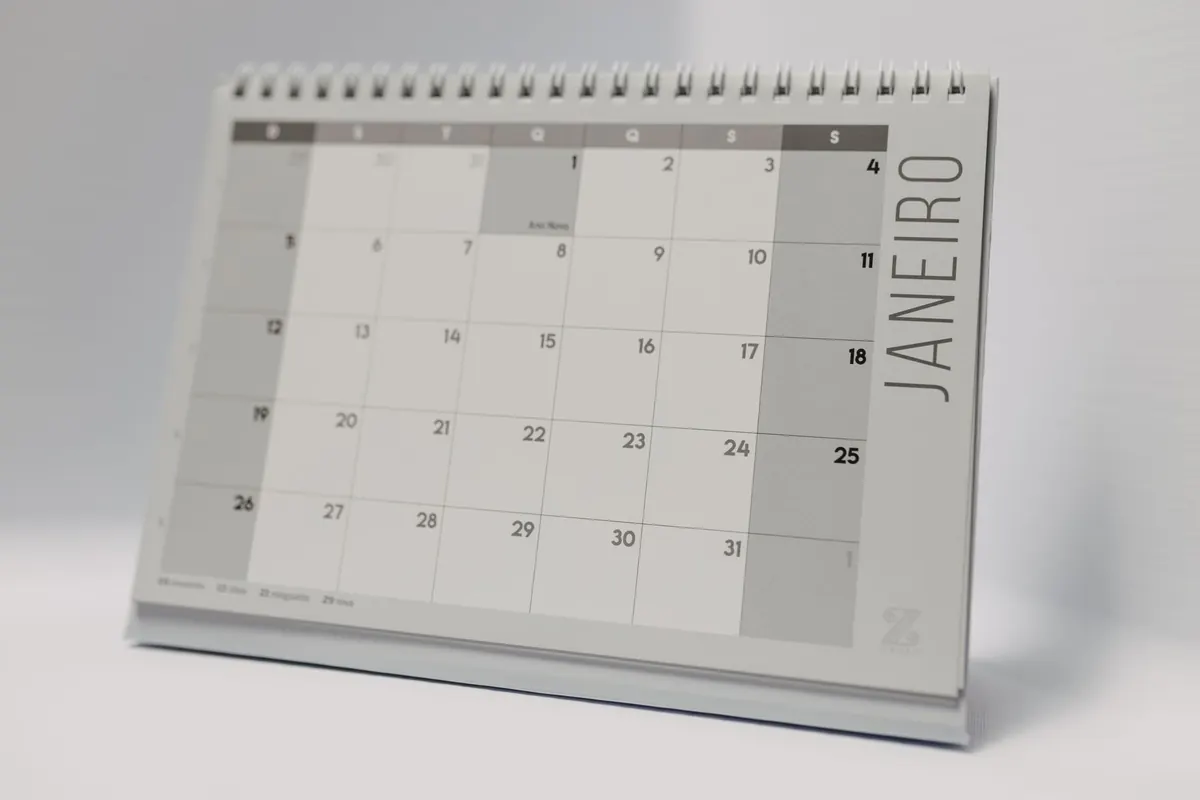
The tool produces a twelve-month calendar. Each month carries a pass type — none, light, full, contaminant-driven, or deep — and the calendar overall reflects three things: the baseline cadence your water hardness wants, the additional passes your regional contaminant calendar demands, and the modifiers your property type and workload scale apply on top. This piece is the methodology behind that calendar.
The rule that comes before everything
The single most common cleaning-frequency mistake is the once-or-twice-a-year recommendation that gets repeated as a national default. It is approximately correct for the soft-water markets where most national cleaning literature was written, and approximately wrong everywhere else. The right cadence is a function of the water, the contaminants, and the property — and the answer ranges from twice a year to twelve times a year across the country.
If you have read any of the regional field notes on this site, this will not surprise you. Jerry Davenport's Texas piece describes a hill-country residential cadence that runs monthly in the well-water market and quarterly in the city; both numbers are well above the national default. Linnea Jorgensen's upper-Midwest piece describes a genuinely interior-only winter that compresses the residential year into eight working months. My own Mid-South coverage divides Tennessee into three water-chemistry zones with three separate cadences, none of which is the same as the national default.
The pattern across the regional coverage is this: the cleaner who follows the published national default is a cleaner whose customers are dissatisfied roughly six months into the cleaning relationship, in any market harder than soft. The cleaner who builds the cadence around the water is a cleaner whose customers stay. The Cleaning Schedule Builder is the tool that produces the regional cadence on demand, so that the decision is not "follow the national default" or "guess from experience" — it is "use the calendar the data implies for this region."
The four inputs and why they are the four inputs
The tool asks four questions before it produces a calendar. State, city (optional), property type, and workload scale. Each is doing specific work in the synthesis.
State is the foundational regional record. Like the Regional Protocol Generator, the Schedule Builder reads the state's water profile (for the hardness baseline), the regional contaminant list (for the extra passes), and the cleaning-calendar text (for the seasonal commentary). The state record is what makes the cadence regional rather than generic.
City is an optional refinement. In states with significant intra-state water-chemistry variation — Texas, California, New York, and several others — the city pick narrows the hardness reading from a statewide range to a specific municipal value. Houston (a published 44–229 mg/L) and San Antonio (a published 257–342 mg/L) are in the same state but in different hardness tiers, and their cadences differ accordingly. Where the user does not pick a city, the tool falls back to the midpoint of the statewide range and labels the result as the state default.
Property type is the cadence-modifier question. Four options — residential DIY, residential pro, commercial, heritage residential — each apply a deterministic adjustment to the hardness baseline. Commercial work has a floor of twelve passes per year (the contract minimum); heritage residential has a ceiling of two (the conservation-grade maximum); DIY runs one tier lighter than residential pro; pro matches the baseline exactly. These modifiers were not invented; they are what fifteen years of regional residential and commercial cadences actually look like in practice.
Workload scale changes the labor estimate but not the cadence. A small property at twelve passes a year is twelve half-day jobs across the year. A large property at the same twelve passes is twelve multi-day jobs. The tool reports both annual cadence and annual labor in roughly day-equivalents so the user can see what the schedule actually demands.
The omissions matter as much as the inclusions. The tool does not ask zip code (the Hard Water Scorer is the right tool for the precise reading on a specific address). The tool does not ask budget (the Cost Estimator is the right tool for the pricing question). The tool does not ask the user's preferred chemistry. The cadence is the cadence; the chemistry comes from the Regional Protocol Generator on top.
The synthesis logic, in plain language
The synthesis function in the tool is a deterministic three-step pipeline.
Step one is the baseline cadence from hardness tier. The five tiers — soft, moderate, hard, very-hard, extremely-hard — map to two, two, four, six, and twelve passes per year respectively. The mapping is not a guess; it is the cadence at which visible spotting will not re-establish between passes for each tier. Soft and moderate share the two-pass baseline because the spotting rate at both tiers is similar in practice — both can hold a twice-yearly cadence cleanly. Hard at four is quarterly; very-hard at six is bimonthly; extremely-hard at twelve is monthly.
Step two is the property-type modifier. Commercial floors at twelve regardless of hardness, because the contract structure assumes monthly minimum service even in soft-water markets — the customer is buying frequency, not chemistry. Heritage residential ceilings at two regardless of hardness, because more frequent work on historic glass risks cumulative surface damage that the gentler heritage chemistries are designed to avoid. DIY runs one tier below pro, because most homeowners do not have the route density that makes monthly visits economical and do not have the standing chemistry inventory that makes them efficient. Pro matches the baseline exactly.
Step three is the contaminant overlay. For each regional contaminant in the state record with severity rated severe (or, in some state records, "high" — the parser normalizes these to the same scheduling category), the tool reads the season string, parses it into a set of month indices, and marks those months as carrying a contaminant-driven pass. Where a contaminant month overlaps with a baseline-cadence month, the month is marked as a deep clean (both drivers active simultaneously). Where it falls between baseline months, it is marked as a contaminant pass and added to the annual total.
The output is the union of the baseline distribution and the contaminant overlay. A San Antonio property on a residential-pro cadence — six baseline passes plus several severe-contaminant months — typically lands somewhere between eight and ten total passes per year. A Burlington, Vermont property on the same residential-pro cadence — four baseline passes plus the maple-pollen severe contaminant in May — lands at five or six.
The synthesis is deterministic. The same inputs always produce the same calendar. There is no randomness, no inference, no language-model generation. The data is in the regional dataset; the rules are in the synthesis function; the output is what the rules produce when applied to the data.
A note on the four pass types
The calendar uses four pass types plus none. Each glyph in the calendar represents a different kind of work.
Full pass (●) is the standard cleaning visit — the chemistry and labor described in the Regional Protocol Generator. Exterior and interior, squeegee finish, distilled or pure-water rinse where the hardness demands it. This is the pass type the baseline cadence produces.
Deep pass (★) is a full pass that happens to coincide with a severe-contaminant month, so the visit includes both the standard cleaning sequence and the contaminant-specific protocol. A spring deep pass in central Texas is a normal residential clean plus the oak-pollen and cedar-pollen pre-rinse. A summer deep pass in coastal Florida is a normal commercial clean plus the salt-aerosol acid-neutralization step. The deep pass is not different work; it is more work in a single visit.
Contaminant pass (◐) is a single-purpose visit driven entirely by a severe regional contaminant in a month that the baseline cadence did not already schedule. The mid-summer Saharan-dust pass on the Gulf Coast is a contaminant pass: not a full clean, just the dust removal. The October fire-season soot pass in northern California is a contaminant pass. These passes are typically shorter than the full pass — they are addressing one specific issue, not running the whole protocol.
Light pass (○) is the lightest visit in the schedule — a maintenance check, an interior-only touch-up, or a moderate-contaminant pre-emptive pass. Light passes appear primarily on DIY schedules where the homeowner is doing a quick check-in between full cleanings, and on commercial schedules where some months pick up a touch-up between contract-mandated full visits. They do not appear at all on heritage schedules (which run only full passes at low frequency).
None (·) is the absence of a scheduled pass. A January slot for a soft-water residential-DIY property is empty; the next scheduled work is the April pass. The tool does not invent activity where the schedule does not need it.
The four-pass-type structure is what makes the calendar useful as a planning document rather than just a frequency recommendation. Telling a homeowner "you should clean four times a year" is less useful than showing them which four months and what work each one is for.
What the tool deliberately does not include
The tool does not produce specific dates. It produces months. A March pass is a March pass; whether you run it on March 8 or March 22 is your decision based on weather, customer preference, and route logistics. We considered offering specific date recommendations and rejected it — the date-level granularity is operational decision-making that the tool's input set cannot resolve well.
The tool does not include real-time weather adjustments. A schedule generated in January is the schedule for the year; an unusual cold snap or wet spring is a real-world adjustment the user makes day-of, not a synthesis parameter. The decision to keep the tool deterministic over the year was an editorial choice: the calendar is a planning document, not an advisory.
The tool does not handle the multi-property case. A working cleaner with thirty residential accounts has thirty calendars; the tool produces one at a time. Building a route-management calendar that aggregates the per-customer schedules is a different tool and a different problem. The cross-link grid at the bottom of the output points at the Cost Estimator for the route-economics question and the Regional Protocol Generator for the per-customer chemistry, both of which are upstream of the multi-property scheduling problem.
The tool does not handle interior-only schedules in winter-constrained markets. The Upper Midwest's genuinely interior-only winter is real, and a January through March interior-only pass on a Twin Cities residential property is a different work product than a full-window January pass would be (if January passes were possible there, which they are not). The current tool produces the full-window calendar; the interior-winter-only modification is a manual user adjustment in this version. A future version may explicitly model the interior-only winter for cold-climate markets — Linnea's piece on the upper-Midwest pattern is the editorial reference for that work when it ships.
A short note on why this is tool ten rather than tool one
This tool would have been more useful at the start of the project than at the end, in some ways. The "how often should I clean my windows" question is the most-asked question in the entire residential cleaning trade, and the tool that answers it well is the tool that converts the most casual reader into a returning visitor.
The reason this is tool ten rather than tool one is the same reason the Regional Protocol Generator is tool nine: the regional dataset that makes the synthesis work did not exist in usable form at the start of the project. Two years of state coverage, fifty state records with contaminant calendars rated for severity, hundreds of city records with verified hardness readings, and a dozen long-form regional field-notes pieces are what makes the cadence selection deterministic rather than guesswork.
The pattern across the toolkit is that the early tools — the Streak Diagnostic, the Hard Water Scorer — are the high-volume entry points, the tools a first-time visitor finds via search. The later tools, including this one, are the synthesis tools that combine the data the early tools and the regional content built up over time. They are the tools the returning visitor finds when they want to plan their year rather than diagnose a specific problem.
If you are reading this as a returning visitor — someone who has run the Streak Diagnostic, scored your water, identified your glass, and now wants to plan the year ahead — you are exactly the reader this tool was built for. The schedule it produces is the schedule I would write for you if you called me. The fact that you can produce it yourself in four clicks is, in some ways, the whole point of putting fifteen years of regional editorial work into structured data.
Glossary terms in this piece
- Baseline cadence — the frequency a hardness tier wants for visible-spotting prevention
- Contaminant pass — a cleaning visit driven by a specific seasonal contaminant pattern
- Deep clean — a full pass coinciding with a severe-contaminant month
- Heritage cleaning — the gentler protocol used on pre-1925 single-pane glazing
- Pure-water pole — deionized or reverse-osmosis filtered water delivered through an extending pole
- Service-level agreement — the fixed-frequency contract structure of commercial cleaning work
Sources
- U.S. Geological Survey, Hardness of Water — the hardness bands (soft through very hard, in mg/L as CaCO₃) this tool sorts a supply into
- NOAA National Centers for Environmental Information, U.S. Climate Normals (1991–2020) — the 30-year station averages behind the seasonal timing, updated each decade
- U.S. Environmental Protection Agency, Consumer Confidence Reports — the annual utility water-quality report where a customer can read their own supply’s hardness
- Cardinal Glass Industries, Technical Service Bulletin CG06: LoĒ-i89® Coated Glass — the manufacturer's own care and cleaning limits for coated glass: soap solution or standard glass cleaner is fine, hydrofluoric-acid rust removers and abrasives are not, and a squeegee must have no exposed metal edge
Elly Giordano
Editorial team contributor covering the South and Mid-South beat. Articles bylined by Elly are researched and reviewed in collaboration with the Giordano Inc. editorial team and informed by interviews with practicing window-washing operators in the region, plus published trade and historic-glass conservation references.