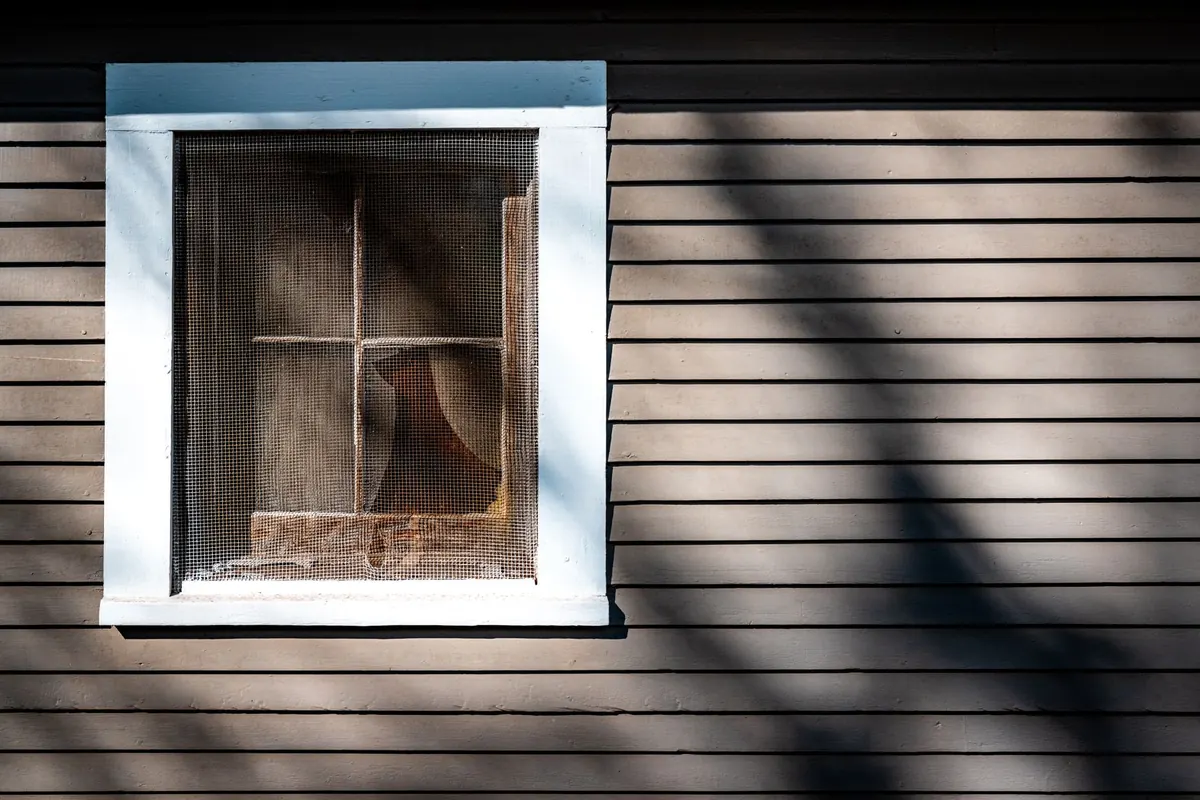
Cleaning glass in Texas: the heat-load problem, the hill-country well-water problem, and the protocols the standard books don't cover
Seventeen years on an Austin and central-Texas route built around two protocol problems the national cleaning literature doesn't address. The mid-August heat-load that flash-evaporates standard solutions before the squeegee crosses the glass. The Edwards Aquifer hill-country well water that is a different chemistry from any Austin municipal supply and that softeners do not actually solve. The distilled-rinse variant of the House Standard recipe, the cedar-and-oak pollen calendar, and the scheduling discipline that organizes the route around them.
PUB. MAY 12, 2026
Two problems define Texas cleaning work and neither shows up in the national literature. The short version:
- Heat load is a chemistry problem, not a comfort problem. A south-facing pane in Austin in August can hit 130°F by noon. Standard House Standard solution applied to glass at that temperature flash-evaporates before the squeegee crosses the pane, redistributing surfactant rather than removing soil. The variant is a higher surfactant load, distilled water cooled in a chest cooler, and sleeve-application only.
- Hill-country well water is hard in ways a softener doesn't fix. Edwards Aquifer karst water runs 250–500+ ppm TDS, and the dominant ions are calcium and magnesium bicarbonates plus dissolved silica. A whole-house softener exchanges calcium and magnesium for sodium, which solves the bathtub-ring problem but leaves the silica untouched. Silica on glass dries to a hardness film a softener never sees.
- The pollen calendar runs longer than people expect. Mountain cedar shed runs December through January (cedar fever). Live oak catkin drop runs late February through early April with a hard yellow-pollen surge in March. Plan the residential calendar around these. Cleaning a south-facing house at peak oak shed is wasted work on the homeowner's side and a reschedule on yours.
- The schedule is the protocol. Start at 6:30 AM on the east elevation, work west around the structure following the sun, never start work on a pane that is reading above 120°F surface temperature. The right time to clean a Texas exterior in summer is the morning. The right time to reschedule a cleaning is when the forecast peaks above 105°F. Both of those are protocol disciplines, not customer-service inconveniences.
Most of the published window-cleaning literature was written for temperate-climate inland routes. Texas is not that. If you are working a route here — or you are a homeowner trying to understand why the cleaner who came out in July left streaks the cleaner who came in April did not — the variables in front of you are heat, water hardness, and pollen, in roughly that order of operational consequence. Everything else in the trade adjusts around those three.
I run a residential and small-commercial route based out of Austin that reaches west into the hill country as far as Marble Falls and Burnet, with regular accounts in Lakeway, Bee Cave, Dripping Springs, Spicewood, and the older neighborhoods of Austin proper from Tarrytown through Travis Heights. I have been on this route since 2009. The two problems that defined the first season I worked it are the same two problems that define it now, and neither of them is documented in the books and trade references that the national side of this industry produces. This piece is the encyclopedia entry on what those problems are and how seventeen years of working through them have shaped the protocols I run today.
The two problems are heat and water. Specifically: the way a south-facing exterior pane in central Texas behaves between roughly mid-June and mid-September when the four-stages sequence the trade is built on stops working as written, and the way the hard-water chemistry of Edwards Aquifer well water in the hill country breaks the standard residential cleaning protocol in a way that is not obvious until you have worked it for a year. Both have led me to a calibrated variant of the House Standard recipe that I have not yet written up formally but that I have been running on the route for the better part of a decade. The variant is straightforward. The principles behind it are worth working through carefully, because the variant by itself is not transferable to operators in different climates without understanding what it is actually doing.
The mid-August heat-load problem
The single most consequential variable on a Texas summer route is the surface temperature of the glass at the moment the cleaning solution lands on it.
In Austin in mid-August, a south-facing or west-facing exterior pane in full sun reaches glass-surface temperatures between 120°F and 140°F by mid-morning and holds in that range through late afternoon. I have measured 142°F on a clear August day on a west-facing pane in Westlake at 2:30 PM with an infrared pyrometer, and the variance from one cleaning to the next on the same elevation is mostly weather, not measurement error. Even on cloudier days, an exterior pane in direct sun runs 25–35°F above ambient air temperature. On a 105°F ambient day, that is 130–140°F glass.
What happens when standard House Standard solution — distilled water with a small amount of Dawn surfactant, applied at room temperature out of a sprayer — meets glass at 130°F is that the water flash-evaporates before the squeegee can be drawn across the pane.[^1] The mechanical sequence the trade is built on assumes the solution forms a continuous film across the glass surface for the duration of the squeegee pass, lifting and suspending the soil so that the rubber edge of the squeegee can remove it. At 130°F surface temperature, that continuous film does not form. The water boils off the glass in seconds, the suspended soil and the surfactant are redeposited on the surface as a haze, and the squeegee then drags that haze across the pane rather than removing it.
The visible result on the finished glass is a streak pattern that looks like a bad squeegee technique but is not. Operators new to working in Texas heat will spend an entire summer adjusting their squeegee work — changing rubber, varying stroke pressure, switching from fan-stroke to straight-pull — trying to fix a problem that is not in the squeegee. The problem is that the chemistry the squeegee depends on is not present on the glass during the work. The film evaporated before the rubber ever touched it.
This is the protocol-defining difference between central Texas and the coastal markets JoAnn Giordano covers. In the Gulf and Atlantic coastal markets the dominant atmospheric overlay is chloride aerosol and ambient humidity, which keep the glass film hydrated through the working day and which produce their own residue problem on the glass after drying. Inland Texas in summer has the opposite problem. The atmospheric humidity is low for most of the working season, the glass surface temperatures run higher than any coastal market sees, and the cleaning film evaporates before it can do its work. The two markets — inland Texas and the coastal Gulf — share a latitude and not much else. The operator who has worked one of them is not necessarily prepared for the other.
The heat-load protocol
The protocol I run from late May through mid-September on every exterior pane that has been in direct sun for more than thirty minutes is built around four changes from the temperate-climate baseline.
Change one: schedule against the sun. I start work at 6:30 AM in summer and run until roughly noon, and I work the route around the sun rather than around the address book. On a single-house cleaning, I start on the east elevation and work west around the structure, following the shade line. On a multi-stop morning, I sequence the route so that the south- and west-facing elevations of each house are handled before the sun rotates onto them. This means an account that is normally a 9:00 AM stop in winter might need to be a 7:00 AM stop in summer, and the route plan reorganizes accordingly. The discipline of working ahead of the sun is the single highest-leverage change in summer protocol, and it does not require any equipment change. It requires planning.
Change two: pre-cool the solution. I keep a 48-quart chest cooler in the truck from late May through mid-September. The distilled water for the day's solution goes into the cooler the night before with ice; I mix solution in the cooler at the start of the day; and I refill the application bucket from the cooler every two stops. The reason is thermal mass. A solution film that lands on the glass at 50°F absorbs substantially more heat from the glass before reaching evaporation temperature than one that lands at 85°F. On a 130°F pane with 85°F solution, the residual liquid film survives about two seconds. With 50°F solution, the same film survives roughly fifteen seconds — long enough for a careful four-foot squeegee pass. The cooler is the cheapest piece of equipment on the truck and the one I would replace first if it broke down at the start of a summer week.
Change three: heavier surfactant load. The House Standard ratio is roughly three drops of Dawn per gallon of distilled water — a deliberately light surfactant load that the senior editor of this site, Mara Whitfield, has documented at length and that is the working baseline for inland temperate-climate residential cleaning. My summer variant runs roughly five drops per gallon, with the additional surfactant doing two specific things on hot glass. First, the higher surfactant concentration reduces the surface tension of the applied film and helps it spread more uniformly across a hot pane that would otherwise produce localized dewetting under thermal stress. Second, the heavier surfactant load extends the working life of the film against flash evaporation by a meaningful amount — not because the surfactant itself resists evaporation, but because the film thickness is sustained for longer when the molecular layer at the air interface has a higher surfactant fraction. The trade-off is that the rinse — the pure water distilled-water flush I run after the wash — has to be more thorough in summer than in winter to clear the additional surfactant from the finished pane.
Change four: sleeve application, not sprayer. I switched from sprayer-application to sleeve-application on summer exterior work in 2014, after about five years of trying to make the sprayer protocol work in Texas heat. The reason the sleeve works better is that the sleeve maintains continuous contact between the wet applicator and the glass through the wash, which keeps a constant supply of fresh solution at the leading edge of the squeegee pass. A sprayer deposits solution on the glass and then waits while the operator switches tools, during which the deposited solution can flash-evaporate. The sleeve eliminates the switch interval. On a four-foot residential pane in 130°F sun, the sleeve-and-squeegee technique produces a clean finish where the sprayer-and-squeegee technique reliably does not. The change took some retraining of muscle memory and probably cost me a half-season of efficiency on the switch year, but it has been the working summer protocol ever since.
The sleeve technique, the fan stroke I run after it, and the cross-body squeegee wipe that keeps the rubber loaded with fresh solution between strokes are all animated in the Technique Library. Chapter 04 covers the sleeve application; Chapter 01 carries the fan stroke and the S-stroke variant I use on the bigger ground-floor picture windows; Chapter 05 walks the squeegee-wipe motion that matters more in summer than at any other time of year, because a contaminated blade flash-dries onto the next pane within seconds of leaving the bucket.
The hill-country well-water problem
About a quarter of the houses on my route are on private wells rather than municipal supply, mostly out west of Loop 360 into the hill country proper. The water on these properties is Edwards Aquifer karst water,[^2] and no utility report covers it. No utility reports on these wells, so the owner's own test is the only reading that counts; the ones I have tested in Dripping Springs, Lakeway, Spicewood and Marble Falls all carried far more dissolved mineral than the Austin city tap. The Austin city tap, for context, publishes 70–126 mg/L of hardness. The hill-country well is not just incrementally harder than the municipal supply — it is two to three times harder, and the composition of what is dissolved in it is different from soft-water city supply in ways the standard protocols do not address.
The dominant ions in Edwards Aquifer water are calcium and magnesium bicarbonates, which are what a standard whole-house ion-exchange softener[^4] removes. About 80 percent of the hill-country households on my route have a softener installed — they are nearly standard equipment for well-water houses out there, because the bathtub ring and the dishwasher-spotting problems are intolerable without one. The homeowner buys the softener for the bathroom and the kitchen, and after about a year of seeing the appliances work the way they are supposed to work, the homeowner assumes the water problem is solved.
It is not solved for the windows.
The softener removes calcium and magnesium. It does not remove silica, which Edwards Aquifer water carries in significant amounts and which is the protocol-defining residue producer for glass cleaning. Silica is amorphous SiO₂ — chemically the same material as the glass itself. When it dries on a glass surface from a water film, it deposits as a hardness layer that subsequent acid cleaning will not lift. The only way to remove silica residue from glass is to dissolve it with the same hydrofluoric-acid or strong-alkali chemistry that etches the glass underneath, which is not a residential cleaning protocol. The right answer is to never deposit the silica on the cleaned glass in the first place.
The softener also does not remove dissolved fluoride or the trace metals (iron, manganese) that show up in some hill-country wells. And the softener output itself carries an elevated sodium load, which adds its own faint residue contribution — softer than the calcium it replaced, but not zero. The net effect is that softened hill-country well water is a substantially better cleaning supply than unsoftened well water, but it is still meaningfully worse for visible glass than even moderate municipal supply.
Before reading the distilled-rinse variant below, anyone working a well-water route — or any route in the central Texas market — should score their own supply first. The Hard Water Scorer takes a zip code and a source description (municipal, private well, softened well) and returns a TDS estimate, the deposit chemistry most likely on local glass, and the rinse-protocol severity tier. The hill-country wells I describe above will score in the upper two tiers; the Austin municipal supply scores middle; the soft-water cities elsewhere in the country score bottom. The score sets the threshold for whether the next section's protocol is necessary or whether a simpler residential cut is enough.
The distilled-rinse variant
What I have run on the route since 2015 is a two-stage protocol on every hill-country well-water house, regardless of whether the household has a softener installed.
The first stage is the wash, and it uses the hot-weather variant of the House Standard recipe — distilled water from the truck, the heavier-surfactant ratio, sleeve application. The wash water never comes from the household tap. I bring my own water in a 25-gallon tank in the truck for every account on well supply, and I have done so since the second year I worked the route. The cost of trucking water is not trivial — about 35 gallons per residential cleaning, roughly $4 in water and the proportional load on the vehicle — but it is the only way to guarantee what is going on the glass during the wash.
The second stage is the rinse, and it uses a separate distilled-water flush with no surfactant added. The rinse clears the surfactant from the wash, removes any suspended soil that the squeegee did not fully lift, and — most importantly — leaves a final film on the glass that dries to nothing. The rinse water is from the same truck supply as the wash and is also distilled. A typical residential pane gets about a quart of rinse water from a low-pressure pump sprayer, applied as a sheeting flood after the squeegee pass, then either allowed to bead off vertically or finished with a clean microfiber if the pane is on a covered porch where the dripping would matter.
The distilled-rinse variant is the part of my protocol that I have been threatening to write up formally since 2022 and that the senior editor of this site has correctly observed I have not actually written up yet. The variant works. It produces a finished pane on hill-country well water that looks identical to a finished pane on Austin city tap, and the homeowner cannot tell which water their windows were cleaned with. I have one Marble Falls account where the well TDS reads 580 mg/L and the finish quality is indistinguishable from my Tarrytown route. That is the protocol working. Whether the pure water water-fed-pole approach Jan Davenport documents would be a better answer than the distilled-rinse-from-the-truck approach for an operator entering this market today is a question I have an opinion on but not a confident one. The pole rig would eliminate the trucking-water load and the squeegee work. It would also be a meaningful capital expense for an operator running a small route, and it changes the finish quality on substrates where the squeegee-and-rinse finish is the homeowner's expectation. For my book of business, the distilled-rinse variant has been the right answer. For an operator coming into the hill country in 2026 with no existing equipment, I would tell them to evaluate both.
The pollen calendar
The third variable that organizes the central Texas residential calendar is the seasonal pollen pattern.[^3] There are two distinct pulses, and both shape the work in ways the routine residential cleaning calendar in temperate-climate markets does not have to accommodate.
The first pulse is mountain cedar, which sheds in December and January and which produces the regional respiratory event known as cedar fever. The cedar pollen grain is small and the visible accumulation on glass is light, which means cedar shed is more an operator-health issue than a glass-residue issue — the working cleaner who is sensitive to cedar pollen is going to spend December and January wearing an N95 on the route, and the cleaning protocol itself does not change much. I keep a box of N95s in the truck and use them through the cedar window. The customer-facing impact is small.
The second pulse is live oak catkin drop, which runs late February through early April with a peak around the third week of March. This one matters operationally. Live oak (Quercus virginiana) produces yellow pollen catkins that drop from the canopy in clusters, accumulate on horizontal surfaces below the tree, and produce a heavy yellow surface residue on glass that is impossible to clean to a finished state while the shed is active. I do not book new exterior cleaning under live oak canopy during peak shed weeks. The work will be re-soiled within twenty-four hours, the homeowner will be unhappy with the result, and the cleaner will have wasted half a day's labor on a pane that needed to wait two weeks. Operators new to the central Texas route make this mistake their first spring and learn it by the second.
The scheduling discipline through pollen season is to map every routine residential account against its tree canopy exposure, and to push the spring cleaning on heavily oak-canopied properties from the standard March slot to a mid-to-late-April slot after the catkin drop is finished. The properties with no significant oak exposure can take the standard March schedule. The mixed properties — most of my hill-country accounts have at least one mature live oak — get the post-shed schedule. The customer correspondence around this is part of the work; the homeowners who have been on the route for several years understand the pollen-calendar rationale and accept the schedule shift, and the new accounts get a written explanation at the start of their first spring.
When to reschedule
The discipline of rescheduling a Texas exterior cleaning when the conditions are wrong is the part of the protocol that most matters and that operators new to this market underuse.
I reschedule when the morning forecast peaks above 105°F ambient, on the grounds that the exterior glass-surface temperatures will exceed the working threshold by 11:00 AM and the work that can be completed by then is too little to justify the trip. I reschedule under active live oak catkin drop. I reschedule under active mountain cedar shed when the customer is in the household during the work and is sensitive to cedar fever — this is a customer-comfort consideration more than a protocol consideration, but it matters. I do not reschedule for routine summer heat at 95–100°F; the early-morning protocol handles that. The threshold for rescheduling is when the protocol stops working, not when the working conditions become uncomfortable.
The rescheduling discipline is part of how I have kept the route productive across seventeen summers. The alternative — trying to push through bad conditions to keep the day's schedule — produces poor work, dissatisfied customers, and the kind of next-season churn that turns a stable route into a marginal one. The seasonal pattern is the protocol. The route plan adjusts to it. That is the actual answer to the question of how to run a Texas window cleaning route, and it is the answer I would have wanted seventeen years ago.
Notes
- The flash-evaporation behavior of dilute surfactant solution on glass at elevated surface temperature is governed by the temperature-dependence of water's vapor pressure and the thermal mass of the applied liquid film. At 80°F ambient with a 90°F glass surface, a thin solution film evaporates over a span measured in minutes, which is long enough for the squeegee pass to remove the film mechanically before any meaningful evaporation occurs. At 130°F glass surface temperature, the same film evaporates in seconds — sometimes faster than the squeegee can be drawn across a four-foot pane — and the residual surfactant load is redeposited on the glass as a haze that the squeegee then drags rather than removes. The mechanical solution to this chemistry problem is to lower the glass surface temperature before the wash by working the elevation in shade, to apply solution in a heavier film that resists flash evaporation through sheer thermal mass, and to use a sleeve applicator rather than a sprayer because the sleeve maintains continuous solution contact with the glass through the wash.
- The Edwards Aquifer is the karst limestone formation that underlies the central Texas hill country from roughly San Antonio through Austin and into the broader hill-country region west and southwest of the I-35 corridor. The aquifer water chemistry is dominated by calcium bicarbonate with significant dissolved silica and trace fluoride (0.5–2.0 mg/L). The calcium and bicarbonate components are exchangeable by a standard ion-exchange water softener; the silica and fluoride components are not. Silica in particular is the protocol-defining component for cleaning work because it deposits as an amorphous film on glass during drying that subsequent acid cleaners do not lift — silica is essentially the same material the glass itself is made of, and the chemistry that dissolves it is the same chemistry that etches the glass underneath. The right protocol on Edwards Aquifer well water is to never let the source water touch the cleaned pane in the first place. The whole-house softener handles the household plumbing. A separate distilled-rinse step handles the glass.
- The central Texas pollen calendar has two seasonal pulses with separate biological sources. Mountain cedar (Juniperus ashei), endemic to the hill country, sheds pollen in a tight December-through-January window and produces the regional respiratory event locally known as cedar fever. The pollen grains are small (about 20 micrometers) and the load is exceptionally heavy in active shed weeks, with measured grain counts that routinely exceed 10,000 grains per cubic meter and that have peaked above 50,000 during exceptional shed events. Live oak (Quercus virginiana and the closely related Quercus fusiformis) sheds its catkins through a late-February-through-early-April window that varies year to year with spring warming but that typically peaks in the third week of March. The live oak shed is the heavier visible-residue producer on glass because the catkins themselves drop and accumulate on horizontal surfaces below the canopy and because the pollen grain is larger (35–50 micrometers) and produces visible yellow surface dust. The combined effect of cedar followed by oak is a roughly 100-day window from mid-December through mid-April during which the central Texas residential cleaning calendar must accommodate substantial pollen-and-catkin overlay on the routine work.
- Whole-house ion-exchange water softeners operate by passing the supply water through a bed of cation-exchange resin charged with sodium ions. The resin exchanges its bound sodium for the calcium and magnesium ions in the inlet water, releasing sodium-equivalent salts into the softened output. The exchange is stoichiometric — one calcium ion takes the place of two sodium ions on the resin and releases two sodium ions into the water — so softened water carries an elevated sodium load relative to unsoftened water. The protocol implication for window cleaning is twofold. First, the softener does nothing to silica, fluoride, or dissolved organics, which are the residue-producing fractions that matter for glass cleaning on hill-country supply. Second, the elevated sodium in softened output is itself a moderate residue contributor — sodium chloride and sodium bicarbonate from softened water both dry to a faint film that is less aggressive than the calcium residue they replaced but that is not zero. For households on softened hill-country well water, the working cleaner should still rinse with distilled water rather than tap water for any visible exterior glass, and the softener should be regarded as a household-plumbing measure rather than a glass-cleaning solution.
Sources
- Texas Water Development Board, Edwards (Balcones Fault Zone) Aquifer — the state's own profile of the limestone aquifer under this region, which is the reason Hill Country well water arrives hard
- U.S. Geological Survey, Water Hardness Map of the Contiguous United States, 2020 update
- Texas A&M AgriLife Extension, Water Hardness and Treatment Options for Rural Texas Households, technical bulletin L-5447, 2022 revision.
- Austin Water, Water Quality Reports — the utility's own annual consumer-confidence reports, where an Austin household can read its own hardness figure rather than take a regional average
- National Weather Service Austin/San Antonio, Local Climate Records — the NWS office covering this region, and the climate record behind every claim here about how long a summer afternoon stays above the drying threshold
- U.S. Occupational Safety and Health Administration, Heat — Overview: Working in Outdoor and Indoor Heat Environments — the federal heat-illness guidance for outdoor work, which is what a summer route in this region is
- Texas A&M Forest Service, Mountain Cedar (Ashe Juniper) Pollen Calendar: Central Texas, annual reporting.
- Cardinal Glass Industries, Technical Service Bulletin CG06: LoĒ-i89® Coated Glass — the manufacturer's own care and cleaning limits for coated glass: soap solution or standard glass cleaner is fine, hydrofluoric-acid rust removers and abrasives are not, and a squeegee must have no exposed metal edge
Jerry Davenport
Regional contributor covering Texas and the central plains for Window Washing Guide. Coverage under this byline addresses well-water households, hard-water protocols, and heat-load cleaning, researched with the Giordano Inc. editorial team from practitioner interviews, municipal water reports, and published trade references.