Window Washing in Hawaii: A Four-Island Operator's Field Notes
PUB. MAY 11, 2026
Hawaii runs as four working zones across the four major inhabited islands. Oahu and the Honolulu metro on Honolulu Board of Water Supply aquifer supply, leeward from the Pearl Harbor aquifer and windward through Kailua-Kaneohe. Maui on Maui Department of Water Supply mixed-aquifer supply, with Upcountry and the East Maui Hana coast on different sources. The Big Island on County of Hawaii Department of Water Supply mixed supply: surface and rain-fed on the Hilo side, aquifer-fed on the Kona side. Kauai on Kauai Department of Water aquifer-and-surface supply. None of these utilities publishes a hardness figure for the cities we cover.
- How Hawaii Works in Practice
- Oahu and the Honolulu Metro Commercial Book
- Maui, the Wailea–Kapalua Corridor, and Lahaina Reconstruction
- Big Island: Kona, Hilo, and the Vog Residue Overlay
- Kauai and the Mount Waialeale Rainforest Pattern
- Universal Chloride-Aerosol Overlay and Frame Corrosion
- Year-Round Production, Inter-Island Logistics, and Heritage Stock
- What I Tell Crews About Working This State
Need a window cleaner in Hawaii?
We're building a local pro directory. Join the free waitlist.
By Easton Giordano, for the Pacific Northwest, West Coast, and adjacent Pacific-extension beat at Window Washing Guide
How Hawaii Works in Practice
Hawaii is the only operating environment in the United States where every property sits within twenty miles of saltwater. That single geographic fact reshapes the entire chemistry-handling baseline. The universal chloride-aerosol overlay statewide — trade-wind atmospheric distribution carries marine aerosol across all four major inhabited islands continuously through the year — runs at substantially higher intensity than the Gulf Coast pattern JoAnn Giordano documents through Tampa, Mobile, and the Texas coastal corridor. The operationally distinctive difference is that the Hawaii loading is continuous through the calendar rather than seasonal, which compresses cleaning intervals and accelerates aluminum-frame corrosion across the housing stock.
Four distinct working zones spanning Oahu and the Honolulu metro (where roughly 70 percent of the state population concentrates), Maui and the ultra-luxury second-home corridor through Wailea, Kapalua, and Kaanapali (parallel to what Drew Giordano documents for Aspen and what is documented for Jackson Hole at substantial intensity, plus the post-2023 Lahaina reconstruction commercial book), the Big Island with its operationally distinctive Kona-side dry-luxury coast and Hilo-side wet-coast split plus the vog residue overlay from continuous Kilauea outgassing, and Kauai with its Mount Waialeale rainforest pattern through windward residential at parallel intensity to Southeast Alaska rainforest plus the Princeville and Hanalei North Shore luxury second-home corridor.
The seasonal-disruption pattern is dominated by the absence of winter dormancy — Hawaii is the only state with no winter shutdown on exterior work. Wet-and-dry seasons exist (November through March runs wetter statewide, April through October runs drier on the leeward sides), but neither stretch effectively shuts down production. That converts to year-round production calendar planning, which is operationally distinctive against every other state in the corpus, and which has substantial implications for crew scheduling, equipment maintenance cycling, and recurring-revenue commercial contract structure.
Oahu and the Honolulu metro corridor — Honolulu proper plus Pearl City, Kailua, Kaneohe, Mililani, Waipahu, Kapolei, Ewa Beach, and the surrounding City and County of Honolulu residential — operates on Honolulu Board of Water Supply Pearl Harbor aquifer-and-mixed-source supply. The Board of Water Supply states that it does not publish a hardness figure, so the protocol starts from a test pane, not from a number. The chemistry-handling baseline is the standard alkaline-soap protocol with conservative pacing on the post-1980 coated-glass IGU concentration that runs heavy through the Honolulu high-rise residential and commercial stock.
Maui and the ultra-luxury second-home corridor — Kahului, Wailuku, Kihei, Wailea, Kapalua, Kaanapali, Lahaina, Paia, Hana, and the surrounding Maui County residential — operates on Maui Department of Water Supply mixed-aquifer supply with substantial regional variation. The supplies differ from Upcountry Maui (Makawao, Pukalani, Kula) to the West Maui and South Maui resort corridor, and none of them is a covered city with a published hardness figure. The post-2000 ultra-luxury second-home residential book through Wailea, Kapalua, and Kaanapali is the most operationally distinctive ultra-luxury second-home corridor in the Pacific outside of the West Coast continental luxury markets — pricing baseline and chemistry-handling standard substantially elevated on the Mountain West luxury baselines.
The Big Island of Hawaii corridor — Kailua-Kona, Hilo, Waimea, Waikoloa, Kohala Coast, Pahoa, Volcano, and the surrounding County of Hawaii residential — operates on County of Hawaii Department of Water Supply mixed-aquifer supply with the widest regional variation of any Hawaii county. The Hilo side runs on surface-and-spring-fed distribution in one of the wettest cities in the country, and the Kona side on aquifer distribution through Waikoloa and Mauna Lani; neither publishes a hardness figure the site uses. The continuous Kilauea-and-Mauna-Loa volcanic outgassing produces a chronic sulfur-and-particulate film overlay (locally called vog, for volcanic fog) that is the single most operationally distinctive contaminant in the state — sub-10-micron particulate with substantial sulfate-ester fraction, requiring extended alkaline-soap dwell plus citric-rinse handling on facility-adjacent and downwind commercial-and-residential.
Kauai (the Garden Isle) — Lihue, Kapaa, Wailua, Princeville, Hanalei, Poipu, Hanapepe, Waimea, and the surrounding Kauai County residential — operates on Kauai Department of Water mixed-aquifer-and-surface supply. No Kauai supply publishes a hardness figure the site uses. The Mount Waialeale rainforest pattern produces among the highest annual precipitation totals on Earth (450+ inches annually at the summit, 75-90 inches on the windward residential corridor through Hanalei, Wainiha, and Haena), driving continuous biofilm-and-organic-residue formation on windward residential that runs at parallel intensity to the Southeast Alaska rainforest pattern. The Princeville and Hanalei North Shore luxury second-home corridor and the Poipu South Shore hospitality corridor anchor the Kauai commercial book.
Oahu and the Honolulu Metro Commercial Book
Oahu carries roughly 70 percent of state population and the densest post-1960 high-rise residential concentration in the state — the Waikiki and Ala Moana high-rise corridor through Honolulu is the only mid-rise-and-high-rise residential corridor of substantial density in Hawaii. Operating distinctions across Oahu break out by geography.
The Honolulu CBD and Waikiki high-rise commercial book is the densest commercial-cleaning book in the state. Pre-1980 commercial-and-residential high-rise concentration through the Ala Moana corridor, Downtown Honolulu, and Waikiki carries post-1990 coated-glass-IGU retrofit stock at substantial density, plus the still-substantial pre-1990 uncoated single-pane heritage commercial concentration. The Waikiki hospitality commercial book operates on hospitality-procurement-grade chemistry-and-pacing baseline — same standard documented for the Las Vegas Strip, Times Square corridor, and Florida resort-coastal commercial concentration.
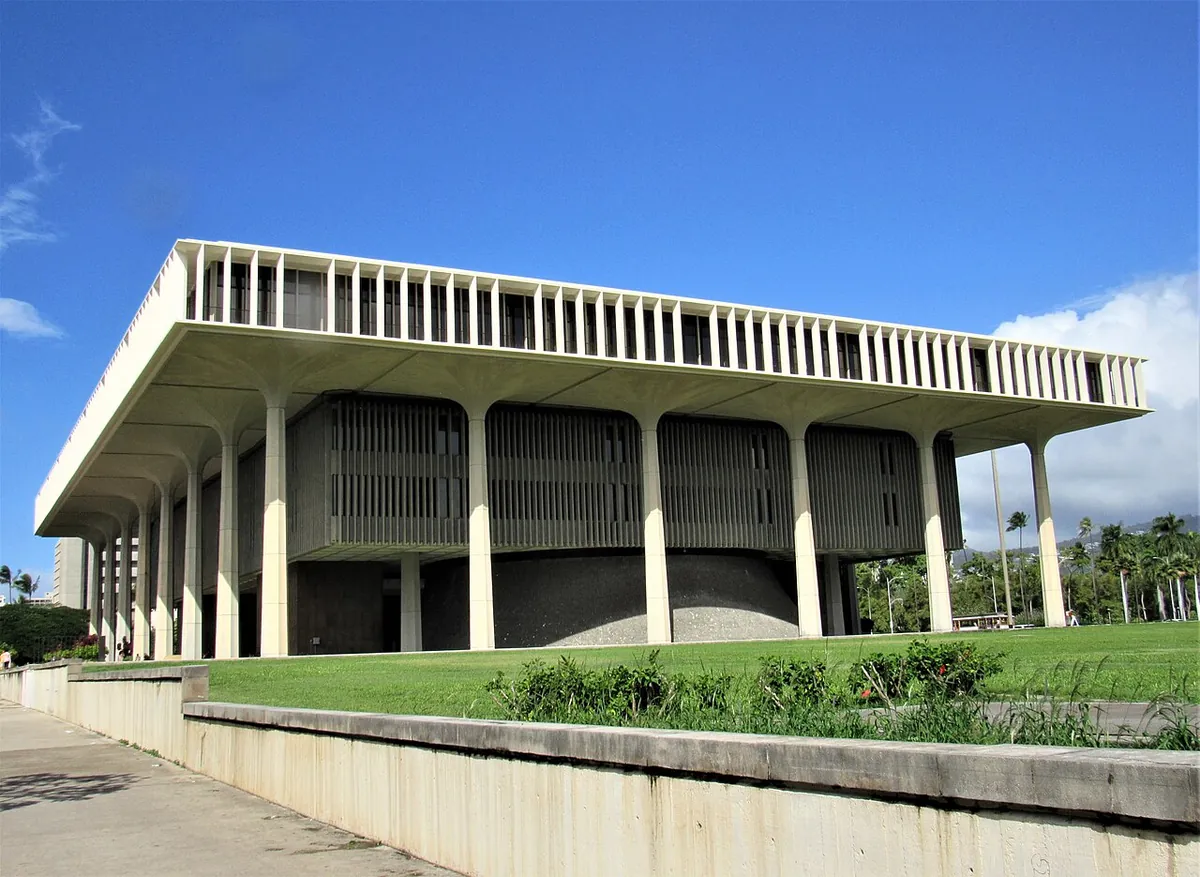
The Honolulu pre-1900 commercial-and-institutional heritage corridor is operationally distinctive against the rest of the state. Iolani Palace (1882, the only royal residence on US soil and the operationally distinctive heritage building in Hawaii), Hawaii State Capitol (1969 modernist), Kawaiahao Church (1842, original-glazing-retention modest), Aliiolani Hale (1874), and the Chinatown Historic District pre-1900 commercial concentration anchor the institutional heritage book. Conservation-grade pacing required on the Iolani Palace and Kawaiahao Church original-glazing retention. The Chinatown commercial heritage stock at Maunakea Street, Hotel Street, and Nuuanu Avenue carries pre-1900 brick-and-stone commercial heritage with reasonable original-glass survival.
Joint Base Pearl Harbor-Hickam and Marine Corps Base Hawaii institutional commercial concentration on Oahu is substantial. Federal-facility procurement-grade chemistry-handling protocol. Same handling framework documented for Norfolk, San Diego, and Jacksonville military-base commercial corridors.
Windward Oahu commercial through Kailua and Kaneohe operates on heavier biofilm-and-organic-residue loading. Same handling framework as Pacific Northwest coastal pattern at parallel intensity. Continuous wet-surface conditions through windward winter (November through March) support biofilm formation on residential glass. Extended alkaline-soap dwell plus selective citric-rinse handling on the worst-affected stock. North Shore Oahu residential (Haleiwa, Kahuku, Sunset Beach) operates on similar pattern at lower density.
The post-2000 production-residential expansion through West Oahu (Kapolei, Ewa Beach, Makakilo) produces post-2000 coated-glass IGU concentration on the production-residential stock. Standard chemistry-handling baseline.
Maui, the Wailea–Kapalua Corridor, and Lahaina Reconstruction
Maui carries the most operationally distinctive ultra-luxury second-home corridor in Hawaii. The Wailea, Kapalua, Kaanapali, and Makena corridor through South and West Maui anchors a substantial post-2000 ultra-luxury second-home commercial-and-residential book — Wailea Resort, Four Seasons Maui, Grand Wailea, Andaz Maui, Kapalua Bay Hotel, Ritz-Carlton Kapalua, and the surrounding gated and resort-adjacent residential concentration run on hospitality-procurement-grade chemistry-and-pacing standards. The pricing baseline on the Maui ultra-luxury second-home corridor runs parallel to what Drew Giordano documents for the Aspen and Snowmass luxury second-home framework and parallel to what is documented for Jackson Hole — substantially elevated on Mountain West and Pacific Northwest continental luxury baselines.
The 2023 Lahaina wildfire substantially destroyed the pre-1900 Front Street commercial heritage corridor that had served as the historical anchor of pre-1900 commercial heritage in West Maui. Lahaina had been the capital of the Kingdom of Hawaii from 1820 to 1845 before Honolulu, and the Front Street commercial corridor carried pre-1900 wood-frame and pre-1900 coral-block commercial heritage at substantial density before the fire. The Waiola Church (1832, Hawaii's oldest western church), Lahaina Hongwanji Mission (1910), Wo Hing Temple Museum (1912), Baldwin Home Museum (1834), Old Lahaina Courthouse (1859), the Banyan Tree (planted 1873), and the surrounding pre-1900 commercial-and-residential heritage concentration substantially burned in the August 2023 fire.
The post-fire reconstruction commercial book through Lahaina runs 2024-2026 and continues. Reconstruction commercial activity through West Maui and the surrounding Maui residential and commercial corridors carries elevated post-construction cleaning workload (drywall-dust residue, construction-mineral residue, post-painting residue) plus elevated standard-cleaning workload as the recovery commercial-residential builds out. Operators serving West Maui through the reconstruction cycle have substantially elevated demand and substantially elevated logistics-and-pricing complexity. The pre-1900 heritage-restoration handling protocol on the few surviving pre-1900 structures (Waiola Church reconstruction, Lahaina Hongwanji Mission survival, scattered residential) requires conservation-grade pacing on the cylinder-glass-glazed and pre-1900 wood-sash glazing.
Kahului and Wailuku Central Maui commercial-and-institutional concentration anchors the Maui institutional commercial book. Maui Memorial Medical Center, University of Hawaii Maui College, Maui County Courthouse heritage (Wailuku Courthouse 1907), and the Kahului high-rise hospitality concentration anchor the standing commercial book through the recovery period. Iao Valley heritage tourism and Bailey House Museum (1833) heritage commercial at Wailuku.
Upcountry Maui residential through Pukalani, Makawao, Kula, and Olinda carries cool-and-temperate residential heritage at elevation (2,000-3,500 ft above sea level on Haleakala's western slope). Upcountry residential outside municipal distribution runs on mixed-aquifer well-water that no utility reports. Iron-and-manganese fraction on some well-water residential. Same chemistry-verification protocol as Mountain West rural ranching residential.
Hana East Maui residential carries pre-1900 small-town heritage commercial-and-residential at modest density. Continuous precipitation pattern through Hana coast supports parallel biofilm-residue framework to Kauai windward and Big Island Hilo-side. Routing premium pricing on Hana service because of the Hana Highway logistics constraint.
Big Island: Kona, Hilo, and the Vog Residue Overlay
The Big Island carries the widest operating variation of any Hawaii county. Kona-side dry-coast luxury hospitality through the Waikoloa-Kohala resort corridor runs on a fundamentally different operating book than Hilo-side wet-coast commercial through the Hilo town center and surrounding windward residential. The continuous Kilauea-and-Mauna-Loa volcanic outgassing produces vog residue that is the single most operationally distinctive contaminant in the state and runs across both sides of the island at variable intensity dependent on wind direction.
The Kona-side luxury hospitality corridor through Waikoloa, Mauna Kea, Mauna Lani, and Hualalai anchors a substantial luxury-hospitality commercial book. Four Seasons Resort Hualalai, Mauna Kea Beach Hotel, Mauna Lani Auberge, Waikoloa Beach Marriott, Hilton Waikoloa Village, and the surrounding luxury second-home and timeshare residential concentration run on hospitality-procurement-grade chemistry-and-pacing standards. Pricing baseline parallel to Maui Wailea-Kapalua at substantial intensity.
The Hilo-side wet-coast commercial book runs on continuous-rainfall biofilm-residue protocol. Hilo averages 130 inches annual precipitation — among the highest in any incorporated US city. Hilo Downtown heritage commercial through Kalakaua Park and the surrounding Banyan Drive heritage commercial concentration carries pre-1900 wood-frame commercial heritage at modest-to-meaningful density. Tsunami-rebuild commercial concentration through the post-1946 and post-1960 Hilo waterfront rebuild stock. Standard handling framework with extended alkaline-soap dwell plus selective citric-rinse handling on biofilm-affected residential.
The vog residue overlay is the single most operationally distinctive contaminant in Hawaii and is the framework reference point for downwind volcanic-particulate handling in the corpus. Kilauea outgassing has run continuously since 1983 with variable intensity, and the May 2018 lower-Puna eruption substantially elevated vog-residue loading through Puna District (Pahoa, Leilani Estates, Kapoho) plus elevated loading across Kona-side residential and commercial through trade-wind-cycle dispersal patterns. Chemistry: sub-10-micron particulate with substantial sulfate-ester fraction (sulfur dioxide and sulfate-aerosol composite). The handling framework is parallel to what is documented for Aleutian volcanic-ash residue on Alaska Cook Inlet and Aleutian-arc residential, with the operating distinction that Hawaii vog runs chronic and continuous rather than episodic. Extended alkaline-soap dwell (8-12 minute pre-treatment) plus citric-rinse handling on facility-adjacent and downwind residential. Wet-rinse-first protocol on heaviest-affected commercial.
The 2018 lower-Puna eruption rebuilding pattern through Pahoa and Leilani Estates continues. Substantial post-2018 reconstruction commercial concentration plus post-2018 standard-residential cleaning workload through Puna District. Same recovery-commercial framework as the Maui post-Lahaina reconstruction at lower intensity.
Waimea (Kamuela) and the Saddle Road corridor carries Parker Ranch heritage commercial and substantial post-2000 production-residential concentration. Parker Ranch (founded 1847, among the largest cattle ranches in the country) anchors the Waimea heritage commercial book. Upcountry Waimea residential at elevation (2,600-3,000 ft) operates on cooler-and-temperate residential pattern with substantial post-2000 luxury second-home concentration.
The Volcano Village residential and commercial corridor adjacent to Hawaii Volcanoes National Park operates on substantial vog-residue loading from continuous Kilauea outgassing plus continuous precipitation-fed biofilm-residue loading at elevation. Heaviest single combined contaminant loading in the state.
Kauai and the Mount Waialeale Rainforest Pattern
Kauai (the Garden Isle) carries the heaviest sustained rainforest pattern in Hawaii. Mount Waialeale at the center of the island carries among the highest annual precipitation totals on Earth (450+ inches annually at the summit), and the windward residential corridor through Hanalei, Princeville, Wainiha, Haena, Anahola, and Kapaa runs continuous precipitation (75-90 inches annually) supporting parallel biofilm-residue framework to Southeast Alaska rainforest and Olympic Peninsula rainforest at substantial intensity.
The chemistry-handling baseline is the standard alkaline-soap protocol with substantial biofilm-residue-handling emphasis on windward residential.
The Princeville and Hanalei North Shore luxury second-home corridor anchors the operationally distinctive luxury commercial book on Kauai. Substantial post-2000 ultra-luxury second-home residential through Princeville, Hanalei Bay, and the surrounding North Shore residential concentration. Pricing baseline parallel to Maui Wailea-Kapalua at substantial intensity, with the operating distinction that the continuous-rainfall residue-handling baseline runs heavier than on the Maui leeward South-Shore-and-West-Maui resort corridor.
The Poipu South Shore hospitality corridor anchors the standard luxury hospitality commercial book on the dry-side leeward Kauai. Grand Hyatt Kauai, Koa Kea Hotel, Sheraton Kauai, and the surrounding Poipu condominium-and-resort residential. Standard hospitality-procurement-grade chemistry-and-pacing protocol.
Lihue and the Eastside commercial book through Kapaa, Wailua, and Lihue anchors the standing Kauai commercial-and-residential workload. Lihue carries pre-1900 plantation-era commercial heritage at modest density through Rice Street and the surrounding Lihue Town corridor. Wilcox Memorial Hospital institutional commercial. Kauai County Courthouse heritage. Kauai Community College institutional commercial.
The Hanapepe and Waimea pre-1900 sugar-plantation heritage commercial corridor on the Westside anchors the operationally distinctive pre-1900 commercial heritage on Kauai. Hanapepe Old Town pre-1900 commercial heritage at meaningful density. Waimea pre-1900 plantation-era commercial-and-residential heritage. Captain Cook landing site (1778) heritage commercial. The Russian Fort Elizabeth (1815-1817, ruins) heritage site. Substantial conservation-grade pacing required on the surviving pre-1900 wood-frame commercial stock.
The Na Pali Coast and Kalalau Valley rural North Shore residential beyond Haena carries off-grid and limited-access residential concentration. Routing-and-logistics premium substantial. Helicopter-and-boat access on Kalalau Valley residential.
The continuous-rainfall biofilm-residue pattern through windward Kauai requires substantial extended alkaline-soap dwell plus selective citric-rinse handling on the worst-affected stock. Same handling framework as Southeast Alaska rainforest pattern at parallel intensity, with the operating distinction that the Hawaii loading runs continuous through the year rather than seasonal.
Universal Chloride-Aerosol Overlay and Frame Corrosion
The universal chloride-aerosol overlay is the operationally distinctive Hawaii pattern against the rest of the state corpus. Hawaii is the only state where every property sits within twenty miles of saltwater, and trade-wind atmospheric distribution carries marine aerosol continuously across all four major inhabited islands. The jet-droplet-and-film-droplet chloride-aerosol transport mechanism JoAnn Giordano documents in the salt-spray-and-coastal-window-cleaning encyclopedia entry operates continuously through the Hawaii calendar rather than seasonally.
Chloride aerosol loading at Hawaii first-row beachfront residential runs at substantially higher intensity than Gulf Coast first-row beachfront residential. The continuous trade-wind cycle (April through October typically, with substantial trade-wind activity outside that window) plus continuous warm marine surface temperatures plus continuous elevated relative humidity (year-round 65-85 percent typical at coastal residential) supports continuous chloride aerosol generation and continuous reactivation through hygroscopic-deliquescence cycling on residential glass and frame hardware.
Cleaning interval cadence on Hawaii residential runs shorter than Gulf Coast baseline because of the continuous-loading pattern. First-row beachfront windward residential typically runs 4-6 week cleaning intervals (compared with Gulf Coast first-row 4-8 weeks). First-row leeward residential typically runs 6-8 week intervals. Quarter-mile inland windward typically runs 8-10 weeks. Quarter-mile inland leeward typically runs 10-12 weeks. Half-mile inland and further typically runs 12-16 weeks. Operators serving Hawaii residential coastal stock can substantially elevate recurring-revenue commercial-and-residential book volume on the compressed cleaning-interval cadence.
Aluminum-frame corrosion at Hawaii first-row coastal residential runs at substantially higher intensity than Gulf Coast equivalent. The continuous chloride loading plus continuous elevated humidity plus continuous warm temperature drives accelerated pitting-corrosion and white-bloom-corrosion through aluminum frame and hardware. Service life on unprotected anodized-aluminum window frame at Hawaii first-row coastal residential typically runs substantially shorter than Gulf Coast equivalent — 8-12 year service life typical compared with Gulf Coast 12-18 year service life under parallel exposure. The wet-rinse-first protocol on chloride-loaded residential is non-negotiable on first-row beachfront stock to prevent abrasive grinding of chloride-and-mineral particulate against the frame anodization and the glass coating.
The substrate-specific notes on impact-glazed residential and stainless hardware that JoAnn Giordano documents apply at higher intensity across Hawaii residential coastal stock. Post-1992 impact-glazed coastal residential through Oahu, Maui, Big Island, and Kauai resort-and-luxury corridors runs at substantial density and requires the standard impact-glazing chemistry-handling baseline. Stainless hardware on luxury second-home residential coastal stock requires conservation-grade pacing on the chloride-pitting handling.
The Aleutian salt-spray chloride-aerosol pattern that runs at the substantially higher intensity on the Aleutian Islands residential operates at parallel intensity to Hawaii first-row coastal at the operating extreme, with the operating distinction that the Aleutian pattern runs through continuous fog-and-rain weather rather than the Hawaii continuous trade-wind cycle.
Year-Round Production, Inter-Island Logistics, and Heritage Stock
Hawaii is the only state in the corpus with year-round production calendar and no winter dormancy. Wet-and-dry seasons exist (November through March runs wetter statewide, April through October runs drier on the leeward sides), but neither stretch effectively shuts down exterior work. Recurring-revenue commercial-and-residential book structure on Hawaii operates on continuous-cycling cleaning interval through the year rather than the compressed production-window-and-winter-shutdown cycle that operates across the rest of the corpus. Crew scheduling, equipment maintenance cycling, and commercial contract structure carry substantial difference from continental West Coast practice.
The trade-wind cycle (typically April through October peak, with continuous activity through most of the year) drives the operational scheduling. Trade-wind activity supports faster drying-tail on residential and substantially reduces the spot-and-streak risk on heavier-mineral-load residential. Kona-winds (November through March, on leeward sides) drive the wet-season disruption and the wettest stretch of the operating calendar. Vog-residue dispersal patterns on the Big Island and downwind Maui residential follow the trade-wind-and-Kona-wind cycle.
Inter-island operating logistics drive the substantial Hawaii operator pricing premium against the West Coast cost basis. Inter-island operators serving multiple islands carry substantial inter-island routing premium pricing on equipment-and-supply movement. Hawaiian Airlines, Southwest Airlines, and Mokulele Airlines inter-island air-cargo and inter-island ferry service (where operating) on equipment-and-supply movement. Multi-day routing on single inter-island commercial properties is routine on the larger commercial accounts. Pricing has to reflect the logistics-and-routing reality, not the West Coast continental cost basis. Same logistics-and-pricing reality framework as the bush Alaska premium at lower intensity.
The Iolani Palace (1882, the only royal residence on US soil) heritage commercial concentration is the operationally distinctive heritage building in Hawaii. Conservation-grade pacing required on the surviving original-glazing retention. Kawaiahao Church (1842) original-glazing retention modest, conservation-grade pacing on what survives. Aliiolani Hale (1874) and the surrounding Honolulu Downtown pre-1900 commercial-and-institutional heritage corridor.
The Chinatown Historic District pre-1900 commercial heritage corridor at Honolulu runs along Maunakea Street, Hotel Street, North King Street, and Nuuanu Avenue. Pre-1900 brick-and-stone commercial heritage at meaningful density with reasonable original-glass survival. Conservation-grade pacing on the surviving pre-1900 wood-sash and pre-1900 cylinder-glass-glazed commercial stock. Heritage-restoration handling protocol on cylinder-glass-glazed stock at routine standard.
The post-2023 Lahaina reconstruction commercial corridor runs through 2024-2026 and continues. Substantial reconstruction commercial concentration at substantial demand and substantial logistics-and-pricing complexity. Pre-1900 heritage-restoration protocol on the few surviving pre-1900 structures.
The Big Island pre-1900 heritage commercial corridor through Hilo Downtown, Kalakaua Park, Banyan Drive, Holualoa, and Waimea-Kamuela. Modest pre-1900 commercial heritage density with substantial post-1946-and-post-1960 tsunami-rebuild commercial through Hilo waterfront.
The Kauai pre-1900 sugar-plantation heritage commercial through Hanapepe Old Town, Waimea, and Koloa anchors the operationally distinctive pre-1900 commercial heritage on Kauai. Modest-to-meaningful density with substantial conservation-grade pacing requirement on surviving wood-frame plantation-era commercial.
What I Tell Crews About Working This State
The single most important Hawaii-specific operating reality is the universal continuous chloride-aerosol overlay. Compress cleaning intervals shorter than Gulf Coast baseline on first-row beachfront stock. The wet-rinse-first protocol on chloride-loaded residential is non-negotiable. Aluminum-frame corrosion on first-row coastal stock runs at substantially higher intensity than Gulf Coast equivalent and substantially shortens service life on unprotected anodized-aluminum frame and hardware. Build the residential-coastal recurring-revenue book on the compressed cleaning-interval cadence — the volume opportunity on Hawaii residential coastal recurring-revenue is substantial against the West Coast continental baseline.
The Big Island vog residue overlay is the operationally distinctive contaminant in the state and is the framework reference point for downwind volcanic-particulate handling in the corpus. Sub-10-micron particulate with substantial sulfate-ester fraction. Extended alkaline-soap dwell (8-12 minute pre-treatment) plus citric-rinse handling on facility-adjacent and downwind residential. Wet-rinse-first protocol on heaviest-affected commercial. Same chemistry-handling framework as Aleutian volcanic-ash residue on Alaska at parallel intensity, with the Hawaii vog operating distinction running chronic and continuous rather than episodic.
The Maui ultra-luxury second-home corridor through Wailea, Kapalua, and Kaanapali parallels the framework Drew Giordano documents for Aspen and what is documented for Jackson Hole at substantial intensity. Hospitality-procurement-grade chemistry-and-pacing standards. Pricing baseline substantially elevated on Mountain West and Pacific Northwest continental luxury baselines. The post-2023 Lahaina reconstruction commercial corridor through 2024-2026 continues — substantially elevated demand and substantially elevated logistics-and-pricing complexity.
The Kauai windward residential continuous-precipitation biofilm-residue pattern through Hanalei, Wainiha, and Haena runs at parallel intensity to Southeast Alaska rainforest. Extended alkaline-soap dwell plus selective citric-rinse handling on the worst-affected stock. The Princeville and Hanalei North Shore luxury second-home corridor anchors the operationally distinctive luxury commercial book on Kauai.
The year-round production calendar with no winter dormancy is operationally distinctive against the rest of the corpus. Build recurring-revenue commercial-and-residential book structure on continuous-cycling cleaning interval rather than the compressed production-window-and-winter-shutdown cycle. Crew scheduling, equipment maintenance cycling, and commercial contract structure all carry substantial difference from continental West Coast practice.
Inter-island operating logistics drive substantial Hawaii operator pricing premium. Multi-day routing on single inter-island commercial properties is routine. Pricing has to reflect the logistics-and-routing reality, not the West Coast continental cost basis. Same logistics-and-pricing reality framework as the bush Alaska premium at lower intensity.
Iolani Palace and the surrounding Honolulu Downtown pre-1900 institutional heritage corridor, plus the surviving Chinatown Historic District pre-1900 commercial heritage at Honolulu, plus the few surviving pre-1900 Lahaina heritage structures (Waiola Church, Lahaina Hongwanji Mission), plus the Kauai pre-1900 sugar-plantation heritage commercial through Hanapepe Old Town and Waimea, all require conservation-grade pacing and heritage-restoration handling protocol.
For broader Pacific Northwest and far-North context, the Alaska, Washington, Oregon, and California state pages cover the chemistry and seasonal frameworks adjacent to Hawaii. For the operating protocols themselves, the article on salt spray and coastal window cleaning covers the universal chloride-aerosol overlay framework that runs at substantially higher intensity statewide, the article on historic window glass restoration covers the Iolani Palace, Chinatown Historic District, and Kauai pre-1900 plantation-era heritage handling, and the article on etched glass or surface deposits covers the mineral residue on Kona-side and Upcountry Maui glass. Cross-references for technique: what is actually on your windows, foggy windows, how to wash a window properly.
The big cities, in numbers
Honolulu Board of Water Supply Pearl Harbor aquifer-and-mixed supply. Densest post-1960 high-rise residential concentration in the state through Waikiki and Ala Moana corridor. Iolani Palace (1882, only royal residence on US soil). Chinatown Historic District pre-1900 commercial heritage at meaningful density. Hawaii State Capitol (1969). Waikiki hospitality commercial book on hospitality-procurement-grade standards.
Windward Oahu distribution on Honolulu Board of Water Supply. Substantially heavier biofilm-and-organic-residue loading than leeward South Shore from heavier windward rainfall (40-60 inches annually). Lanikai and Kailua Beach luxury residential. Marine Corps Base Hawaii institutional commercial.
County of Hawaii DWS Wailuku River and precipitation-fed surface supply. Averages 130 inches annual precipitation — among the highest in any incorporated US city. Continuous-rainfall biofilm-residue protocol. Pre-1900 Downtown commercial heritage at modest-to-meaningful density. Post-1946 and post-1960 tsunami-rebuild commercial concentration along waterfront.
County of Hawaii DWS Hualalai aquifer-source supply. Pre-1900 Downtown commercial heritage at modest density through Alii Drive corridor. Substantial luxury hospitality commercial concentration through Kohala Coast resort corridor — Four Seasons Resort Hualalai, Mauna Kea Beach Hotel, Mauna Lani Auberge, Waikoloa Beach Marriott. Hospitality-procurement-grade standards.
Maui DWS Central Maui mixed-aquifer supply. Maui County Courthouse heritage (Wailuku Courthouse 1907). Bailey House Museum (1833) heritage commercial. Iao Valley heritage tourism. Maui Memorial Medical Center institutional commercial. University of Hawaii Maui College.
Maui DWS South Maui aquifer-source supply. Substantial post-2000 ultra-luxury second-home residential through Wailea and Makena. Wailea Resort, Four Seasons Maui, Grand Wailea, Andaz Maui hospitality-procurement-grade commercial book. Pricing baseline parallel to Aspen and Jackson Hole at substantial intensity.
Maui DWS West Maui aquifer-source supply. Post-2023 wildfire reconstruction commercial concentration through 2024-2026 continues. Pre-1900 Front Street heritage corridor substantially destroyed in August 2023 fire. Surviving heritage: Waiola Church (1832 reconstruction), Lahaina Hongwanji Mission (1910). Kaanapali and Kapalua ultra-luxury second-home corridor — Ritz-Carlton Kapalua, Kapalua Bay Hotel.
Kauai Department of Water Lihue Basin mixed supply. Pre-1900 plantation-era commercial heritage at modest density through Rice Street. Wilcox Memorial Hospital institutional commercial. Kauai County Courthouse heritage. Kauai Community College. Kauai county seat commercial book.
Kauai DOW Eastside mixed supply. Substantial moderate-density residential. Coconut Coast hospitality commercial book. Wailua River heritage tourism. Continuous trade-wind-and-windward residue loading.
Kauai DOW North Shore precipitation-fed supply. Substantial post-2000 ultra-luxury second-home residential at substantial density. Continuous-precipitation biofilm-residue pattern (75-90 inches annually) parallel to Southeast Alaska rainforest. Pricing baseline parallel to Maui Wailea-Kapalua at substantial intensity.
Kauai DOW South Shore supply. Grand Hyatt Kauai, Koa Kea Hotel, Sheraton Kauai hospitality commercial. Koloa pre-1900 plantation-era heritage commercial. Standard hospitality-procurement-grade chemistry-and-pacing.
County of Hawaii DWS Saddle Road corridor mixed supply. Parker Ranch heritage commercial (founded 1847, among the largest cattle ranches in the country). Upcountry residential at elevation 2,600-3,000 ft. Substantial post-2000 luxury second-home concentration. Cool-and-temperate residential pattern.
Dedicated city pages in Hawaii
Each city page carries its own water profile, neighborhood breakdown, cost range, and city-specific operating notes.
Rules for high-rise and rope-access window work
Hawaii runs its own OSHA-approved program for private employers, which must be at least as effective as federal OSHA. The federal benchmark for rope work is 29 CFR 1910.27: owner-certified anchors rated to 5,000 pounds, gear checked every shift, a separate fall-arrest line for each worker, and no rope descent in storms or gusty wind.
OSHA, State Plans: which states run their own programs · OSHA 29 CFR 1910.27: Scaffolds and rope descent systems · checked September 2026 · How we check local rules
What lands on the glass
| CONTAMINANT | SEASON | SEVERITY |
|---|---|---|
| Universal continuous chloride-aerosol residue | year-round statewide | high statewide, very high on first-row coastal |
| Only state where every property sits within twenty miles of saltwater. Trade-wind atmospheric distribution carries marine aerosol continuously across all four islands at substantially higher intensity than Gulf Coast pattern. Cleaning intervals compressed shorter than Gulf Coast baseline (first-row windward 4-6 weeks, leeward 6-8 weeks). Wet-rinse-first protocol non-negotiable on first-row beachfront stock. Same handling framework JoAnn Giordano documents for Gulf Coast at substantially higher intensity, with the operating distinction that Hawaii loading is continuous rather than seasonal. | ||
| Big Island vog residue (continuous volcanic outgassing) | year-round on Big Island and downwind Maui residential | high on Big Island statewide, medium-to-high on downwind Maui |
| Continuous Kilauea outgassing since 1983, May 2018 lower-Puna eruption awareness, Mauna Loa activity monitoring. Sub-10-micron particulate with substantial sulfate-ester fraction (sulfur dioxide and sulfate-aerosol composite). Extended alkaline-soap dwell (8-12 minute pre-treatment) plus citric-rinse handling on facility-adjacent and downwind residential. Wet-rinse-first protocol on heaviest-affected commercial. Same chemistry-handling framework as Aleutian volcanic-ash residue at parallel intensity, with the operating distinction that Hawaii vog runs chronic and continuous rather than episodic. | ||
| Kauai windward and Hilo-side continuous-precipitation biofilm residue | year-round on windward residential statewide | high on Kauai North Shore and Hilo-side Big Island |
| Mount Waialeale 450+ inches annually at summit, Hanalei-Wainiha-Haena windward residential 75-90 inches annually, Hilo 130 inches annually, Kailua-Kaneohe windward Oahu 40-60 inches annually. Continuous wet-surface conditions support biofilm formation on glass. Extended alkaline-soap dwell plus selective citric-rinse handling. Same handling framework as Pacific Northwest coastal pattern and Southeast Alaska rainforest pattern at parallel intensity. | ||
| Aluminum-frame corrosion (coastal) | year-round on first-row coastal residential statewide | very high on first-row beachfront, high on quarter-mile inland coastal |
| Continuous chloride loading plus continuous elevated humidity plus continuous warm temperature drives accelerated pitting-corrosion and white-bloom-corrosion through aluminum frame and hardware. Service life on unprotected anodized-aluminum 8-12 years typical at first-row coastal against Gulf Coast 12-18 years equivalent. Wet-rinse-first protocol non-negotiable. Stainless hardware on luxury second-home coastal residential requires conservation-grade pacing on chloride-pitting handling. | ||
| Tropical-foliage organic residue | year-round statewide | medium statewide |
| Continuous tropical-foliage growth and year-round leaf-and-pollen residue cycling produces continuous low-intensity organic residue loading. No seasonal pollen-wave concentration parallel to continental pattern. Standard alkaline-soap protocol sufficient on most residential. | ||
| Hurricane-and-tropical-storm post-event residue | June through November awareness window | episodic, high in active-event years |
| Hurricane Iniki (1992 Kauai direct hit) is the operating reference event. Hurricane Lane (2018 Big Island near-pass) substantially elevated post-event cleaning workload. Tropical-storm post-event residue carries elevated chloride-and-debris composite. Wet-rinse-first protocol on post-event statewide. | ||
| Wildfire-related residue (Maui post-Lahaina) | episodic on West Maui and surrounding Maui | high in 2023-2024 post-fire window through Lahaina-adjacent |
| August 2023 Lahaina wildfire substantially destroyed pre-1900 Front Street commercial heritage corridor. Post-fire reconstruction commercial concentration through 2024-2026 continues. Reconstruction-cleaning workload includes drywall-dust residue, construction-mineral residue, post-painting residue plus elevated standard-cleaning workload as recovery commercial-residential builds out. | ||
| Kona-side and Upcountry Maui mineral residue | year-round on Kona-side Big Island and Upcountry Maui residential | medium-to-high on Kona-side and Upcountry residential |
| County of Hawaii DWS Hualalai aquifer supply at Kailua-Kona and surrounding Kohala Coast. Maui DWS Upcountry supply at Pukalani, Makawao, Kula. Extended citric pre-treatment plus citric-rinse finish where a test pane shows heavy scale. Some Upcountry Maui well-water residential outside municipal distribution carries iron-and-manganese fraction parallel to Mountain West rural ranching residential. | ||
The year, in seasons
April through May runs the transition from wet to dry on the leeward sides. Trade-wind cycle stabilizing. No spring rush stretch parallel to continental US pattern — production calendar continuous year-round. Recurring-revenue commercial-and-residential book steady.
June through October runs the dry stretch on the leeward sides — production peak on leeward residential and commercial. Windward sides continue heavier biofilm-residue handling. Hurricane-and-tropical-storm awareness window June through November.
September through November runs the transition back to wet on leeward sides. Trade-wind cycle continues. Hurricane-and-tropical-storm awareness window continues. Windward sides continue heavily wet.
November through March runs the wet stretch statewide. Kona-winds (south-and-west-trending winds) drive the wettest stretch of the operating calendar on leeward sides. Vog-residue dispersal on Big Island and downwind Maui follows Kona-wind cycle. No exterior work shutdown — production continues year-round. Whale-watching tourism commercial peak November through April. Year-round production calendar with no winter dormancy is operationally distinctive against rest of corpus.
The articles that matter most for Hawaii
Common questions about window cleaning in Hawaii
How hard is the water in Hawaii?+
None of the Hawaii utilities we cover publishes a hardness figure we could read, so we have no measured number to give. As a planning estimate only, municipal supplies here fall around 60–220 mg/L (CaCO₃). Ask your utility for its report.
When is the best time of year to clean windows in Hawaii?+
In Hawaii, the working operator's calendar typically favors fall — september through november runs the transition back to wet on leeward sides. trade-wind cycle continues. hurricane-and-tropical-storm awareness window continues. windward sides continue heavily wet. For a full seasonal breakdown, see the cleaning calendar section on this page.
How much does window cleaning cost in Hawaii?+
Residential window cleaning in Hawaii typically runs $8–18 per pane or $200–500 for a standard single-family house exterior, depending on metro pricing, story height, screen condition, and frame type. Use our cost estimator for a calibrated quote for your home.
Why do my windows look dirty so quickly in Hawaii?+
The dominant residue problem in Hawaii is universal continuous chloride-aerosol residue (year-round statewide). Only state where every property sits within twenty miles of saltwater. Trade-wind atmospheric distribution carries marine aerosol continuously across all four islands at substantially higher intensity than Gulf Coast pattern. Cleaning intervals compressed shorter than
Do I need a professional to clean my windows in Hawaii?+
Single-story homes with accessible glazing can be cleaned by homeowners using basic squeegee technique and the right solution. Multi-story houses, post-2010 coated glass, hard-water markets, and screens-plus-tracks work usually pay for themselves with a professional. See our hiring checklist below.
What's special about cleaning windows in Hawaii's climate?+
Continuous chloride-aerosol overlay statewide year-round (operationally distinctive). Big Island vog residue continuous from Kilauea outgassing (chronic). Kauai windward continuous-precipitation biofilm-residue (75-90 inches annually on residential corridor, 450+ inches annually at Mount Waialeale summit). Hilo 130 inches annual precipitation. Hurricane-and-tropical-storm aware
Where can I find a window cleaner in Honolulu, Hawaii?+
Honolulu is the largest market in Hawaii and has the deepest concentration of professional window-cleaning services. Our "Find a Cleaner" page takes waitlist sign-ups while the local pro directory is built; meanwhile, read the Honolulu section of this page for the city-specific water and cleaning context.
Easton Giordano
Editorial team contributor covering the Pacific Northwest and broader West Coast beat. Articles bylined by Easton are researched and reviewed in collaboration with the Giordano Inc. editorial team and informed by interviews with practicing window-washing operators in the region, plus published materials-science and trade references.
READ MORE BY EASTON GIORDANO →