Window Washing in Kansas: A Wheat-Belt Operator's Field Guide
PUB. MAY 11, 2026
Four of the five covered Kansas utilities publish in the hard band, and Kansas City's Missouri River supply is extremely hard. Wichita Water Department draws from Cheney Reservoir and the Equus Beds aquifer. Topeka Water draws the Kansas River and Lake Sherwood. Lawrence runs the Kansas River. Western Kansas wheat-belt municipals and rural well supply run on Ogallala and Dakota aquifer groundwater.
- How Kansas Works in Practice
- The Wheat-Belt Fertilizer Drift and Harvest Dust Calendar
- Wichita Aviation-Industry Commercial and the Cheney Reservoir Profile
- Western Kansas Wind-Erosion Soil Deposition
- The KC Metro Kansas-Side and the Overland Park Corporate Ring
- Topeka, Lawrence, and the Eastern Kansas University-Town Belt
- The Mid-Summer Flash-Evaporation Heat Load
- What I Tell Crews About Working This State
Need a window cleaner in Kansas?
We're building a local pro directory. Join the free waitlist.
By Jan Davenport, for the Midwest and Great Lakes beat at Window Washing Guide
How Kansas Works in Practice
The covered Kansas cities run from Overland Park at a published 144 mg/L (hard) to Kansas City at a published 300 mg/L (extremely hard), and the wheat-belt wells publish nothing at all. Wichita Water draws from Cheney Reservoir and the Equus Beds aquifer and delivers municipal supply at a published 150 mg/L (hard). Topeka sits at a published 154 mg/L (hard).
The chemistry is one of three working problems that define Kansas operating. The second is the agricultural-drift seasonal pattern that runs heavier than the Iowa corn-belt version because the wheat-belt crop calendar produces both a spring fertilizer-and-herbicide drift wave (April-May) and a distinct June-July harvest dust wave that the corn-belt does not have at the same intensity. The third is the mid-summer flash-evaporation heat load — western Kansas afternoon temperatures regularly exceed 95 degrees Fahrenheit and south-facing glass surface temperatures exceed 130 degrees by noon, which means cleaning solution flash-evaporates before the squeegee crosses the glass.
The state runs as three working markets. The Kansas City metro Kansas-side — Overland Park, Olathe, Lenexa, Shawnee, plus the inner-ring KCK municipalities — operates as a Kansas City suburban market with WaterOne supply, Overland Park at a published 144 mg/L (hard) and Olathe at a published 180 mg/L (hard), and the substantial post-1985 corporate-office and high-end-residential book that has built up southwest of the river over the past four decades. The Wichita metro plus the eastern Kansas university towns (Lawrence, Topeka, Manhattan, Emporia) operate as a second corridor with hard-water chemistry and mixed pre-1925 heritage residential plus post-1985 production-suburban. And western Kansas — Salina west through Hays, Garden City, Liberal, Dodge City — operates as a wheat-belt agricultural-and-small-town market with no published hardness figure, the heaviest seasonal agricultural drift, and the most extreme working-temperature constraints in the state.
The notes that follow draw on interviews with operators in each of these markets, plus published Wichita Water Department, WaterOne, and Kansas Department of Health and Environment water-quality references.
The Wheat-Belt Fertilizer Drift and Harvest Dust Calendar
The Kansas agricultural calendar produces three distinct seasonal contaminant patterns on residential and small-commercial glass, and the state's operators need to understand all three to plan their working calendar properly.
The first is the spring fertilizer-and-herbicide drift wave, which runs from approximately April 1 through late May and overlaps with the spring pollen wave in eastern Kansas. The chemistry is similar to the Iowa nitrate-and-atrazine wave I described in the Iowa piece — atmospheric deposition of nitrogen-based fertilizer compounds and pre-emergence herbicides applied across the wheat-belt acreage that defines most of central and western Kansas. The deposition appears as a faint brown-yellow film on east-facing residential glass and produces the same wet-rinse-first cleaning protocol that the Iowa wave requires. Skip the wet pre-rinse, go straight to soap-and-scrub, and you spread the residue rather than lifting it.
The intensity in western Kansas is heavier than the Iowa intensity because the wheat-belt agricultural footprint is more dominant relative to non-agricultural land use, and the prevailing wind delivers material from very large agricultural acreage with minimal urban or forest buffering. The Iowa wave is heavy in agricultural-adjacent residential. The Kansas wave is heavy almost everywhere outside the immediate Wichita-Topeka-KC urban cores.
The second seasonal pattern is the June-July wheat-harvest dust wave, which is the heaviest single seasonal contaminant in the state. The wheat harvest runs from approximately June 15 through July 25 across most of Kansas, with the southwestern counties starting earlier and the northwestern counties finishing later. The combine activity across millions of acres produces a dry, fibrous, statically-charged dust composed of broken wheat stalks, chaff, and fine soil particulate that deposits on residential glass throughout the wheat-belt counties. The protocol is the same dry-brush pre-clear before any wet cleaning that I described for the Iowa corn-and-soybean harvest handling — wet contact spreads the static-charged dust rather than lifting it.
The third pattern, distinct to the western Kansas wheat-belt, is the wind-erosion soil deposition that occurs during dry stretches throughout the summer growing season. When wheat-belt soil dries out in the absence of summer rain, the prevailing summer winds (often 15 to 25 mph in the afternoon across western Kansas) lift fine soil particulate from harvested fields and fallow-acreage and deposit it on residential glass in the surrounding agricultural-and-small-town counties. The deposition is heavy in dry years, light in wet years, and unpredictable enough that crews working western Kansas have to plan for the worst case. The 2011 through 2014 drought years produced documentation of wind-erosion deposition intensities not seen since the 1930s Dust Bowl years, and the operators who worked western Kansas through those years adjusted their protocols substantially.
The compound effect of these three patterns is that a western Kansas residential property may need cleaning every six to ten weeks through the summer to maintain customer expectations of clean glass, with the cleaning protocol shifting between wet-rinse-first (spring drift), dry-brush pre-clear (harvest dust), and dry-brush pre-clear plus extended wash (wind-erosion soil) depending on the calendar date and the recent rainfall pattern. The crews that work this market long-term diagnose the deposition pattern on arrival and adjust the protocol to the specific contamination present rather than running a uniform calendar protocol.
Wichita Aviation-Industry Commercial and the Cheney Reservoir Profile
Wichita runs the largest commercial-cleaning book in the state, anchored by the aviation-industry headquarters and manufacturing concentration. Spirit AeroSystems (the major aerostructures manufacturer), Textron Aviation (Cessna and Beechcraft), Bombardier Learjet, and the supporting aerospace-supplier network produce a substantial industrial-and-headquarters commercial book with both manufacturing-facility maintenance contracts and headquarters-office quarterly maintenance.
The aerospace-industry procurement culture produces longer-term contracts than typical Midwest commercial work, with substantial documentation requirements (insurance, OSHA training records, foreign-object-debris protocols on manufacturing-facility work, security clearances on certain Spirit AeroSystems and defense-related accounts) that operators need to maintain to bid the work.
The defining residential characteristic of the Wichita metro is the pre-1925 College Hill, Riverside, and Delano heritage residential pockets. These neighborhoods carry early-twentieth-century craftsman, prairie-style, and colonial revival residential at moderate density with original wood sash and original divided-light glazing on the better-preserved blocks. The original-glass survival rate runs 25 to 40 percent on the better blocks — material but not exceptional. The conservation calculus is the same as the Des Moines Sherman Hill or KC Hyde Park heritage work. The pricing supports the pacing.
The post-1985 east-side Wichita production-suburban — Bel Aire, Andover, Derby, Goddard — operates on standard residential protocol with the Wichita Water hard-chemistry adjustment.
Extended citric pre-treatment (3 to 5 minutes), alkaline-soap wash, citric-rinse finish on the worst-affected windows.
Western Kansas Wind-Erosion Soil Deposition
Western Kansas — the counties west of roughly the I-135 corridor, running from Salina west through Hays, Russell, Hoxie, and out to the Colorado line — operates as a distinct agricultural-and-small-town market with chemistry and seasonal patterns that the rest of the state's protocols do not address.
None of those towns is a covered city with a published figure; test every new property.
The protocol on these properties is extended citric pre-treatment (5 to 7 minutes), citric-rinse finish as standard practice rather than spot application, and customer pricing that reflects the longer cleaning time. The cleaning takes substantially longer per window than a Wichita or KC property — typically 1.5 to 2 times the duration — and the customers on these properties typically know their water is hard and accept the pricing structure.
The wind-erosion soil deposition is the working environmental constraint that the operators new to western Kansas underestimate. In a dry summer, east-facing and south-facing residential glass can carry visible brown soil film within two weeks of a cleaning. The protocol is dry-brush pre-clear before any wet cleaning, with the working operator accepting that visit frequency on residential maintenance accounts may need to run every six to eight weeks rather than the eight-to-twelve-week interval that would apply in a non-erosion environment.
The 2011 through 2014 drought period produced wind-erosion intensities that some operators described as comparable to historical accounts of the 1930s Dust Bowl — the residential cleaning routes in the worst-affected counties were running at twice the typical seasonal frequency, and several long-established small-town operators retired or shifted to other work because the operating conditions were unsustainable. The pattern has moderated since 2015 but has not gone away.
The mid-summer working-temperature constraint in western Kansas is severe. Afternoon temperatures regularly exceed 95 degrees Fahrenheit from late June through late August, and south-facing glass surface temperatures regularly exceed 130 degrees by noon. The single most useful schedule adjustment crews make is working east-facing exposures in the morning, north-facing exposures at midday, and west-facing and south-facing exposures in the late afternoon or early evening when the surface has cooled. The flash-evaporation problem at midday is real — solution evaporates before the squeegee crosses the glass on the worst-exposed surfaces — and operators who try to push through it produce streak patterns that require a second wash.
The western Kansas small-town residential market is geographically dispersed and lower-density than the eastern Kansas urban markets, with one- and two-person operations dominating the working trade. The crews that work this corner full-time typically combine the window-washing work with pressure-washing, gutter-cleaning, and other exterior maintenance services to make the residential book economically viable at lower density.
The KC Metro Kansas-Side and the Overland Park Corporate Ring
The Kansas City metro Kansas-side runs as a substantial corporate-office and high-end-residential market anchored by the post-1985 build-out of Overland Park, Olathe, Lenexa, and Shawnee in northeast Johnson County. WaterOne supplies most of this corridor; Overland Park sits at a published 144 mg/L (hard).
The Overland Park corporate-office concentration has produced one of the more interesting Midwest post-1985 commercial environments. The Overland Park Convention Center area, the College Boulevard corporate corridor, and the surrounding post-2000 mid-rise office stock carry substantial coated-glass IGU on quarterly maintenance contracts. The contract structure is more relationship-driven than the Wichita aerospace book but still longer-term than typical Midwest commercial — Sprint's former headquarters campus (now T-Mobile, after the 2020 merger) anchors a significant commercial heritage book that includes substantial pre-2000 corporate-office stock with the operating patterns of a major-corporate procurement environment.
The KCK municipalities — Strawberry Hill, Argentine, and the broader pre-1925 KCK working-class heritage residential — carry pre-1925 immigrant-heritage residential at modest density (Croatian heritage in Strawberry Hill, Mexican heritage in Argentine, plus the broader pre-1925 working-class stock). The conservation considerations are real on the better-preserved blocks but the original-glass survival rates run lower than the comparable KC Missouri-side Westport or Hyde Park heritage (typically 15 to 30 percent versus 30 to 45 percent on the Missouri side).
The Kansas Speedway and the surrounding post-2000 commercial redevelopment around the speedway and the Village West shopping district carry standard contemporary commercial on quarterly maintenance.
Topeka, Lawrence, and the Eastern Kansas University-Town Belt
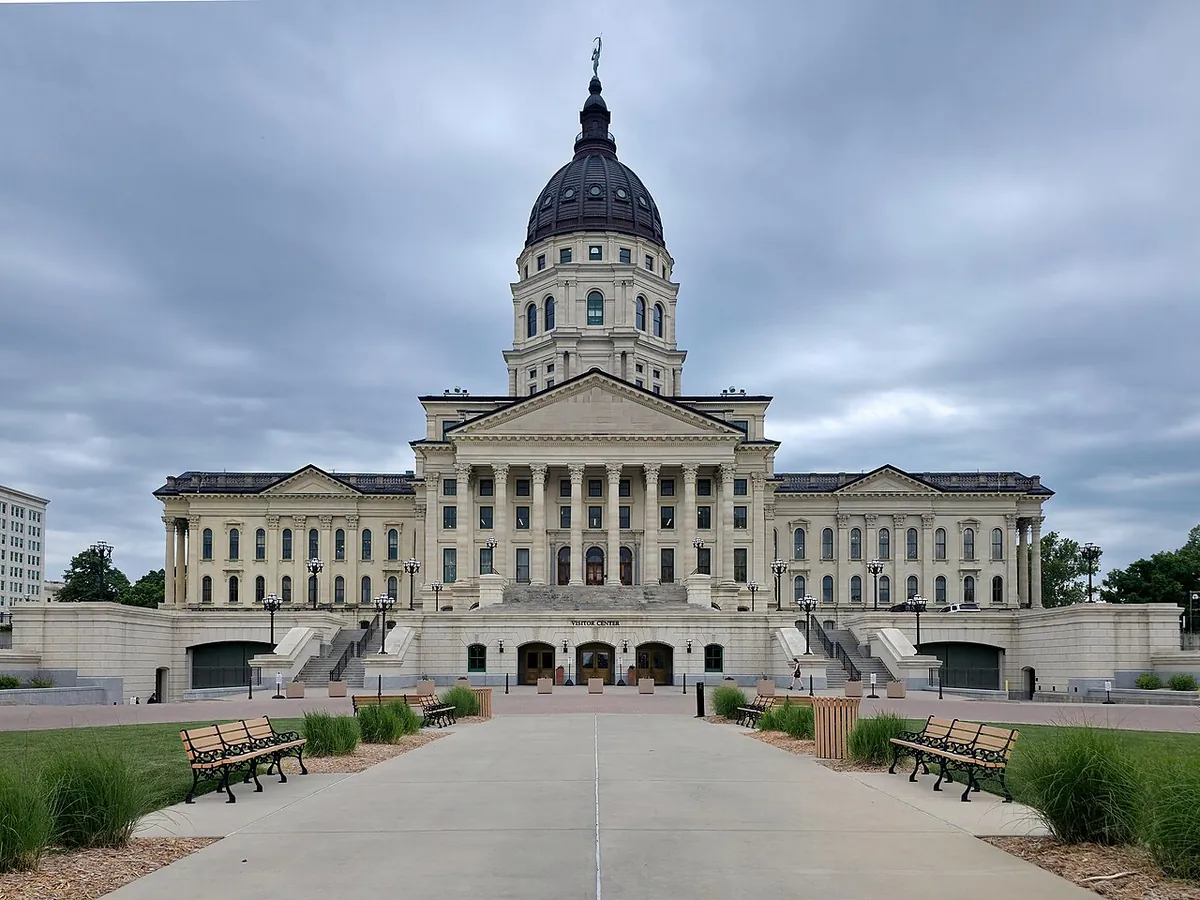
Topeka runs as the state capital with a small heritage residential concentration in Westboro and College Hill, plus the state capitol grounds heritage. The chemistry handles on extended alkaline-soap dwell plus citric finish. The Brown v. Board of Education National Historic Site (Monroe Elementary School, the focus of the 1954 Supreme Court decision) is a designated heritage landmark with significant pre-1925 institutional heritage glass.
Lawrence runs as a Kansas River corridor university town anchored by the University of Kansas. The chemistry handles on standard alkaline-soap protocol with light citric finish.
The defining residential characteristic of Lawrence is the pre-1925 Old West Lawrence and East Lawrence heritage residential. Old West Lawrence in particular contains pre-1900 residential at meaningful density with substantial original-glass survival on the better-preserved blocks. The pre-Civil-War survival is sparse but real — Quantrill's Raid in August 1863 destroyed much of the pre-1863 town, but a small number of pre-Raid buildings survived (the Watkins Community Museum building dates to 1888 but stands on a pre-1863 foundation). The post-Raid reconstruction-era pre-1900 stock is the dominant heritage layer and operates on standard pre-1900 heritage protocol.
The University of Kansas campus heritage glass on the older campus buildings is on a specialty conservation calendar. Strong Hall, Dyche Hall, and the surrounding pre-1900 campus carry institutional heritage glazing comparable to the University of Iowa or University of Missouri heritage I described in those pieces.
Manhattan operates similarly with Kansas State University as the anchor and the Aggieville commercial district plus surrounding pre-1925 residential. Emporia, Pittsburg, and the smaller eastern Kansas university towns operate as smaller versions of the same university-town pattern.
The post-1985 production-suburban around Topeka, Lawrence, and Manhattan operates on standard residential protocol with a citric finish, Topeka sitting at a published 154 mg/L (hard).
The Mid-Summer Flash-Evaporation Heat Load
The Kansas mid-summer heat load deserves its own section because it shapes the working calendar across the state in a way that does not apply in any other state I cover east of the Mississippi. From mid-June through late August, afternoon temperatures regularly exceed 95 degrees in central and western Kansas and frequently exceed 100 degrees in the wheat-belt counties west of Hays. South-facing glass surface temperatures exceed 130 degrees by noon. The flash-evaporation problem at these temperatures is real and unavoidable — cleaning solution evaporates on contact with the glass surface before the squeegee crosses, producing solution-streak patterns that require a second pass.
The working answer is schedule adjustment. East-facing exposures get worked in the morning before the sun crosses to the south. North-facing exposures get worked at midday when surface temperatures are lowest on those orientations. West-facing and south-facing exposures get worked in the late afternoon or early evening after the peak heat has passed. Pre-6-AM and post-7-PM working stretches in the worst summer weeks are standard practice in western Kansas.
The chemistry adjustment is to use cooler solution. Distilled water cooled in a chest cooler on the truck (the same protocol that Jerry Davenport documents for central Texas) extends the working time before flash-evaporation begins by enough to make the worst summer afternoons workable. Some operators run pre-cooled deionized water on water-fed pole systems for the same reason.
The pricing adjustment is to recognize that summer-month production rates drop measurably — typically 20 to 30 percent below spring or fall rates on residential — and that pricing structures should reflect the slower per-day throughput rather than the per-window-equivalent rate.
The hospitality book at the worst summer stretch slows down because customers themselves often leave for cooler destinations. Residential bookings drop into July. The commercial book stays steady but the working-day length shifts to early morning and late afternoon.
What I Tell Crews About Working This State
A few things any operator running Kansas should internalize:
Overland Park, at a published 144 mg/L, is the lowest covered figure in the state. Extended citric pre-treatment (5 to 7 minutes on the worst wells), citric-rinse finish as standard practice, and customer pricing that reflects the longer cleaning time.
The wheat-belt seasonal pattern produces three distinct contaminant waves — spring fertilizer-and-herbicide drift (April-May), June-July wheat-harvest dust, and summer wind-erosion soil deposition. Each requires a different protocol. Wet-rinse-first for the spring drift. Dry-brush pre-clear for the harvest dust and the wind-erosion soil.
The tornado-alley spring scheduling reality is real and unavoidable. Build flexibility into the April-through-June calendar. Plan for booking-day cancellations and reschedules. The crews that work this market long-term build slack into the spring schedule that crews in non-tornado-alley states do not need.
The mid-summer flash-evaporation heat load defines the working calendar from mid-June through late August. East-facing morning, north-facing midday, west-facing and south-facing late afternoon or evening. Cooler solution. Pre-6-AM and post-7-PM working stretches. The summer-month production-rate drop is real and pricing should reflect it.
The Overland Park corporate-office concentration produces a substantial post-1985 commercial book that is not technically distinctive but is contract-stable and rate-supportive. Most of this work is held by a small number of regional commercial operators with established procurement relationships.
The Wichita aerospace-industry commercial book carries documentation requirements (security, FOD protocols, OSHA records) that operators need to maintain to bid the work.
The eastern Kansas university-town heritage residential — Lawrence Old West Lawrence, Topeka Westboro, Manhattan around campus — deserves heritage protocol on pre-1900 original-glass properties. The pre-1863 Quantrill's Raid survival is sparse but real on the Lawrence side.
Western Kansas requires local operators with long-term relationships and seasonal experience. The wind-erosion patterns, the well-water chemistry, the geographic dispersion, and the mid-summer working constraints are all easier to handle if you have worked them for years than if you have just rolled in from Wichita or KC.
For broader Midwest and central-plains context, the Iowa, Missouri, and Texas state pages cover the chemistry frameworks that bracket Kansas on three sides. For the operating protocols themselves, the article on the test that tells etching from deposits covers the core hard-water chemistry, the article on streaks come back overnight covers the bicarbonate-residue-redeposition problem that Kansas supply produces, and the article on foggy windows that will not clear covers the IGU-seal-failure pattern that the western Kansas thermal-cycling stress accelerates. Cross-references for technique: washing a window properly, the glass types reference, historic window glass restoration.
The big cities, in numbers
Wichita Water Cheney Reservoir and Equus Beds. Pre-1925 College Hill, Riverside, and Delano heritage residential pockets. Aviation-industry commercial (Spirit AeroSystems, Textron Aviation, Bombardier Learjet). Post-1985 east-side production-suburban dominant.
WaterOne supply. Kansas City metro southwest-suburb. Post-1985 production-suburban dominant. Post-2000 corporate-office park concentration. Limited heritage stock.
Board of Public Utilities Missouri River-source. Pre-1925 Strawberry Hill and Argentine heritage residential. Kansas Speedway and post-2000 redevelopment commercial. Croatian and Mexican immigrant heritage residential.
Olathe Water. Kansas City metro southwest-suburb. Post-1990 production-suburban dominant. Limited pre-1925 heritage core.
Topeka Water. State capital. Pre-1925 Westboro and College Hill heritage residential. Post-1985 capitol-district commercial. Brown v. Board National Historic Site.
Lawrence Water Kansas River. University of Kansas campus heritage. Pre-1925 Old West Lawrence and East Lawrence heritage residential. Pre-1900 Civil War heritage (Quantrill's Raid 1863 reconstruction).
Manhattan Water Tuttle Creek Reservoir. Kansas State University campus heritage. Aggieville commercial district. Flint Hills surrounding rural well-water.
Salina Water. Pre-1900 heritage downtown. Smoky Hill River corridor. Surrounding wheat-belt agricultural.
Dedicated city pages in Kansas
Each city page carries its own water profile, neighborhood breakdown, cost range, and city-specific operating notes.
Rules for high-rise and rope-access window work
Private window work in Kansas is under federal OSHA, because the state runs no OSHA plan of its own. For rope access that means 29 CFR 1910.27: the building owner certifies each anchor in writing to 5,000 pounds, the rig is inspected every shift, every worker has an independent fall-arrest line, and descents over 130 feet need stabilization at the work spot.
OSHA, State Plans: which states run their own programs · OSHA 29 CFR 1910.27: Scaffolds and rope descent systems · checked September 2026 · How we check local rules
What lands on the glass
| CONTAMINANT | SEASON | SEVERITY |
|---|---|---|
| Wheat-belt fertilizer-and-herbicide spring drift | April through May | high statewide, heaviest western and central Kansas |
| Springtime atmospheric deposition of nitrogen-based fertilizer and pre-emergence herbicides applied across millions of wheat-belt acres. Produces brown-yellow film on east-facing residential glass. Wet-rinse-first protocol — same handling as the Iowa nitrate-runoff wave but heavier in western Kansas. | ||
| Wheat-harvest dust wave (June-July) | mid-June through late July | high statewide, heaviest western Kansas |
| Wheat harvest produces fine, dry, fibrous dust that deposits on residential glass throughout the wheat-belt counties. Dry-brush pre-clear before any wet cleaning, comparable to the Iowa corn-and-soybean harvest handling. Statewide phenomenon but heaviest in western Kansas where wheat is the dominant crop. | ||
| Western Kansas wind-erosion soil dust | May through August on dry-stretch days | high in western Kansas counties |
| Wind-erosion soil deposition during dry stretches produces heavy brown film on east-facing and south-facing residential glass. Dry-brush pre-clear required. The 2011-2014 drought years produced documentation of this pattern at intensities not seen since the 1930s Dust Bowl years. | ||
| Ogallala-aquifer well-water mineral | year-round on well-water properties | high across western and central Kansas |
| Ogallala and Dakota aquifer groundwater, with substantial calcium-carbonate and magnesium-bicarbonate fractions plus iron-and-manganese on some properties. Extended citric dwell (5-7 minutes) required. The single most useful chemistry adjustment is the extended pre-treatment. | ||
| Mid-summer flash-evaporation heat load | June through August | high statewide, extreme western Kansas |
| Not a contaminant but a working constraint. Mid-summer afternoon temperatures regularly exceed 95°F in western Kansas and 90°F statewide, and the south-facing glass surface temperatures exceed 130°F by noon. Solution flash-evaporates before squeegee crosses glass. Schedule eastern exposures morning, northern exposures midday, western and southern exposures late afternoon or evening. | ||
| Spring pollen wave (oak, elm) | mid-April through early May | medium-high in eastern Kansas, light in western Kansas |
| Wet-only handling. Elm and oak pollen heaviest in Wichita, Topeka, Lawrence, and KC. Western Kansas pollen-load light due to limited deciduous canopy. | ||
The year, in seasons
Mid-March through May is the heaviest booking pressure of the year, with substantial weather-related disruption from tornado activity. Pollen wave drives eastern Kansas residential surge through April. Wheat-belt fertilizer-and-herbicide drift wave heavy April-May statewide. Pre-Memorial-Day residential rush.
June through August is production window with substantial mid-summer flash-evaporation scheduling adjustment required. Wheat-harvest dust wave June-July is the heaviest single seasonal event. Wichita and KC metro commercial work steady. Western Kansas markets see substantial wind-erosion soil deposition in dry years.
September through early November is the cleanest production stretch statewide. Pre-Thanksgiving residential rush concentrated. Western Kansas wind-erosion may extend into November in dry years. KU football season drives Lawrence residential surge weekends.
December through February is mostly interior-only for residential statewide. Wichita and KC metro commercial interior work is the off-season backbone. Western Kansas and small-town markets go substantially quiet.
The articles that matter most for Kansas
Border states with their own guides
Land-adjacent states each get their own water-and-window profile. If you're working a regional route or moving across the border, these are the natural next reads.
Common questions about window cleaning in Kansas
How hard is the water in Kansas?+
The five utilities we cover in Kansas that publish hardness report 144 to 300 mg/L (as CaCO₃). The middle of those cities sits near 154 mg/L, which is hard, meaning municipal water consistently leaves visible mineral spots and requires acid-rinse protocols on long-residence glass. Each city page gives its own utility's figure.
When is the best time of year to clean windows in Kansas?+
In Kansas, the working operator's calendar typically favors fall — september through early november is the cleanest production stretch statewide. pre-thanksgiving residential rush concentrated. western kansas wind-erosion may extend into november in dry years. ku football season drives lawrence residential surge weekends. For a full seasonal breakdown, see the cleaning calendar
How much does window cleaning cost in Kansas?+
Residential window cleaning in Kansas typically runs $8–18 per pane or $200–500 for a standard single-family house exterior, depending on metro pricing, story height, screen condition, and frame type. Use our cost estimator for a calibrated quote for your home.
Why do my windows look dirty so quickly in Kansas?+
The dominant residue problem in Kansas is wheat-belt fertilizer-and-herbicide spring drift (April through May). Springtime atmospheric deposition of nitrogen-based fertilizer and pre-emergence herbicides applied across millions of wheat-belt acres. Produces brown-yellow film on east-facing residential glass. Wet-rinse-first protocol — same handling as the Iowa nitrate-runoff wa
Do I need a professional to clean my windows in Kansas?+
Single-story homes with accessible glazing can be cleaned by homeowners using basic squeegee technique and the right solution. Multi-story houses, post-2010 coated glass, hard-water markets, and screens-plus-tracks work usually pay for themselves with a professional. See our hiring checklist below.
What's special about cleaning windows in Kansas's climate?+
Tornado activity highest in any state I cover — central tornado-alley defines spring-and-early-summer scheduling. Severe thunderstorms statewide. Wind-erosion dust events on dry-stretch days statewide. Heavy snowfall events possible December-February. Ice storms. These conditions shape what a cleaner needs to know about scheduling, technique, and timing. The cleaning calendar o
Where can I find a window cleaner in Wichita, Kansas?+
Wichita is the largest market in Kansas and has the deepest concentration of professional window-cleaning services. Our "Find a Cleaner" page takes waitlist sign-ups while the local pro directory is built; meanwhile, read the Wichita section of this page for the city-specific water and cleaning context.
Jan Davenport
Editorial team contributor covering the Midwest and Great Lakes beat. Articles bylined by Jan are researched and reviewed in collaboration with the Giordano Inc. editorial team and informed by interviews with practicing window-washing operators in the region, plus published trade and small-business operations references.
READ MORE BY JAN DAVENPORT →