Window Washing in Rhode Island: A Narragansett Bay Operator's Field Guide
PUB. MAY 11, 2026
Most of Rhode Island runs on Providence Water's Scituate Reservoir or supply interconnected with it, and Providence, Cranston and East Providence all describe their water as soft. The working problem is not the water. It is the maritime exposure on coastal stock and the substantial pre-1800 colonial heritage concentration in Newport, Providence, and the broader Narragansett Bay corridor.
- How Rhode Island Works in Practice
- The Newport Pre-1800 Colonial and Gilded Age Mansion Concentration
- Providence College Hill and the Brown-and-RISD Campus Heritage
- The Open-Atlantic Coastal Salt Profile
- Federal Hill, Fox Point, and the Providence Inner-Ring
- The Blackstone Valley Mill Heritage Corridor
- Block Island as a Separate Market
- What I Tell Crews About Working This State
Need a window cleaner in Rhode Island?
We're building a local pro directory. Join the free waitlist.
By Abby Giordano, for the Northeast and New England beat at Window Washing Guide
How Rhode Island Works in Practice
Rhode Island is the smallest state I cover and one of the more distinctive working environments in the Northeast for two reasons that have nothing to do with size. First, the state contains an unusually high concentration of pre-1800 colonial residential heritage glass — Newport and College Hill in Providence together carry one of the densest pre-Revolutionary glazing survivals in the country, with original-glass survival rates on the best-preserved blocks comparable to Charleston, Annapolis, and the better Boston historic pockets. Second, Newport's Gilded Age mansion concentration on Bellevue Avenue and Ocean Drive — The Breakers, Marble House, The Elms, Rosecliff, plus dozens of surrounding mansion-era estates — represents some of the most significant residential heritage glass in the United States, much of it still privately owned and still cleaned on a regular schedule.
The water chemistry is genuinely simple. Providence Water draws from Scituate Reservoir and delivers municipal supply that Providence Water itself describes as soft. Most of Rhode Island operates on Providence-connected supply or similar small-system supply at uniformly soft hardness. Standard alkaline-soap-only protocols produce streak-free results across the state. The chemistry is not the working problem.
The working problems are the heritage protocol, the open-Atlantic salt-aerosol exposure on coastal stock, and the extreme seasonal compression around Newport's summer season. The state runs as three operating markets: Providence and the inner-ring (Pawtucket, Cranston, East Providence) on the heritage-and-municipal-residential book; Newport and the coastal corridor on heritage-and-tourism work; and the Blackstone Valley and western Rhode Island on mill-heritage and residential work.
The notes that follow draw on interviews with operators in each of these markets, plus published Providence Water Supply Board data and Newport Preservation Society heritage-glass conservation references.
The Newport Pre-1800 Colonial and Gilded Age Mansion Concentration
Newport carries two distinct heritage residential concentrations that the working operator should treat as separate categories. The first is the pre-1800 colonial residential — the Point neighborhood, the Hill neighborhood, the streets around Touro Synagogue and the Brick Market, plus scattered properties throughout the historic core. These properties carry pre-Revolutionary residential at exceptional density, with original wood sash, original divided-light glazing including substantial pre-1800 crown glass survival on the most preserved properties, and original-glass survival rates that justify museum-grade heritage protocols on the better-preserved blocks. Touro Synagogue, completed in 1763, is the oldest synagogue building in continuous use in North America. The Wanton-Lyman-Hazard House dates to roughly 1697. The Brick Market dates to 1772. The cleaning protocols on these properties are conservation-grade — water-fed pole or hand-detail technique only, no scraping under any circumstances, no abrasive media, extended dwell times on alkaline-soap pre-treatment (4 to 6 minutes), test inconspicuous areas before working main facades.
The second concentration is the Gilded Age mansion stock along Bellevue Avenue and Ocean Drive, built primarily between 1880 and 1920 as summer residences for the major industrial and financial fortunes of the late 19th and early 20th centuries. The Breakers (1895), Marble House (1892), The Elms (1901), Rosecliff (1902), Chateau-sur-Mer (1852, expanded substantially through the 1880s), Belcourt Castle, Beechwood, and the dozens of surrounding mansion-era estates carry heritage glass that varies in age from the 1850s through the 1920s, with substantial original-glass survival on the landmark properties.
The major mansions that are now museum properties operated by the Preservation Society of Newport County are cleaned on dedicated heritage-protocol service by specialty operators with established preservation-community relationships. The private mansions — and there are many — that remain in private ownership are typically cleaned by a small number of specialty residential operators with the same conservation expertise. The pricing on this work runs at the highest residential rates in New England and probably the highest residential rates outside the most expensive Greenwich and Manhattan accounts.
The single most distinctive technical feature of Newport Gilded Age work is the handling of the leaded-and-stained glass that runs through many of the mansion-era properties. Tiffany leaded glass, La Farge stained glass, and substantial Tiffany Studios commissions are present on multiple Bellevue Avenue and Ocean Drive properties, and the cleaning protocols on these specialty glazings differ from standard residential heritage work. The lead came (the lead strip that holds individual glass pieces in a stained-glass panel) is structurally fragile and chemically sensitive to alkaline-soap exposure at the dwell times that standard protocols use. The protocol on leaded-and-stained glass is typically dry-dust-and-careful-detail rather than wet wash, with wet protocols only on the non-leaded panes around the leaded centers. Operators who do not understand this distinction can produce structural damage to lead came in a single visit. The crews that hold long-term Newport mansion accounts have specific Tiffany-and-stained-glass protocols and document them carefully.
The Bellevue Avenue and Ocean Drive properties also carry substantial open-Atlantic salt-aerosol exposure on south-facing exposures, which is addressed in the next section.
Providence College Hill and the Brown-and-RISD Campus Heritage
Providence College Hill is the second great Rhode Island heritage concentration and one of the densest pre-1800 colonial residential survivals in the country. The streets running up from the Providence River to the top of College Hill — Benefit Street in particular, plus George, Power, Williams, John, and the surrounding network — carry pre-Revolutionary residential at exceptional density. Benefit Street has been called the "mile of history" and the descriptor is accurate. Original wood sash, original divided-light glazing, original-glass survival rates on the better blocks running 45 to 60 percent, and pre-1800 crown glass survival on the most-preserved properties.
The conservation calculus is the same as Newport — water-fed pole or hand-detail technique only, no scraping, no abrasive media, extended dwell times, test inconspicuous areas. The pricing supports the conservation pacing. The crews that hold long-term Benefit Street and surrounding accounts tend to be specialty operators with established preservation-community relationships.
The Brown University and Rhode Island School of Design campuses overlay much of College Hill, and the institutional heritage glass on the older campus buildings represents some of the older institutional glazing in continuous use in the United States. University Hall (Brown, 1770), the John Brown House (1788), the John Carter Brown Library (1904), and the broader pre-1900 Brown campus carry institutional heritage glass on a specialty conservation calendar separate from standard commercial maintenance. RISD's Memorial Hall (1893) and the surrounding pre-1925 campus run similarly.
The First Baptist Church in America (1775) on North Main Street carries some of the older institutional heritage glass in the city. The Athenaeum (1838) on Benefit Street, the Old State House (1762) on Benefit Street, and the surrounding institutional heritage stock all operate on specialty conservation handling.
The Open-Atlantic Coastal Salt Profile
The Rhode Island coastline runs roughly 40 miles along the open Atlantic from Westerly through Narragansett, around Point Judith and through Narragansett Bay, with the Newport oceanfront and the South County beach communities carrying the heaviest open-Atlantic salt-aerosol exposure. The chemistry is comparable to or slightly heavier than the Cape Cod or Long Island Hamptons profile because the prevailing on-shore wind delivers sustained marine aerosol with minimal land-based dilution.
The protocol on south-facing coastal residential is extended alkaline-soap dwell (3 to 4 minutes) plus citric-rinse finish, with monthly visit frequency standard on year-round occupied high-end coastal residential. Newport's Bellevue Avenue and Ocean Drive estate properties combine the heritage protocol with the coastal protocol, which produces extended visit times — a single major Bellevue Avenue mansion can take a careful crew a full day to work properly through both the conservation considerations and the salt-aerosol load.
The South County beach communities — Narragansett Pier, Watch Hill, Misquamicut, Charlestown, South Kingstown — operate on heavily seasonal hospitality-and-second-home work with the same property-management-volume calendar I described for the Connecticut shoreline and the Grand Strand in South Carolina. Pre-Memorial-Day opens, mid-summer turnover, pre-Columbus-Day or pre-Thanksgiving close-outs. The pricing is volume-rate-compressed.
Watch Hill in particular carries a high-end second-home concentration with substantial pre-1900 heritage cottage stock that operates on heritage-protocol logic. The Watch Hill Lighthouse and the surrounding pre-1900 residential carry original-glass survival rates that justify careful handling on the better-preserved properties.
The Narragansett Bay brackish-aerosol exposure on Greenwich Bay, Pawtuxet Cove, and the Mount Hope Bay frontage is lighter than the open-Atlantic load but year-round and meaningful on bay-facing residential. The protocol is similar — extended alkaline-soap dwell, citric-rinse finish on the worst-affected exposures — but the visit frequency runs quarterly rather than monthly on most properties.
Federal Hill, Fox Point, and the Providence Inner-Ring
Beyond College Hill, Providence carries substantial pre-1900 residential heritage in Federal Hill, Fox Point, Wickenden Street, and the broader inner-ring neighborhoods. Federal Hill in particular contains pre-1900 brick and detached residential plus the Italian-immigrant working-class heritage stock that came in with the late-19th-century immigration wave. The conservation considerations are real on the better-preserved blocks but the original-glass survival rates run lower than College Hill (typically 20 to 35 percent on pre-1900 stock) and the heritage protocol is less consistently applied.
Fox Point and Wickenden Street carry pre-1900 working-class residential and the heritage of the Portuguese-immigrant community that settled the area in the late 19th and early 20th centuries. The cleaning approach is standard heritage protocol with the soft Providence Water chemistry.
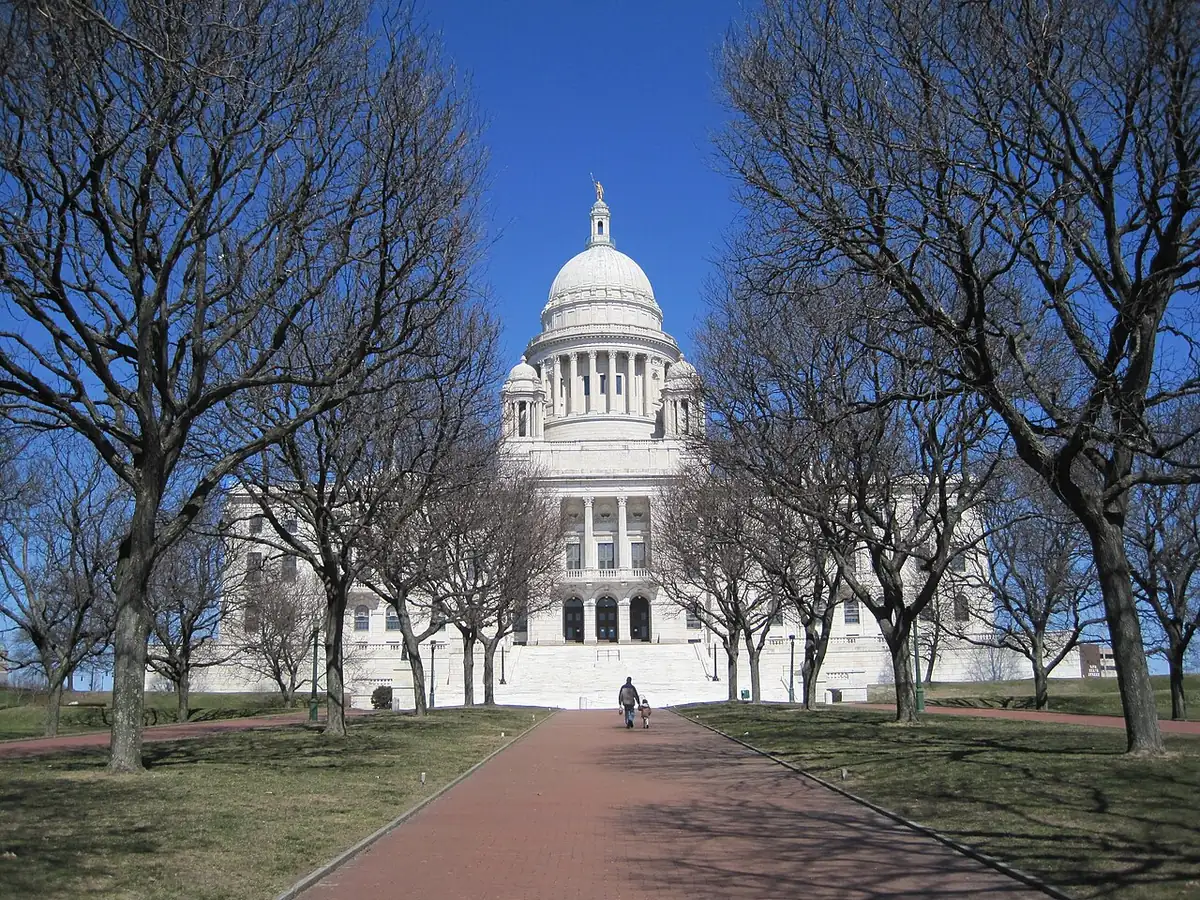
The downtown Providence commercial book is anchored by Brown University and the medical-and-institutional concentration plus a limited post-1985 mid-rise commercial book. The state house grounds and the pre-1900 financial district carry significant institutional heritage. The Providence Place Mall (2000) and the surrounding post-2000 commercial development run as standard contemporary commercial.
Cranston and East Providence operate as inner-ring municipal markets with pre-1900 heritage residential pockets (Edgewood and Pawtuxet Village in Cranston, Riverside in East Providence) and substantial post-1985 production-suburban. Pawtuxet Village in particular carries pre-1700 colonial residential at lower density than Newport or College Hill but with comparable conservation considerations on the best-preserved properties.
The Blackstone Valley Mill Heritage Corridor
Pawtucket and Woonsocket carry pre-1900 mill-and-textile heritage residential and commercial that operates as a distinct working market. Slater Mill in Pawtucket, completed in 1793 as the first water-powered cotton-spinning mill in the United States, is the anchor of the Blackstone Valley industrial-heritage corridor. The surrounding mill-era heritage stock includes worker-housing tenements, mill-master residential, and the pre-1900 commercial Main Streets that grew up around the mill economy.
The conservation considerations on Blackstone Valley mill heritage are different from the Newport and College Hill colonial heritage. The mill stock is later (mostly 1820s through 1900) and the original-glass survival rates are lower (typically 15 to 30 percent on pre-1900 stock) because mill buildings had higher replacement-glazing turnover during the active industrial period. But substantial heritage survival remains on the better-preserved properties, and the conservation calculus matters on Slater Mill itself, on the Wilkinson Mill, on the Capron Mill in Uxbridge, and on the surrounding designated heritage stock.
The working-class residential surrounding the mills carries pre-1900 working-class heritage that operates on standard heritage protocol with the soft Providence Water chemistry. The post-1985 production-suburban that has grown into Pawtucket and Woonsocket since the mid-20th-century deindustrialization runs on standard residential protocol.
Woonsocket carries French-Canadian immigrant heritage residential in addition to the mill heritage — substantial pre-1900 worker-housing built for the Quebec-immigrant textile labor that defined the city's economy from the 1870s through the 1920s.
The Blackstone Valley industrial heritage corridor was designated a National Heritage Corridor in 1986, and the local preservation infrastructure has developed substantially over the four decades since. The operators who hold long-term Blackstone Valley mill-heritage accounts tend to be specialized in industrial-heritage work and have established preservation-community relationships.
Block Island as a Separate Market
Block Island runs as a separate seasonal market with its own operating logic. The island carries pre-1900 fishing-village heritage residential at exceptional density — the Old Harbor and the New Harbor commercial cores plus the surrounding pre-1900 cottage stock represent one of the better-preserved late-19th-century resort-village concentrations in New England. The Southeast Light (1875) and the Northeast Light (1867) are heritage landmarks with significant institutional heritage glass.
The cleaning calendar is extremely seasonal. The summer season runs roughly Memorial Day through Columbus Day with intense hospitality and second-home turnover work concentrated in the peak July and August stretch. The pre-Memorial-Day opens and the post-Columbus-Day close-outs concentrate substantial work into narrow windows. The off-season operates at a small fraction of summer volume.
Block Island runs on well-water on private supply plus Block Island Water Company municipal supply, and the salt-aerosol load is among the heaviest in the state because the entire island is open-Atlantic exposed and there is essentially no inland buffer. Extended alkaline-soap dwell plus citric-rinse finish on south-facing exposures, with monthly or twice-monthly visit frequency during summer on the most-exposed properties.
The crews that work Block Island year-round are typically island-based one- and two-person operations that combine the cleaning work with other property-maintenance services. The mainland crews that work Block Island seasonally do so on dedicated trips and price the work to reflect the ferry-and-equipment-transport overhead.
What I Tell Crews About Working This State
A few things any operator running Rhode Island should internalize:
Providence, Cranston and East Providence all get water their utilities describe as soft. Providence Water and Newport Water produce streak-free results on standard alkaline-soap protocol with minimal citric finish. Operators who carry over-engineered chemistry protocols from harder-water states will produce citric residue on the Providence supply.
The pre-1800 colonial heritage concentrations in Newport (the Point, the Hill, Touro Synagogue area) and Providence (College Hill, Benefit Street) demand conservation-grade protocol. Water-fed pole or hand-detail only. No scraping. No abrasive media. Extended dwell on alkaline-soap pre-treatment. Test inconspicuous areas. The original-glass survival rates (45 to 60 percent on the best blocks) make this protocol non-negotiable.
The Newport Gilded Age mansion concentration on Bellevue Avenue and Ocean Drive carries some of the most significant residential heritage glass in the United States, including substantial Tiffany leaded-and-stained-glass and La Farge work. The protocol on leaded-and-stained glass is dry-dust-and-careful-detail rather than wet wash on the lead-came elements. Operators without specific Tiffany-and-stained-glass training should refer this work rather than attempt it.
The open-Atlantic salt-aerosol exposure on south-facing coastal residential is heavier than the Long Island Sound versions across Connecticut. Extended alkaline-soap dwell, citric-rinse finish, monthly visit frequency on year-round occupied high-end coastal stock.
The Newport summer season produces extreme seasonal compression that operators who do not plan for will fail. Pre-Memorial-Day opens, intense July and August turnover, late-September through October close-outs. The hospitality book runs on volume-rate-compressed pricing and the private residential book pays substantially better.
The Blackstone Valley mill heritage in Pawtucket, Woonsocket, and the surrounding corridor carries pre-1900 industrial-heritage stock that operates on heritage protocol with the soft Providence Water chemistry.
Block Island operates as a separate seasonal market with substantial ferry-and-equipment-transport considerations. Mainland crews should price accordingly.
For broader New England context, the Connecticut, Massachusetts, and New York state pages cover the chemistry frameworks that bracket Rhode Island on three sides. For the operating protocols themselves, the article on restoring historic window glass covers the Newport and College Hill heritage work, the article on coastal window cleaning covers the open-Atlantic coastal work, and the article on the glass types reference covers the leaded-and-stained-glass protocols that Newport's Tiffany work demands. Cross-references for technique: the four stages of a wash, the failed-seal diagnosis, the test that tells etching from deposits.
The big cities, in numbers
Providence Water Scituate Reservoir supply. Federal Hill, College Hill, Fox Point pre-1850 heritage residential at substantial density. Brown University and RISD campus heritage. Pre-1800 colonial residential on College Hill exceptional. Post-1985 downtown mid-rise commercial limited.
Kent County Water Authority connected to Providence supply. Post-1985 production-suburban dominant. T.F. Green airport corridor commercial. Apponaug Village pre-1900 heritage pocket. Greenwich Bay coastal residential.
Providence Water supply. Edgewood and Pawtuxet Village pre-1900 heritage residential pockets. Post-1985 production-suburban substantial. Pawtuxet Cove coastal residential.
Pawtucket Water connected to Providence supply. Pre-1900 mill-industry heritage downtown plus Slater Mill historic district. Surrounding pre-1925 working-class residential.
East Providence Water supply. Pre-1900 historic core plus post-1985 production-suburban. Riverside neighborhood pre-1925 residential pocket.
Woonsocket Water. Pre-1900 textile-industry heritage downtown plus Main Street historic district. French-Canadian heritage residential.
Kent County Water supply. Western Rhode Island residential plus Anthony Mill heritage. Lower-density rural-suburban.
Newport Water. Pre-1800 colonial residential at one of the densest survivals in the country plus 1880s-1920s Gilded Age mansion heritage along Bellevue Avenue and Ocean Drive. Open-Atlantic salt-aerosol exposure on south-facing coastal. Heavily seasonal hospitality book.
Dedicated city pages in Rhode Island
Each city page carries its own water profile, neighborhood breakdown, cost range, and city-specific operating notes.
Rules for high-rise and rope-access window work
Rhode Island has no OSHA-approved state plan, so private window-cleaning firms here work under federal OSHA. Its rope descent rule (29 CFR 1910.27) requires anchors the building owner certifies in writing to 5,000 pounds, gear inspected at the start of every shift, a separate fall-arrest line for each worker, and no descents above 300 feet unless no safer access exists.
OSHA, State Plans: which states run their own programs · OSHA 29 CFR 1910.27: Scaffolds and rope descent systems · checked September 2026 · How we check local rules
What lands on the glass
| CONTAMINANT | SEASON | SEVERITY |
|---|---|---|
| Open-Atlantic salt aerosol (Newport, Narragansett, Watch Hill) | year-round on south-facing coastal stock | high on Newport Bellevue Avenue and Ocean Drive, Narragansett Pier, Watch Hill ocean-block |
| Pure marine aerosol on the open-Atlantic exposures. Heavier than the Long Island Sound versions across the Connecticut shoreline. Extended alkaline-soap dwell plus citric finish. Monthly visit frequency on year-round occupied coastal residential. | ||
| Narragansett Bay brackish aerosol | year-round on bay-side stock | medium-high on Greenwich Bay, Pawtuxet Cove, Mount Hope Bay frontage |
| Brackish-bay aerosol comparable to Chesapeake or Long Island Sound. Cleans with extended alkaline-soap dwell. | ||
| Spring pollen wave (oak, maple) | late April through mid-May | high statewide |
| Wet-only handling. Peak early May. Heavier in inland Rhode Island than coastal due to less wind exposure. Pollen lifts cleanly with water plus light alkaline soap; do not scrape. | ||
| Mill-era industrial heritage residue (Pawtucket, Woonsocket, Providence) | year-round on pre-1925 industrial-corridor commercial | medium on Blackstone Valley and Providence industrial-corridor |
| Legacy industrial particulate on pre-1925 mill-and-textile heritage stock. Standard alkaline-soap with extended dwell handles it. The deposition pattern has decreased substantially since the 1980s deindustrialization. | ||
| Newport mansion heritage glass conservation | year-round on Gilded Age estate stock | high on Bellevue Avenue and Ocean Drive mansion residential |
| Not a contaminant but a conservation consideration. The Breakers, Marble House, The Elms, Rosecliff, and the broader Bellevue Avenue concentration carry pre-1900 and early-1900s heritage glass on landmark properties. Conservation protocols required. | ||
| Maple-leaf-litter tannin staining | late October through mid-November | medium on residential with mature maple canopy |
| Wet maple leaves on white painted sashes produce brown tannin discoloration. Citric pre-treatment required. Heavier in inland Rhode Island than coastal. | ||
The year, in seasons
Mid-March through May is the heaviest booking pressure of the year statewide. Pollen wave drives residential surge through April-May. Newport pre-Memorial-Day mansion-and-cottage opens are the heaviest single booking surge in coastal Rhode Island. Providence and inner-state commercial Q2 contracts.
June through August is the production window. Newport peak season runs through Labor Day with extreme hospitality-and-tourism activity dominating the coastal book. Providence and inland residential book steady. Mid-summer humidity squeeze moderate.
September through early November is the cleanest production stretch statewide. Newport mansion close-out work concentrated late September through October. Pre-Thanksgiving residential rush heavy. Providence commercial Q4 contracts.
December through February is mostly interior-only for residential statewide. Providence commercial interior work is the off-season backbone. Newport off-season substantially quiet but year-round residential continues at lower volume.
The articles that matter most for Rhode Island
Border states with their own guides
Land-adjacent states each get their own water-and-window profile. If you're working a regional route or moving across the border, these are the natural next reads.
Common questions about window cleaning in Rhode Island
How hard is the water in Rhode Island?+
None of the Rhode Island utilities we cover publishes a hardness figure we could read, so we have no measured number to give. As a planning estimate only, municipal supplies here fall around 30–80 mg/L (CaCO₃). Ask your utility for its report.
When is the best time of year to clean windows in Rhode Island?+
In Rhode Island, the working operator's calendar typically favors fall — september through early november is the cleanest production stretch statewide. newport mansion close-out work concentrated late september through october. pre-thanksgiving residential rush heavy. providence commercial q4 contracts. For a full seasonal breakdown, see the cleaning calendar section on this pa
How much does window cleaning cost in Rhode Island?+
Residential window cleaning in Rhode Island typically runs $8–18 per pane or $200–500 for a standard single-family house exterior, depending on metro pricing, story height, screen condition, and frame type. Use our cost estimator for a calibrated quote for your home.
Why do my windows look dirty so quickly in Rhode Island?+
The dominant residue problem in Rhode Island is open-atlantic salt aerosol (newport, narragansett, watch hill) (year-round on south-facing coastal stock). Pure marine aerosol on the open-Atlantic exposures. Heavier than the Long Island Sound versions across the Connecticut shoreline. Extended alkaline-soap dwell plus citric finish. Monthly visit frequency on year-round occupied
Do I need a professional to clean my windows in Rhode Island?+
Single-story homes with accessible glazing can be cleaned by homeowners using basic squeegee technique and the right solution. Multi-story houses, post-2010 coated glass, hard-water markets, and screens-plus-tracks work usually pay for themselves with a professional. See our hiring checklist below.
What's special about cleaning windows in Rhode Island's climate?+
Severe summer thunderstorms possible but less frequent than Mid-Atlantic. Hurricane and nor’easter activity affects coastal September through November. Occasional heavy snowfall December-February. Ice storms. These conditions shape what a cleaner needs to know about scheduling, technique, and timing. The cleaning calendar on this page reflects this rhythm.
Where can I find a window cleaner in Providence, Rhode Island?+
Providence is the largest market in Rhode Island and has the deepest concentration of professional window-cleaning services. Our "Find a Cleaner" page takes waitlist sign-ups while the local pro directory is built; meanwhile, read the Providence section of this page for the city-specific water and cleaning context.
Abby Giordano
Editorial team contributor covering the Northeast and New England beat. Articles bylined by Abby are researched and reviewed in collaboration with the Giordano Inc. editorial team and informed by interviews with practicing window-washing operators in the region, plus published trade and apprenticeship technique references.
READ MORE BY ABBY GIORDANO →