Window Washing in Wyoming: A Four-Zone Operator's Field Notes
PUB. MAY 11, 2026
Wyoming runs as six working zones. Cheyenne and the southeastern Wyoming corridor on Cheyenne Board of Public Utilities Crow Creek and aquifer-supplemented supply. Casper and the central Wyoming corridor on Casper Water and Casper Mountain-source supply. Laramie and the high-elevation southeastern Wyoming corridor on Casper Aquifer-source supply. Jackson Hole and the Teton corridor on Jackson Hole municipal supplies. The Yellowstone-adjacent Cody corridor and northwest Wyoming on Cody Water and surrounding municipal supplies. The Bakken-adjacent Powder River Basin corridor (Gillette, Sheridan, Buffalo, Wright, Newcastle) on Gillette-Madison Water and surrounding municipal supplies — among the hardest municipal water in the Mountain West. Rural ranching well-water varies from well to well.
- How Wyoming Works in Practice
- Cheyenne and the Southeast Wyoming Corridor
- Casper and the Central Wyoming Oil-and-Gas Corridor
- Laramie and the University of Wyoming High-Elevation Corridor
- Jackson Hole, Teton, and the Ultra-Luxury Second-Home Corridor
- The Yellowstone-Adjacent Cody Heritage and the Bakken-Adjacent Northeast
- Universal High-Elevation UV, Severe Wind, and the Rural Ranching Well-Water Overlay
- What I Tell Crews About Working This State
Need a window cleaner in Wyoming?
We're building a local pro directory. Join the free waitlist.
By Easton Giordano, for the Pacific Northwest, West Coast, and adjacent Mountain West beat at Window Washing Guide
How Wyoming Works in Practice
Wyoming is the least populous state in the country and the highest-elevation state by mean elevation (6,700 feet — the highest in the lower 48). The combination of low population, extreme elevation, severe winter cold, severe year-round wind, and the most operationally distinctive ultra-luxury second-home corridor in the Mountain West produces an operating environment that has no real parallel outside of the Mountain West region itself. Six distinct working zones spanning the Cheyenne state-capital corridor in southeastern Wyoming, the Casper oil-and-gas corridor in central Wyoming, the Laramie University of Wyoming corridor at 7,165 feet, the Jackson Hole and Teton ultra-luxury second-home corridor in northwestern Wyoming, the Yellowstone-adjacent Cody heritage and northwest tourism corridor, and the Bakken-adjacent Powder River Basin coal corridor in northeastern Wyoming.
The seasonal-disruption pattern is dominated by severe winter cold from November through March (regularly -30 to -40°F in extended stretches at higher elevations), heavy wind year-round (Wyoming runs the heaviest sustained wind exposure of any state in the lower 48), wildfire-smoke residue from June through October in active fire years, and the universal high-elevation UV-accelerated IGU seal degradation pattern that runs statewide rather than zone-confined as it does in Montana, Idaho, or Colorado.
Cheyenne and the southeastern Wyoming corridor — Cheyenne proper plus Pine Bluffs, Burns, Albin, and the surrounding Laramie County residential — operates on Cheyenne Board of Public Utilities Crow Creek and aquifer-supplemented supply at a published 46–69 mg/L (soft to moderately hard). The chemistry-handling baseline is extended citric pre-treatment (3 to 5 minutes) plus citric-rinse finish on most stock.
Casper and the central Wyoming corridor — Casper proper plus Mills, Bar Nunn, Evansville, Mountain View, and the surrounding Natrona County residential — operates on Casper Water and Wyoming Water Development Casper Mountain-source supply. The corridor runs the Wyoming oil-and-gas commercial concentration through the Casper-and-surrounding Natrona County energy-corridor commercial.
Laramie and the southeastern Wyoming high-elevation corridor — Laramie proper plus Bosler, Centennial, and the surrounding Albany County residential — operates on Laramie Water Casper Aquifer-source supply. Laramie sits at 7,165 feet elevation — among the highest-elevation municipal corridors in the country — and the high-elevation UV-accelerated IGU seal degradation pattern is operationally dominant.
The Jackson Hole and Teton corridor — Jackson proper plus Wilson, Teton Village, Moose, Moran, and the surrounding Teton County residential — operates on Jackson Hole municipal supplies. The Jackson Hole corridor is the most operationally distinctive ultra-luxury second-home commercial book in the Mountain West outside of Aspen. Same operating-protocol framework I document for the Idaho Sun Valley luxury second-home corridor at substantially higher intensity.
The Yellowstone-adjacent Cody corridor and the northwest Wyoming tourism corridor — Cody, Powell, Lovell, Greybull, and the surrounding Park, Big Horn, and Hot Springs County residential — operates on Cody Water and surrounding municipal supplies. The Buffalo Bill heritage commercial concentration through Cody and the Yellowstone-adjacent tourism commercial through the surrounding northwest Wyoming corridor.
The Bakken-adjacent northeast Wyoming Powder River Basin corridor — Gillette, Sheridan, Buffalo, Wright, Newcastle, Sundance, and the surrounding Campbell, Sheridan, Johnson, Crook, and Weston County residential — operates on Gillette-Madison Water and surrounding municipal supplies, with sub-micron suspended-particulate fraction on the worst-affected systems. Gillette publishes the hardest water in the Mountain West, second of the 185 ranked cities in the country. Same chemistry-handling pattern Jan Davenport documents for the Bakken corridor in North Dakota and that I document for eastern Montana.
Operators serving rural Wyoming residential statewide carry chemistry verification on individual properties as routine practice.
Cheyenne and the Southeast Wyoming Corridor
Cheyenne operates on Cheyenne Board of Public Utilities Crow Creek and aquifer-supplemented supply at a published 46–69 mg/L (soft to moderately hard). The protocol-handling baseline is extended citric pre-treatment (3 to 5 minutes) plus citric-rinse finish on most stock.
The Cheyenne pre-1900 Downtown commercial heritage at meaningful density through the 17th Street and Capitol Avenue corridors operates on heritage-handling protocol. Cheyenne developed as the Union Pacific Railroad division point in 1867, and the pre-1900 brick-and-stone commercial heritage stock reflects that Union Pacific-era commercial concentration. The pre-1900 brick-and-stone commercial heritage with substantial original-glass survival on the most-preserved properties.
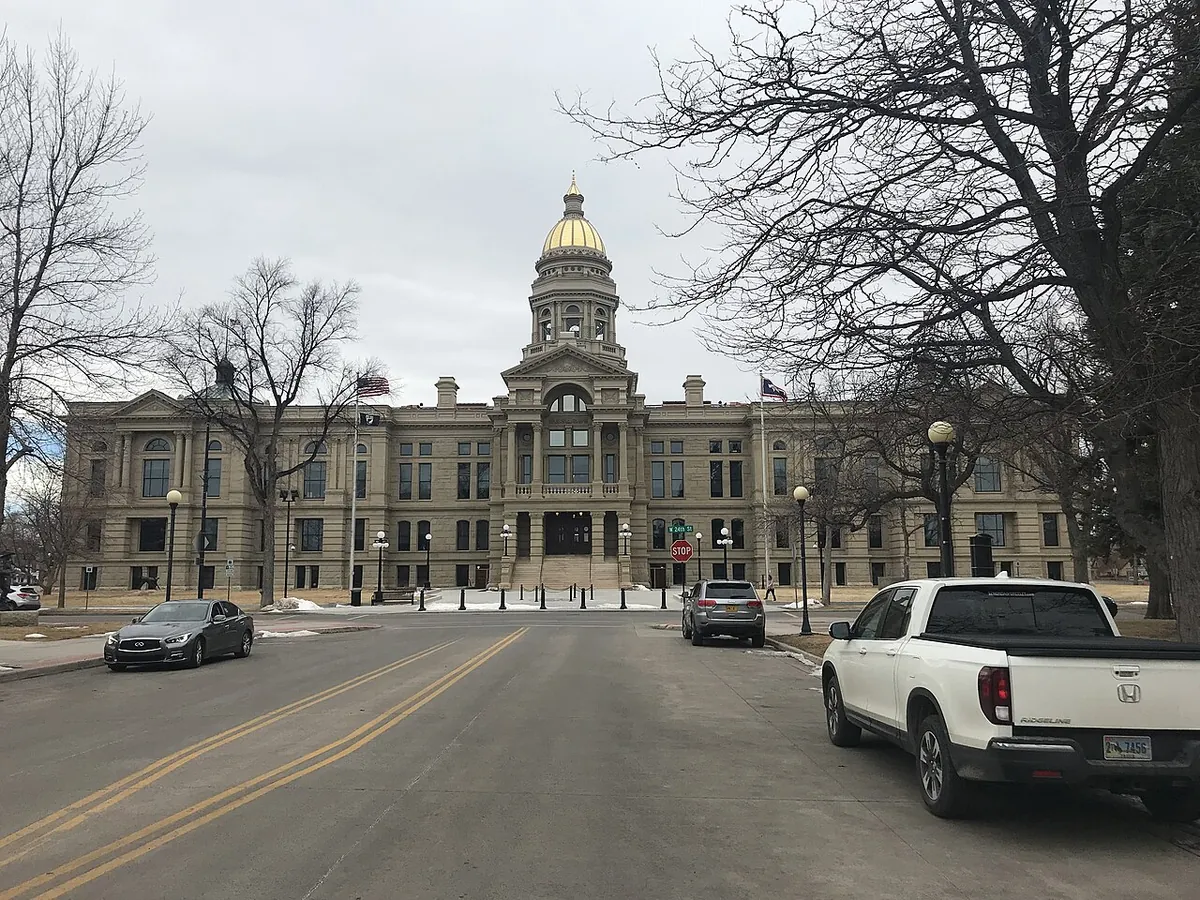
The Wyoming State Capitol (1888 Sandstone Renaissance Revival, restored 2019) and the surrounding Capitol Complex institutional heritage operate on institutional-procurement-grade handling with conservation-grade pacing on the surviving original glazing. The Wyoming State Capitol heritage handling is the most operationally demanding institutional heritage corridor in Wyoming. Pre-1900 institutional heritage at substantial density.
The Cheyenne Historic District pre-1900 single-family heritage residential at meaningful density operates on standard heritage handling. The pre-1900 Queen Anne, Italianate, and Romanesque Revival single-family residential through the Downtown-adjacent residential corridor.
The Cheyenne Frontier Days commercial concentration (last full week of July through early August — "the daddy of 'em all" rodeo and the largest outdoor rodeo in the country) is one of the operationally distinctive single-event commercial-volume concentrations in Wyoming. Frontier Days brings 200,000+ visitors to Cheyenne and produces a compressed pre-event commercial cleaning window through the Cheyenne hospitality-and-retail commercial. Same booking-pressure compression pattern Cal Hatcher documents for Nashville SEC football and that Wade Marler documents for the Louisville Derby Week at lower intensity.
The Union Pacific Railroad Depot (1886 Henry Van Brunt Romanesque Revival) and the surrounding pre-1900 railroad-and-industrial heritage are operationally distinctive in southeastern Wyoming. The F.E. Warren Air Force Base institutional commercial concentration drives a substantial institutional commercial book.
The Cheyenne post-1985 production-suburban residential expansion is meaningful. Post-1985 production-suburban expansion through the surrounding Laramie County residential. The post-2010 production-residential expansion produces coated-glass IGU concentration on the post-2010 stock.
Suburban Cheyenne — Pine Bluffs, Burns, Albin — is post-1985 production-suburban dominant with limited post-2010 luxury concentration.
Casper and the Central Wyoming Oil-and-Gas Corridor
Casper operates on Casper Water and Wyoming Water Development Casper Mountain-source supply. The protocol-handling baseline is extended citric pre-treatment (3 to 5 minutes) plus citric-rinse finish on most stock.
The Casper pre-1900 Downtown commercial heritage at meaningful density through the Center Street and South Center Street corridors operates on heritage-handling protocol. The pre-1900 brick-and-stone commercial heritage with reasonable original-glass survival on the most-preserved properties. Casper developed as a Union Pacific spur-line and oil-refining commercial center beginning in the 1890s.
The Casper Old Yellowstone District pre-1900 commercial heritage and the surrounding Downtown commercial-conversion stock operates on heritage-handling protocol. The Natrona County Courthouse (1909 Beaux-Arts) institutional heritage.
The Casper pre-1925 heritage residential at meaningful density through the Old Yellowstone District-adjacent residential corridor operates on standard heritage handling. The post-1925 production-residential expansion through the Casper Mountain-adjacent residential corridor.
The Wyoming oil-and-gas commercial concentration through Casper is the dominant central Wyoming commercial book. The oil-and-gas-services commercial through the Salt Creek-and-Teapot-Dome historical oil-and-gas corridor and the surrounding modern oil-and-gas production-and-services commercial drives a substantial regional commercial book. The oil-and-gas-services industrial residue on commercial glass facility-adjacent is operationally distinctive — hydrocarbon residue plus drilling-mud-and-fines residue composite. Extended alkaline-soap dwell plus citric-rinse handling on facility-adjacent commercial. Same handling pattern Jan Davenport documents for the North Dakota Bakken corridor at lower intensity.
The Casper mid-rise downtown commercial concentration drives a meaningful commercial book. The Wyoming Medical Center and the surrounding institutional commercial through the Casper corridor.
The Salt Creek-adjacent and Bar Nunn production-residential expansion is post-1985 production-suburban dominant with limited post-2010 luxury concentration.
Laramie and the University of Wyoming High-Elevation Corridor
Laramie operates on Laramie Water Casper Aquifer-source supply. The protocol-handling baseline is the standard alkaline-soap protocol with citric finish on lower-sash mineral residue.
Laramie sits at 7,165 feet elevation — among the highest-elevation municipal corridors in the country and the highest-elevation municipal commercial corridor in the lower 48 outside of Leadville, Colorado. The high-elevation UV-accelerated IGU seal degradation pattern is operationally dominant. Cumulative UV exposure at 7,000+ feet accelerates IGU seal degradation visibly across substantially shorter time-horizons than the lower-elevation Mountain West baseline. Document seal-degradation indicators on each residential visit and provide written notation to customer as routine practice.
The Laramie pre-1900 Downtown commercial heritage at meaningful density through the Ivinson Avenue and Grand Avenue corridors operates on heritage-handling protocol. Laramie developed as a Union Pacific Railroad division point in 1868, and the pre-1900 brick-and-stone commercial heritage stock reflects that Union Pacific-era commercial concentration. The pre-1900 Wyoming Territorial Prison (1872) institutional heritage at the western edge of Downtown.
The University of Wyoming campus heritage at substantial density is operationally distinctive in southeastern Wyoming. Old Main (1887) and the surrounding pre-1900 academic heritage operate on conservation-grade pacing on the surviving original glazing. The University of Wyoming heritage-handling baseline is the most operationally demanding institutional heritage corridor in southeastern Wyoming, and the surrounding University of Wyoming institutional commercial book drives a substantial institutional commercial book.
The Laramie pre-1900 single-family heritage residential at meaningful density operates on standard heritage handling. The pre-1900 Queen Anne, Italianate, and Foursquare single-family residential through the Downtown-adjacent and University-adjacent residential corridors.
The Laramie post-2000 production-residential expansion is meaningful with limited post-2010 luxury concentration. The coated-glass IGU concentration on the post-2000 stock is meaningful, and the high-elevation UV exposure on the coated-glass IGU is operationally distinctive — high-elevation UV combined with surface-sensitive coated-glass IGU substrates produces an accelerated handling-pattern adjustment requirement on the post-2000 stock.
The Snowy Range and Centennial post-2000 luxury second-home-and-vacation residential book through the Snowy Range Mountain corridor at lower density. The ski-corridor seasonal commercial through Snowy Range Ski Area drives a modest seasonal commercial book that peaks December through March.
Jackson Hole, Teton, and the Ultra-Luxury Second-Home Corridor
Jackson Hole operates on Jackson Hole municipal supplies. The protocol-handling baseline is the standard alkaline-soap protocol with citric finish on lower-sash mineral residue and conservation-grade pacing on the ultra-luxury second-home book.
The Jackson Hole and Teton corridor is the most operationally distinctive ultra-luxury second-home commercial book in the Mountain West outside of Aspen. Same operating-protocol framework I document for the Idaho Sun Valley luxury second-home corridor at substantially higher intensity, and the same operating-protocol framework Drew Giordano documents for the Aspen and Telluride luxury second-home corridors in Colorado. Jackson Hole Teton County is among the highest-per-capita-income counties in the country, and the residential property values reflect that concentration.
The Jackson Hole post-2000 luxury second-home-and-vacation residential book through the Wilson, Teton Village, Moose, and Moran corridors and the surrounding Teton County residential is operationally distinctive. Substantial post-2000 luxury single-family residential at substantial density. Coated-glass IGU concentration on the post-2000 stock is substantial with substantially modified surface-sensitivity protocol requirements. Surface-sensitivity protocol on the coated-glass IGU is part of the routine handling.
The Jackson pre-1900 Downtown commercial heritage at modest density through the Town Square corridor operates on heritage-handling protocol. The Jackson Hole hospitality-and-retail commercial concentration through the Town Square and the surrounding Downtown drives a substantial regional commercial book that operates on hospitality-procurement-grade handling.
The Jackson Hole Mountain Resort and Teton Village ski-corridor commercial concentration drives a substantial seasonal commercial book that peaks December through March. The summer-tourism commercial concentration through the Grand Teton National Park-adjacent and Yellowstone National Park-adjacent corridor peaks Memorial Day through Labor Day. The Jackson Hole tourism commercial book runs continuously through summer-and-winter peaks with a meaningful spring-and-fall shoulder.
The high-elevation UV-accelerated IGU seal degradation pattern is operationally distinctive in the Jackson Hole corridor. Jackson sits at 6,237 feet elevation and Teton Village sits at 6,311 feet elevation. The cumulative UV exposure at this elevation accelerates IGU seal degradation visibly. Document seal-degradation indicators on each residential visit and provide written notation to customer as routine practice. The luxury second-home property-owner segment is generally educated about seal-degradation indicators.
The ultra-luxury residential pricing tier in Jackson Hole is operationally distinctive. The pricing structure operates on hospitality-procurement-grade rates with substantial markup on the conservation-grade-pacing requirements. Operators serving the Jackson Hole ultra-luxury second-home book carry premium pricing.
The Yellowstone-Adjacent Cody Heritage and the Bakken-Adjacent Northeast
Cody operates on Cody Water Shoshone River-and-aquifer-supplemented supply. The protocol-handling baseline is the standard alkaline-soap protocol with citric finish on lower-sash mineral residue.
The Cody pre-1900 Downtown commercial heritage at meaningful density through the Sheridan Avenue corridor operates on heritage-handling protocol. Cody was founded in 1896 by Buffalo Bill Cody, and the pre-1900 brick-and-stone commercial heritage stock reflects that founding-era commercial concentration. The Irma Hotel (1902, built by Buffalo Bill Cody) and the surrounding pre-1900 commercial heritage stock with substantial original-glass survival on the most-preserved properties.
The Buffalo Bill Center of the West institutional heritage at substantial density is operationally distinctive in northwestern Wyoming. The Buffalo Bill Museum, the Plains Indian Museum, the Cody Firearms Museum, the Whitney Western Art Museum, and the Draper Natural History Museum operate on institutional-procurement-grade handling. The institutional heritage corridor is the most operationally demanding institutional heritage corridor in northwestern Wyoming.
The Yellowstone National Park-adjacent tourism commercial concentration through Cody and the East Entrance corridor drives a substantial seasonal-tourism commercial book that peaks Memorial Day through Labor Day. The Cody Nite Rodeo (June through August nightly) commercial concentration drives sustained summer commercial workload.
Powell, Lovell, Greybull, Worland, Thermopolis, and the surrounding Big Horn Basin commercial through the surrounding Park, Big Horn, Hot Springs, and Washakie County corridor drives a coherent regional commercial pattern. Pre-1925 small-town heritage commercial through the Downtown corridors at modest density.
The Bakken-adjacent northeast Wyoming Powder River Basin corridor operates on Gillette-Madison Water and surrounding municipal supplies, with sub-micron suspended-particulate fraction on the worst-affected systems. Gillette publishes the hardest water in the Mountain West, second of the 185 ranked cities in the country.
Gillette operates on Gillette-Madison Water and surrounding municipal supply at a published 315–496 mg/L (extremely hard). The protocol-handling for Gillette residential requires extended citric pre-treatment (4 to 6 minutes), citric-rinse finish, and customer pricing that reflects the extended cleaning time. The Powder River Basin coal-corridor commercial concentration is operationally distinctive — Gillette is the largest coal-producing county in the country (Campbell County) and the surrounding Powder River Basin coal-and-energy commercial corridor drives a substantial regional commercial book. The coal-and-energy-services industrial residue on commercial glass facility-adjacent is operationally distinctive — coal-dust residue plus mineral residue composite plus drilling-mud-and-fines residue composite on the worst-affected stock. Extended alkaline-soap dwell plus citric-rinse handling on facility-adjacent commercial.
Sheridan operates on Sheridan Water supply. The Sheridan pre-1900 Downtown commercial heritage at meaningful density through the Main Street corridor operates on heritage-handling protocol. The Sheridan pre-1900 brick-and-stone commercial heritage with reasonable original-glass survival on the most-preserved properties. The Sheridan Inn (1893) and the surrounding pre-1900 commercial heritage. Sheridan was a Burlington Northern Railroad division point and a historical cattle-baron commercial corridor.
Buffalo, Wright, Newcastle, Sundance, and the surrounding Johnson, Crook, and Weston County commercial through the Powder River Basin and the Black Hills-adjacent corridors drives a coherent regional commercial pattern at modest density.
Universal High-Elevation UV, Severe Wind, and the Rural Ranching Well-Water Overlay
The universal high-elevation UV-accelerated IGU seal degradation pattern is the most operationally distinctive feature of Wyoming residential statewide. Wyoming state mean elevation is 6,700 feet — the highest in the country — and the cumulative UV exposure at high elevation accelerates IGU seal degradation visibly across substantially shorter time-horizons than the lower-elevation baseline. Document seal-degradation indicators on each residential visit statewide and provide written notation to customer as routine practice.
The severe wind exposure year-round is operationally distinctive. Wyoming runs the heaviest sustained wind exposure of any state in the lower 48 — annual mean wind speeds in southeastern Wyoming (Cheyenne, Laramie, Rawlins) regularly exceed 12 to 15 mph with frequent 50+ mph gusts. The wind-driven dust-and-debris residue exposure on residential statewide is constant. Wet-rinse-first protocol on post-event residential statewide. The wind-related exterior-work-condition disruption is operationally distinctive — operators routinely lose exterior work-windows to wind across the operating calendar statewide.
The wildfire-smoke residue handling from June through October in active fire years runs at meaningful intensity across the western and central portions of the state. The 2018, 2020, 2021, and 2023 fire seasons each produced extended residue exposure on residential and commercial through the Jackson Hole, Cody, and surrounding northwest Wyoming corridors. Same handling pattern I document for the Idaho and Montana state coverage.
The severe winter cold from November through March is operationally distinctive statewide. Regularly -30 to -40°F in extended stretches at higher elevations through January and February. Winter exterior work effectively shuts down December through February at higher elevations and severely constrained statewide. Commercial interior work is off-season backbone statewide.
Operators serving rural Wyoming residential statewide carry chemistry verification on individual properties as routine practice. Extended citric pre-treatment plus citric-rinse finish where a test pane shows heavy scale.
The Cheyenne Frontier Days commercial concentration (last full week of July through early August) drives substantial seasonal commercial workload through the Cheyenne hospitality-and-retail commercial. The Jackson Hole and Cody summer-tourism commercial peak Memorial Day through Labor Day. The Jackson Hole Mountain Resort and Snowy Range ski-corridor commercial peak December through March.
The seasonal-disruption pattern across the operating calendar is severe statewide. Wyoming carries one of the most internally compressed production windows in the Mountain West — production weeks for full-scale exterior work are constrained to approximately May through October with severe disruption from wind, wildfire smoke, and severe-weather events through the production window.
What I Tell Crews About Working This State
A few things any operator running Wyoming should internalize:
The chemistry is genuinely six-zone with a rural-ranching-well-water overlay. Cheyenne sits at a published 46–69 mg/L (soft to moderately hard) and Gillette at a published 315–496 mg/L (extremely hard); Casper, Laramie, Jackson Hole and Cody publish no figure the site uses.
Gillette publishes the hardest municipal water in the Mountain West. Same chemistry-handling pattern Jan Davenport documents for the Bakken corridor in North Dakota and that I document for eastern Montana. Crews moving between Cheyenne and Gillette need to make the chemistry adjustment.
The universal high-elevation UV-accelerated IGU seal degradation pattern is the most operationally distinctive feature of Wyoming residential statewide. Wyoming state mean elevation is 6,700 feet — the highest in the country. Laramie at 7,165 feet, Jackson Hole at 6,237 feet, Teton Village at 6,311 feet, Cheyenne at 6,062 feet. Document seal-degradation indicators on each residential visit statewide and provide written notation to customer as routine practice.
The severe wind exposure year-round is operationally distinctive. Wyoming runs the heaviest sustained wind exposure of any state in the lower 48. Wind-driven dust-and-debris residue on residential statewide is constant. Wet-rinse-first protocol on post-event residential statewide. Operators routinely lose exterior work-windows to wind across the operating calendar.
The Jackson Hole and Teton ultra-luxury second-home corridor is the most operationally distinctive ultra-luxury second-home commercial book in the Mountain West outside of Aspen. Same operating-protocol framework as Sun Valley at substantially higher intensity. Coated-glass IGU concentration is substantial. Hospitality-procurement-grade pricing required.
The Cheyenne Frontier Days commercial concentration (last full week of July through early August) is a compressed pre-event commercial cleaning window through the Cheyenne hospitality-and-retail commercial. Lock the Frontier Days commercial accounts by May or expect to lose them.
The Powder River Basin coal-corridor industrial residue on Gillette and surrounding commercial requires extended alkaline-soap dwell plus citric-rinse handling. Coal-dust residue plus mineral residue composite plus drilling-mud-and-fines residue composite. Same handling framework as North Dakota Bakken corridor.
The Casper oil-and-gas-services commercial book through central Wyoming requires the same industrial-residue handling framework at moderate intensity. Hydrocarbon residue plus drilling-mud-and-fines residue composite. Same handling pattern Jan Davenport documents for the Bakken corridor.
The wildfire-smoke residue handling from June through October in active fire years runs at meaningful intensity across western and central Wyoming. The 2018, 2020, 2021, and 2023 fire seasons each produced extended residue exposure on Jackson Hole, Cody, and surrounding northwest Wyoming residential and commercial.
The University of Wyoming institutional heritage at Laramie and the Wyoming State Capitol (1888) institutional heritage at Cheyenne are the two operationally distinctive institutional heritage corridors in the state. Conservation-grade pacing required on the surviving pre-1900 academic and capitol glazing. The Buffalo Bill Center of the West institutional heritage at Cody is operationally distinctive among Western-heritage institutional commercial.
The severe winter cold from November through March effectively shuts down exterior work December through February at higher elevations and severely constrains statewide. Commercial interior work is off-season backbone statewide.
For broader Mountain West context, the Montana, Idaho, Colorado, North Dakota, and South Dakota state pages cover the chemistry and seasonal frameworks that bracket Wyoming. For the operating protocols themselves, the article on hard water etching versus deposits covers the Powder River Basin Bakken-adjacent and rural ranching well-water chemistry, the article on the failed-seal diagnosis covers the universal high-elevation UV-accelerated IGU seal degradation pattern, and the article on historic window glass restoration covers the Wyoming State Capitol, the University of Wyoming Old Main, the Wyoming Territorial Prison, and the Cody Irma Hotel heritage handling. Cross-references for technique: the four stages of a wash, glass types and cleaning, why streaks return by morning.
The big cities, in numbers
Cheyenne Board of Public Utilities Crow Creek and aquifer-supplemented supply. Pre-1900 Downtown commercial heritage at meaningful density through 17th Street and Capitol Avenue. Wyoming State Capitol (1888 Sandstone Renaissance Revival). Union Pacific Railroad Depot (1886) heritage. F.E. Warren Air Force Base institutional commercial. State capital commercial book. Cheyenne Frontier Days commercial concentration last full week of July.
Casper Water and Wyoming Water Development Casper Mountain-source supply. Pre-1900 Downtown commercial heritage at meaningful density through Center Street and South Center Street. Natrona County Courthouse (1909 Beaux-Arts) institutional heritage. Wyoming oil-and-gas commercial concentration. Salt Creek and Teapot Dome historical oil-and-gas corridor.
Laramie Water Casper Aquifer-source supply. Pre-1900 Downtown commercial heritage at meaningful density through Ivinson Avenue and Grand Avenue. University of Wyoming campus heritage (Old Main 1887). Pre-1900 Wyoming Territorial Prison (1872). Sits at 7,165 ft elevation — among the highest-elevation municipal corridors in the country. High-elevation UV-accelerated IGU seal degradation operationally dominant.
Gillette-Madison Water supply — among the hardest municipal water in the Mountain West. Powder River Basin coal-corridor commercial concentration. Campbell County is the largest coal-producing county in the country. Coal-and-energy-services industrial residue handling. Bakken-adjacent chemistry pattern.
Green River raw supply treated at the Green River plant and piped fourteen miles to Rock Springs by the joint powers board that bought the private system in 1986. Trona and coal industry dust, high-desert wind, coal-boom historic downtown.
Sheridan Water supply. Pre-1900 Downtown commercial heritage at meaningful density through Main Street. Sheridan Inn (1893). Historical Burlington Northern Railroad division point and cattle-baron commercial corridor. Powder River Basin north-corridor commercial.
Jackson Hole municipal supplies. Pre-1900 Downtown commercial heritage at modest density through Town Square. Substantial post-2000 ultra-luxury second-home residential book through Wilson, Teton Village, Moose, and Moran. Jackson Hole Mountain Resort ski-corridor commercial. Grand Teton and Yellowstone tourism commercial. Most operationally distinctive ultra-luxury second-home commercial book in the Mountain West outside of Aspen.
Cody Water Shoshone River-and-aquifer-supplemented supply. Pre-1900 Downtown commercial heritage at meaningful density through Sheridan Avenue. Founded 1896 by Buffalo Bill Cody. Irma Hotel (1902). Buffalo Bill Center of the West institutional heritage (5 museums). Yellowstone National Park East Entrance tourism commercial concentration. Cody Nite Rodeo summer commercial.
Teton Village Water mountain-source supply. Jackson Hole Mountain Resort core. Substantial post-2000 ultra-luxury second-home residential at substantial density. Sits at 6,311 ft elevation — high-elevation UV-accelerated IGU seal degradation operationally dominant.
Dedicated city pages in Wyoming
Each city page carries its own water profile, neighborhood breakdown, cost range, and city-specific operating notes.
Rules for high-rise and rope-access window work
Wyoming runs its own OSHA-approved program for private employers, which must be at least as effective as federal OSHA. The federal benchmark for rope work is 29 CFR 1910.27: owner-certified anchors rated to 5,000 pounds, gear checked every shift, a separate fall-arrest line for each worker, and no rope descent in storms or gusty wind.
OSHA, State Plans: which states run their own programs · OSHA 29 CFR 1910.27: Scaffolds and rope descent systems · checked September 2026 · How we check local rules
What lands on the glass
| CONTAMINANT | SEASON | SEVERITY |
|---|---|---|
| Universal high-elevation UV-accelerated IGU seal degradation | year-round statewide | high statewide |
| Wyoming state mean elevation 6,700 ft — the highest in the country. Laramie at 7,165 ft, Jackson Hole at 6,237 ft, Teton Village at 6,311 ft, Cheyenne at 6,062 ft. Cumulative UV exposure at high elevation accelerates IGU seal degradation visibly. Document seal-degradation indicators on each residential visit statewide and provide written notation to customer as routine practice. Same handling framework as Sun Valley, Park City, and Aspen. | ||
| Severe wind-driven dust-and-debris residue | year-round statewide | high statewide |
| Wyoming runs the heaviest sustained wind exposure of any state in the lower 48 — annual mean wind speeds in southeastern Wyoming regularly exceed 12-15 mph with frequent 50+ mph gusts. Wind-driven dust-and-debris residue on residential statewide is constant. Wet-rinse-first protocol on post-event residential statewide. Operators routinely lose exterior work-windows to wind across the operating calendar. | ||
| Powder River Basin coal-and-energy industrial residue | year-round on Gillette, Wright, and Powder River Basin commercial | high on Powder River Basin commercial |
| Gillette is the largest coal-producing county in the country (Campbell County). Coal-and-energy-services industrial residue on commercial glass facility-adjacent — coal-dust residue plus mineral residue composite plus drilling-mud-and-fines residue composite on the worst-affected stock. Extended alkaline-soap dwell plus citric-rinse handling. Same handling pattern Jan Davenport documents for North Dakota Bakken corridor. | ||
| Casper oil-and-gas-services industrial residue | year-round on Casper and surrounding Natrona County commercial | medium-to-high on facility-adjacent commercial |
| Wyoming oil-and-gas commercial concentration through Casper. Hydrocarbon residue plus drilling-mud-and-fines residue composite on commercial glass facility-adjacent. Extended alkaline-soap dwell plus citric-rinse handling. Same handling framework as North Dakota Bakken corridor at lower intensity. | ||
| Wildfire-smoke residue | June through October in active fire years | high on western and central Wyoming in active fire years |
| Wildfire-smoke residue heavy in active fire seasons through western and central Wyoming — Jackson Hole, Cody, and surrounding northwest Wyoming corridors. The 2018, 2020, 2021, and 2023 fire seasons each produced extended residue exposure on residential and commercial. Wet-rinse-first protocol on smoke-residue residential. | ||
| Powder River Basin hard-water residue | year-round on Gillette and surrounding Campbell, Johnson County residential | high on Powder River Basin residential |
| Gillette-Madison Water supply at a published 315–496 mg/L (extremely hard), the hardest municipal water in the Mountain West. Extended citric pre-treatment (4-6 minutes) plus citric-rinse finish required. Verify chemistry on individual properties. | ||
| Spring snow-melt residue (higher elevations) | April through May | medium-to-high at higher elevations |
| Late-winter and early-spring snow-melt residue at higher elevations carries chloride-residue, mineral residue, and organic residue composite. Percarbonate-citric ladder protocol on the worst-affected stock. | ||
| Rural ranching well-water mineral residue | year-round on rural ranching wells | high on rural Wyoming ranching residential |
| Rural Wyoming ranching well-water with regional variation. Extended citric pre-treatment plus citric-rinse finish required on the properties that leave the heaviest scale. Verify chemistry on individual properties. | ||
The year, in seasons
Late April through May. Spring snow-melt residue handling at higher elevations. Mud-season working-condition disruption mid-April through May. Wind-driven dust-and-debris residue year-round.
Late May through September is the production window statewide. Wildfire-smoke residue handling June through October in active fire years through western and central Wyoming. Cheyenne Frontier Days last full week of July through early August drives compressed commercial cleaning window through Cheyenne.
September through October is the cleanest production stretch statewide outside of wildfire-smoke events. Pre-winter residential rush September-October. First hard frost at higher elevations early-to-mid September.
Exterior work effectively shuts down December through February at higher elevations and severely constrained statewide. Ski-corridor commercial peak December through March drives substantial seasonal commercial workload (Jackson Hole Mountain Resort, Snow King, Snowy Range). Commercial interior work is off-season backbone statewide.
The articles that matter most for Wyoming
Border states with their own guides
Land-adjacent states each get their own water-and-window profile. If you're working a regional route or moving across the border, these are the natural next reads.
Common questions about window cleaning in Wyoming
How hard is the water in Wyoming?+
The two utilities we cover in Wyoming that publish hardness report 46 to 496 mg/L (as CaCO₃). The middle of those cities sits near 232 mg/L, which is very hard, meaning municipal water deposits noticeable mineral residue every wash cycle and accelerates the long-term etching problem. Each city page gives its own utility's figure.
When is the best time of year to clean windows in Wyoming?+
In Wyoming, the working operator's calendar typically favors fall — september through october is the cleanest production stretch statewide outside of wildfire-smoke events. pre-winter residential rush september-october. first hard frost at higher elevations early-to-mid september. For a full seasonal breakdown, see the cleaning calendar section on this page.
How much does window cleaning cost in Wyoming?+
Residential window cleaning in Wyoming typically runs $8–18 per pane or $200–500 for a standard single-family house exterior, depending on metro pricing, story height, screen condition, and frame type. Use our cost estimator for a calibrated quote for your home.
Why do my windows look dirty so quickly in Wyoming?+
The dominant residue problem in Wyoming is universal high-elevation uv-accelerated igu seal degradation (year-round statewide). Wyoming state mean elevation 6,700 ft — the highest in the country. Laramie at 7,165 ft, Jackson Hole at 6,237 ft, Teton Village at 6,311 ft, Cheyenne at 6,062 ft. Cumulative UV exposure at high elevation accelerates IGU seal degradation visibly. Docum
Do I need a professional to clean my windows in Wyoming?+
Single-story homes with accessible glazing can be cleaned by homeowners using basic squeegee technique and the right solution. Multi-story houses, post-2010 coated glass, hard-water markets, and screens-plus-tracks work usually pay for themselves with a professional. See our hiring checklist below.
What's special about cleaning windows in Wyoming's climate?+
Severe thunderstorms on eastern plains spring through summer. Hail-storm exposure moderate-to-heavy on eastern plains. Tornado activity low-to-moderate on eastern plains. Severe winter weather statewide November through April — deep-winter cold (regularly -30 to -40°F at higher elevations), heavy snowfall in western Wyoming mountains. Wildfire-smoke residue events heavy in acti
Where can I find a window cleaner in Cheyenne, Wyoming?+
Cheyenne is the largest market in Wyoming and has the deepest concentration of professional window-cleaning services. Our "Find a Cleaner" page takes waitlist sign-ups while the local pro directory is built; meanwhile, read the Cheyenne section of this page for the city-specific water and cleaning context.
Easton Giordano
Editorial team contributor covering the Pacific Northwest and broader West Coast beat. Articles bylined by Easton are researched and reviewed in collaboration with the Giordano Inc. editorial team and informed by interviews with practicing window-washing operators in the region, plus published materials-science and trade references.
READ MORE BY EASTON GIORDANO →