Window Washing in West Virginia: A Four-Zone Operator's Field Notes
West Virginia runs as seven working zones. Charleston and the Kanawha Valley corridor on West Virginia American Water Elk River and Kanawha River-supplemented supply. Huntington and the Tri-State Ohio River corridor on West Virginia American Water Ohio River-source supply. Morgantown and the north-central corridor on Morgantown Utility Board Cobun Creek and Monongahela River-source supply. Wheeling and the northern panhandle on Wheeling Water Ohio River-source supply. The Eastern Panhandle (Martinsburg, Charles Town, Harpers Ferry, Shepherdstown) on mixed municipal supplies. The southern coal corridor (Beckley, Bluefield, Princeton, Welch, Logan) on mixed municipal supplies. Rural Appalachian well-water varies from well to well.
- How West Virginia Works in Practice
- Charleston and the Kanawha Valley Chemical Corridor
- Huntington and the Tri-State Ohio River Corridor
- Morgantown and the North-Central WVU Institutional Corridor
- Wheeling and the Northern Panhandle Heritage Corridor
- The Eastern Panhandle and the DC-Commuter Spillover
- The Southern Coal Corridor, Foliage Season, and the Rural Appalachian Well-Water Overlay
- What I Tell Crews About Working This State
Need a window cleaner in West Virginia?
We're building a local pro directory. Join the free waitlist.
By Wade Marler, for the Bluegrass, Ohio Valley, and adjacent Appalachian beat at Window Washing Guide
How West Virginia Works in Practice
West Virginia is one of the most internally varied operating environments in the Appalachian region. Seven distinct working zones spanning the Kanawha Valley chemical-industry corridor, the Ohio River Tri-State corridor at Huntington, the north-central WVU institutional corridor at Morgantown, the Wheeling pre-1850 commercial heritage corridor in the northern panhandle, the Eastern Panhandle DC-commuter spillover through Martinsburg and Harpers Ferry, the southern coal-corridor commercial through Beckley and Bluefield, and the rural Appalachian well-water residential statewide. The seasonal-disruption pattern is dominated by foliage-season October scheduling pressure (West Virginia carries the heaviest fall foliage in the lower 48), winter ice-and-salt residue from December through March in the higher elevations, and chemical-industry residue overlay through the Kanawha Valley year-round.
Charleston and the Kanawha Valley corridor — Charleston proper plus South Charleston, St. Albans, Nitro, Dunbar, Institute, and the surrounding Kanawha County residential — operates on West Virginia American Water Elk River and Kanawha River-supplemented supply. The chemistry-handling baseline is the standard alkaline-soap protocol with selective citric on lower-sash mineral residue. What makes the Kanawha Valley operationally distinctive is not the water — it is the chemical-industry residue overlay that runs through the corridor as a function of the historical Kanawha Valley chemical industry concentration and the still-active facility footprint through Institute, Nitro, and the surrounding South Charleston commercial-industrial corridor.
Huntington and the Tri-State Ohio River corridor — Huntington proper plus Barboursville, Milton, Kenova, Ceredo, and the surrounding Cabell and Wayne County residential — operates on West Virginia American Water Ohio River-source supply at a published 62–154 mg/L (moderately hard to hard). Huntington runs continuously with Ashland, Kentucky and Ironton, Ohio across the Ohio River — the same operating market with three state license plates. The chemistry profile is comparable to the Cincinnati Ohio River corridor pattern that Jan Davenport documents for Ohio.
Morgantown and the north-central corridor — Morgantown proper plus Westover, Star City, Cheat Lake, and the surrounding Monongalia County residential — operates on Morgantown Utility Board Cobun Creek and Monongahela River-source supply at a published 104.8 mg/L (moderately hard). The corridor runs the WVU institutional commercial book, the post-2000 luxury and production-residential expansion through the surrounding Morgantown corridor, and the Marcellus Shale gas-corridor commercial concentration through Bridgeport, Clarksburg, and the surrounding Harrison County corridor.
Wheeling and the northern panhandle — Wheeling proper plus Bethlehem, Triadelphia, Moundsville, New Martinsville, and the surrounding Ohio and Marshall County residential — operates on Wheeling Water Ohio River-source supply. Wheeling carries the deepest pre-1850 commercial heritage corridor in West Virginia and one of the deepest in all of Appalachia — Wheeling was a major Ohio River port and the original Virginia statehood-petition center, and the surviving pre-1850 commercial heritage stock through the Centre Wheeling Market, the Wheeling Suspension Bridge corridor, and the surrounding Downtown is operationally distinctive.
The Eastern Panhandle — Martinsburg, Charles Town, Harpers Ferry, Shepherdstown, Berkeley Springs, and the surrounding Berkeley, Jefferson, and Morgan County residential — operates on mixed municipal supplies. The Eastern Panhandle is operationally a DC-commuter spillover market that runs continuously with the Loudoun County and Frederick County Virginia and Maryland commuter corridors. Same chemistry profile and same coated-glass IGU concentration pattern Tony Petruzzi documents for the Northern Virginia commercial book.
The southern coal corridor — Beckley, Bluefield, Princeton, Welch, Logan, Williamson, and the surrounding Raleigh, Mercer, McDowell, Logan, and Mingo County residential — operates on mixed Raleigh County Water, Bluefield Valley Water, and surrounding municipal supplies. The coal-corridor industrial residue on commercial glass through the active and legacy mining-corridor commercial is operationally distinctive.
Operators serving rural West Virginia residential statewide carry chemistry verification on individual properties as routine practice.
Charleston and the Kanawha Valley Chemical Corridor
Charleston operates on West Virginia American Water Elk River and Kanawha River-supplemented supply at a published 17–55 mg/L (soft). The protocol-handling baseline is the standard alkaline-soap protocol with selective citric on lower-sash mineral residue.
The Charleston pre-1900 Downtown commercial heritage at substantial density through the Capitol Street corridor and the surrounding Downtown commercial-conversion stock operates on heritage-handling protocol. The pre-1900 brick-and-stone commercial heritage with substantial original-glass survival on the most-preserved properties. The Charleston heritage commercial property-owner community is reasonably educated about preservation standards.
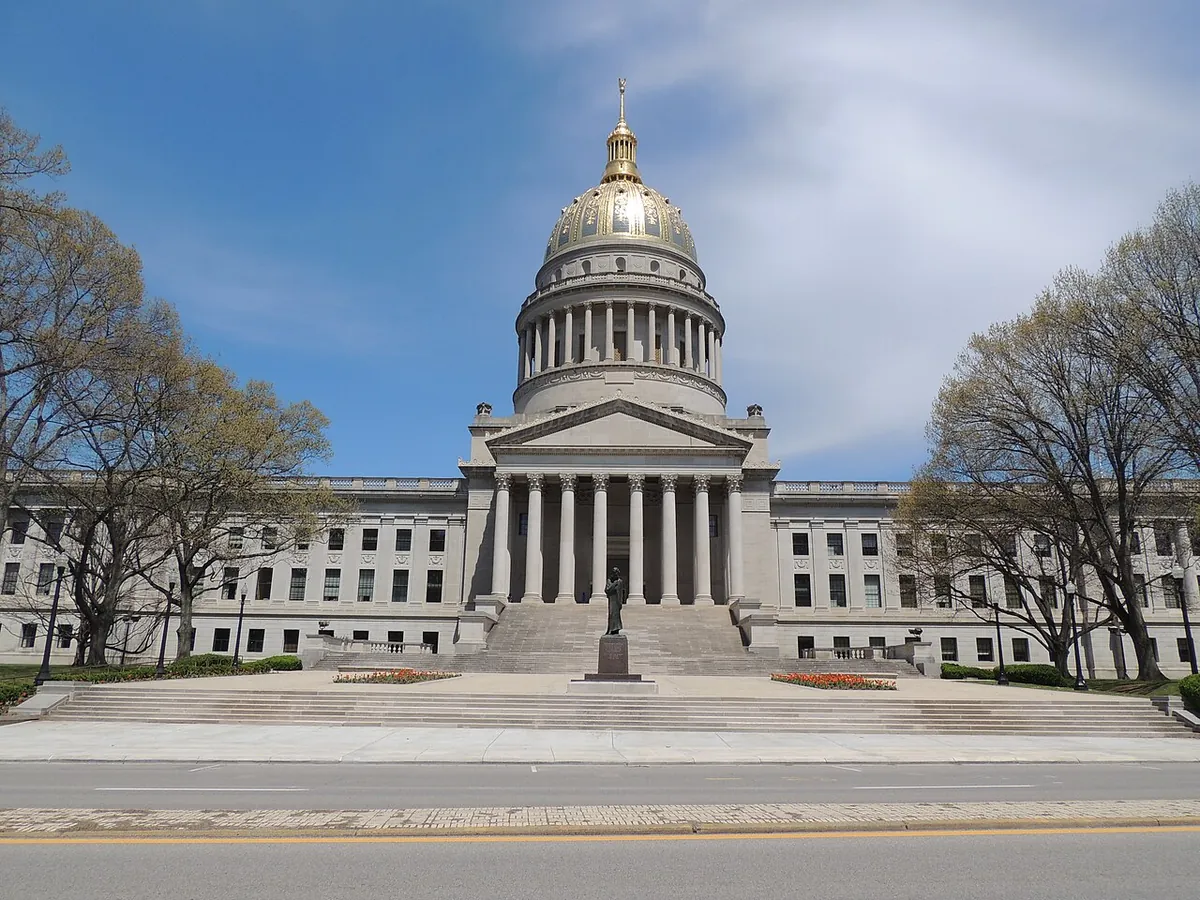
The West Virginia State Capitol (1932 Cass Gilbert Beaux-Arts) and the surrounding Capitol Complex institutional heritage operate on institutional-procurement-grade handling. The State Capitol carries substantial original-and-restored glazing with conservation-grade pacing requirements. The State Capitol heritage handling is the most operationally demanding institutional heritage corridor in central West Virginia.
The Charleston East End pre-1900 heritage residential at substantial density operates on standard heritage handling. The East End single-family residential carries pre-1900 Queen Anne, Italianate, and turn-of-the-century Colonial Revival at meaningful density. The pre-1900 South Hills residential at modest density. The heritage-handling baseline is conservative pacing, hand-finish only on the most-preserved properties.
The University of Charleston campus heritage at modest density operates on standard institutional handling. The Charleston mid-rise downtown commercial concentration drives a meaningful commercial book that operates on quarterly-to-monthly maintenance scheduling.
The Kanawha Valley chemical-industry residue overlay through the Institute, Nitro, South Charleston, and Dunbar industrial-commercial corridor is the operationally distinctive feature of the Charleston market. The historical Kanawha Valley chemical industry concentration was the densest single-region chemical-manufacturing corridor in the country through the mid-20th century, and the still-active facility footprint produces a distinctive industrial-organic residue on commercial glass facility-adjacent — organic-solvent residue plus particulate-and-mineral residue composite. Extended alkaline-soap dwell plus citric-rinse handling on facility-adjacent commercial. Wet-rinse-first protocol on the worst-affected stock.
The South Charleston commercial-industrial corridor through the MetroValley and the surrounding facility-adjacent commercial drives a coherent regional commercial book that runs on the chemical-industry-residue-handling protocol. The Institute and Nitro facility-adjacent residential carries the same chemical-industry-residue exposure pattern at lower intensity on residential.
Suburban Kanawha Valley — Cross Lanes, Hurricane, Teays Valley, St. Albans — is post-1985 production-suburban dominant with limited post-2010 luxury concentration. The Cross Lanes and Teays Valley post-2010 production-suburban expansion produces coated-glass IGU concentration on the post-2010 stock.
Huntington and the Tri-State Ohio River Corridor
Huntington operates on West Virginia American Water Ohio River-source supply at a published 62–154 mg/L (moderately hard to hard). The protocol-handling baseline is the standard alkaline-soap protocol with selective citric handling.
The Huntington pre-1900 Downtown commercial heritage at substantial density through the 4th Avenue and 9th Street corridors operates on heritage-handling protocol. The pre-1900 brick-and-stone commercial heritage with substantial original-glass survival on the most-preserved properties. Huntington was a major C&O Railway terminus and the Downtown commercial heritage stock reflects that pre-1900 industrial-commercial concentration.
The Marshall University campus heritage at substantial density is operationally distinctive in southwestern West Virginia. Old Main (1868) and the surrounding pre-1900 academic heritage operate on conservation-grade pacing on the surviving original glazing. The Marshall University heritage-handling baseline is the most operationally demanding institutional heritage corridor in southwestern West Virginia.
The Huntington Ritter Park and Southside pre-1900 heritage residential at substantial density operates on standard heritage handling. The pre-1900 single-family residential through the Southside and Ritter Park residential corridors carries pre-1900 Queen Anne and Italianate at meaningful density. Original-glass survival rates on the better-preserved properties are reasonable.
The Huntington mid-rise downtown commercial concentration drives a meaningful commercial book. The Cabell Huntington Hospital and Marshall University Health Sciences institutional commercial concentration drives a substantial institutional commercial book.
The Tri-State Ohio River corridor commercial — Huntington, Ashland Kentucky, and Ironton Ohio — runs continuously across the Ohio River as a single operating market. The chemistry is comparable, the heritage stock is comparable, and the property-management contracting often crosses state lines. Same operating-protocol framework Jan Davenport documents for the Cincinnati Ohio River corridor at lower intensity.
Barboursville, Milton, and the surrounding Cabell County production-suburban residential is post-1985 dominant with limited post-2010 luxury concentration. The post-2010 production-suburban expansion produces coated-glass IGU concentration on the post-2010 stock.
Morgantown and the North-Central WVU Institutional Corridor
Morgantown operates on Morgantown Utility Board Cobun Creek and Monongahela River-source supply at a published 104.8 mg/L (moderately hard). The protocol-handling baseline is the standard alkaline-soap protocol with citric finish on lower-sash mineral residue.
The Morgantown pre-1900 Downtown commercial heritage at meaningful density through the High Street corridor and the surrounding Downtown commercial-conversion stock operates on heritage-handling protocol. The pre-1900 brick-and-stone commercial heritage with substantial original-glass survival on the most-preserved properties.
The West Virginia University Downtown campus heritage and Evansdale campus institutional commercial concentration is operationally distinctive in north-central West Virginia. Woodburn Hall (1876) and the surrounding pre-1900 academic heritage operate on conservation-grade pacing on the surviving original glazing. The WVU heritage-handling baseline is the most operationally demanding institutional heritage corridor in north-central West Virginia, and the surrounding WVU institutional commercial book through the Downtown and Evansdale campus corridors is operationally distinctive.
The Morgantown South Park, Suncrest, and Cheat Lake residential carries the post-2000 luxury and production-residential expansion. Coated-glass IGU concentration on the post-2000 stock is substantial. Surface-sensitivity protocol on the post-2000 coated-glass IGU is part of the routine handling.
The Morgantown mid-rise downtown commercial concentration drives a meaningful commercial book. The Mon Health System and WVU Medicine Health Sciences institutional commercial concentration drives a substantial institutional commercial book.
The Marcellus Shale gas-corridor commercial concentration through Bridgeport, Clarksburg, Fairmont, and the surrounding Harrison and Marion County corridor produces a distinctive gas-and-oil-services commercial book. The gas-and-oil-services industrial residue on commercial glass facility-adjacent is operationally distinctive — hydrocarbon residue plus drilling-mud-and-fines residue composite at lower intensity than the Bakken pattern that Jan Davenport documents for North Dakota. Extended alkaline-soap dwell plus citric-rinse handling on facility-adjacent commercial.
Clarksburg pre-1900 Downtown commercial heritage at meaningful density operates on heritage-handling protocol. Fairmont pre-1900 commercial heritage and pre-1900 single-family heritage residential at meaningful density.
The post-2010 Morgantown corridor production-residential expansion through Cheat Lake, Suncrest, and the surrounding Monongalia County residential is meaningful. The coated-glass IGU concentration on the post-2010 stock is meaningful.
Wheeling and the Northern Panhandle Heritage Corridor
Wheeling operates on Wheeling Water Ohio River-source supply. The protocol-handling baseline is the standard alkaline-soap protocol with selective citric handling.
The Wheeling pre-1850 Downtown commercial heritage at substantial density is operationally distinctive — among the deepest pre-1850 Ohio River port-and-commercial heritage corridors in Appalachia and one of the deepest in the country. The Centre Wheeling Market (1853) and the surrounding pre-1850 commercial-and-market heritage stock operate on heritage-handling protocol with conservation-grade pacing requirements on the surviving pre-1850 cylinder glass.
The Wheeling Suspension Bridge (1849, the oldest surviving wire-suspension bridge in the United States) and the surrounding pre-1850 Downtown commercial heritage corridor operates on the densest pre-1850 commercial heritage protocol in West Virginia. Pre-1850 cylinder-glass survival rates on the most-preserved Downtown properties are meaningful. The heritage-handling baseline is conservation-grade on pre-1850 stock — water-fed pole or hand-detail only, no scraping, slow pacing.
The West Virginia Independence Hall (1859 federal customs house, the site of the West Virginia statehood petitions) and the surrounding pre-1900 federal-and-institutional heritage operate on institutional-procurement-grade handling with conservation-grade pacing on the surviving original glazing. The Independence Hall heritage handling is operationally distinctive in West Virginia heritage commercial.
The Wheeling Heritage Trail commercial corridor through the Centre Wheeling Market, the North Wheeling pre-1850 heritage commercial, and the surrounding Downtown Wheeling heritage commercial drives a coherent regional heritage commercial book that operates on conservation-grade pacing.
The Wheeling North Wheeling and Woodsdale pre-1900 single-family heritage residential at substantial density operates on standard heritage handling. The pre-1900 Queen Anne, Italianate, and pre-1880 Second Empire single-family residential at meaningful density. Original-glass survival rates on the better-preserved properties are reasonable.
The Wheeling mid-rise downtown commercial concentration drives a meaningful commercial book that operates on quarterly-to-monthly maintenance scheduling.
The Northern Panhandle commercial through Moundsville, New Martinsville, Wellsburg, and the surrounding Marshall, Wetzel, and Brooke County commercial drives a coherent regional commercial pattern. The legacy chemical-and-steel industrial corridor through the surrounding Northern Panhandle produces a distinctive industrial residue exposure pattern on commercial glass facility-adjacent at lower intensity than the Kanawha Valley pattern.
Moundsville pre-1900 commercial heritage at modest density operates on heritage-handling protocol. The West Virginia Penitentiary (1876, decommissioned 1995, now historic-site tourism) and the surrounding pre-1900 institutional heritage.
The Eastern Panhandle and the DC-Commuter Spillover
The Eastern Panhandle — Martinsburg, Charles Town, Harpers Ferry, Shepherdstown, Berkeley Springs, and the surrounding Berkeley, Jefferson, and Morgan County residential — operates on mixed municipal supplies. The Eastern Panhandle is operationally a DC-commuter spillover market that runs continuously with the Loudoun County and Frederick County Virginia and Maryland commuter corridors.
Martinsburg operates on Martinsburg Public Works Tuscarora Creek and aquifer-supplemented supply. The Martinsburg pre-1900 Downtown commercial heritage at meaningful density operates on heritage-handling protocol. The pre-1900 brick-and-stone commercial heritage with substantial original-glass survival on the most-preserved properties.
The Martinsburg DC-commuter spillover residential expansion is substantial. Post-2000 production-residential expansion through Martinsburg, Inwood, Hedgesville, and the surrounding Berkeley County residential is the dominant residential pattern. Coated-glass IGU concentration on the post-2000 stock is substantial. Same chemistry and same coated-glass IGU concentration pattern Tony Petruzzi documents for the Loudoun County Northern Virginia commercial book.
Charles Town and the surrounding Jefferson County residential operates on Jefferson Utilities and surrounding municipal supplies. The Charles Town pre-1900 Downtown commercial heritage at modest-to-meaningful density operates on heritage-handling protocol. The historic Charles Town courthouse (where John Brown was tried in 1859) and the surrounding pre-1900 institutional heritage. Post-2000 DC-commuter residential expansion through Ranson and the surrounding Jefferson County residential is substantial.
Harpers Ferry sits at the confluence of the Potomac and Shenandoah Rivers and is dominated by the Harpers Ferry National Historical Park heritage-site institutional commercial. The pre-1850 commercial-and-armory heritage stock through Lower Town Harpers Ferry operates on conservation-grade pacing with substantial original-glass survival. The heritage-handling baseline is conservation-grade — water-fed pole or hand-detail only, no scraping, slow pacing, customer pricing that reflects the National Park Service procurement standards.
Shepherdstown — the oldest town in West Virginia (chartered 1762) — carries pre-1800 commercial heritage and pre-1800 single-family heritage residential at meaningful density. The Shepherd University campus heritage at modest density. Pre-1800 heritage stock is operationally distinctive in the Eastern Panhandle and West Virginia broadly. Conservation-grade pacing required on the surviving pre-1800 glazing.
Berkeley Springs (Bath, chartered 1776) carries pre-1800 commercial heritage at modest density and operates as a long-running spa-tourism commercial book.
The Eastern Panhandle commercial book runs continuously with the Northern Virginia Tony Petruzzi beat. Operators based in Martinsburg or Charles Town routinely cross-route into Loudoun County and Frederick County, Maryland.
The Southern Coal Corridor, Foliage Season, and the Rural Appalachian Well-Water Overlay
The southern coal corridor — Beckley, Bluefield, Princeton, Welch, Logan, Williamson — operates on mixed municipal supplies. The protocol-handling baseline is extended citric pre-treatment on most stock.
Beckley operates on Beckley Water Glade Creek and aquifer-supplemented supply. The Beckley pre-1900 Downtown commercial heritage at modest density operates on heritage-handling protocol. The Beckley mid-rise downtown commercial concentration drives a meaningful commercial book. The Tamarack Foundation for the Arts and the surrounding institutional commercial through the Beckley corridor.
Bluefield (the historical Norfolk and Western Railway division point on the Pocahontas Coalfield) operates on Bluefield Valley Water supply. The Bluefield pre-1900 Downtown commercial heritage at modest-to-meaningful density operates on heritage-handling protocol. The pre-1900 brick-and-stone commercial heritage with reasonable original-glass survival.
The coal-corridor industrial residue on commercial glass through the active and legacy mining-corridor commercial is operationally distinctive. Coal-dust residue plus mineral residue composite on commercial glass through Welch, Logan, Williamson, and the surrounding coal-corridor commercial. Extended alkaline-soap dwell plus citric-rinse handling on facility-adjacent commercial. The legacy coal-corridor commercial through the McDowell and Mingo County corridors is operationally distinctive — substantial pre-1925 small-town heritage commercial at modest density through the historic coal-camp downtowns.
The New River Gorge National Park (designated National Park 2020) and the surrounding park-adjacent commercial through Fayetteville and the surrounding Fayette County corridor drives a substantial seasonal-tourism commercial book that peaks Memorial Day through Labor Day with a meaningful October foliage-season concentration. The Bridge Day commercial concentration (third Saturday in October) is one of the operationally distinctive single-day commercial-volume concentrations in the country — Bridge Day brings 100,000+ visitors to Fayetteville and produces a compressed pre-event-and-post-event commercial cleaning window through the Fayetteville and surrounding hospitality-and-retail commercial.
The foliage-season October scheduling pressure is operationally distinctive in West Virginia. West Virginia carries the heaviest fall foliage in the lower 48, and the foliage-season tourism commercial concentration through the New River Gorge corridor, the Monongahela National Forest corridor, the Greenbrier resort corridor (White Sulphur Springs), and the surrounding statewide foliage-tourism commercial drives substantial October commercial workload. The pre-foliage-season commercial-and-residential rush late September through mid-October is the heaviest single-month booking pressure stretch in the West Virginia operating calendar.
The Greenbrier resort heritage commercial at White Sulphur Springs (the Greenbrier hotel dates to 1858 with substantial pre-1900 heritage commercial concentration) operates on hospitality-procurement-grade handling. The Greenbrier institutional commercial book is operationally distinctive in the state — White Sulphur Springs commercial commands premium pricing and the Greenbrier procurement standards are demanding.
The winter ice-and-salt residue from December through March in the higher elevations runs on the Allegheny corridor and the Eastern Panhandle. The chloride-residue handling on residential at elevation requires percarbonate-citric ladder protocol on the worst-affected stock. Exterior work is constrained December through February at higher elevations.
The WVU football season (September through November) produces a coherent Morgantown hospitality-and-retail commercial book that drives substantial autumn commercial workload — same booking-pressure pattern Cal Hatcher documents for the Nashville SEC football corridor at lower intensity.
Coal-corridor and karst-affected rural wells publish nothing; test them. Same chemistry-verification pattern I document for the Bluegrass horse-country karst-water residential at lower intensity. Extended citric pre-treatment plus citric-rinse finish where a test pane shows heavy scale. Verify chemistry on individual properties.
What I Tell Crews About Working This State
A few things any operator running West Virginia should internalize:
The chemistry is genuinely seven-zone with a rural-well-water overlay. Crews moving between these markets need to make the chemistry adjustment.
The Kanawha Valley chemical-industry residue overlay through Institute, Nitro, South Charleston, and Dunbar is the operationally distinctive feature of the central West Virginia commercial book. Organic-solvent residue plus particulate-and-mineral residue composite on facility-adjacent commercial. Extended alkaline-soap dwell plus citric-rinse handling. Wet-rinse-first protocol on the worst-affected stock.
The Wheeling pre-1850 commercial heritage corridor is among the deepest pre-1850 Ohio River port-and-commercial heritage corridors in Appalachia and one of the deepest in the country. Centre Wheeling Market, the Wheeling Suspension Bridge corridor, and the surrounding Downtown carry pre-1850 cylinder-glass survival rates that demand conservation-grade pacing. Water-fed pole or hand-detail only, no scraping, slow pacing.
The Shepherdstown pre-1800 commercial-and-residential heritage (oldest town in West Virginia, chartered 1762) and the Harpers Ferry pre-1850 commercial-and-armory heritage stock through Lower Town are operationally distinctive in the Eastern Panhandle. Conservation-grade pacing required on the surviving pre-1800 and pre-1850 glazing.
The foliage-season October scheduling pressure is the heaviest single-month booking pressure stretch in the West Virginia operating calendar. West Virginia carries the heaviest fall foliage in the lower 48. Pre-foliage-season commercial-and-residential rush late September through mid-October. Build the autumn calendar backwards from the first week of October or the season will fail.
The Bridge Day commercial concentration (third Saturday in October) produces a compressed pre-event-and-post-event commercial cleaning window through Fayetteville. Lock the Bridge Day commercial accounts by August or expect to lose them to outside crews booked by the hospitality property managers.
The Eastern Panhandle DC-commuter spillover commercial runs continuously with the Tony Petruzzi Northern Virginia beat. Operators based in Martinsburg or Charles Town routinely cross-route into Loudoun County and Frederick County, Maryland. Same chemistry profile, same coated-glass IGU concentration pattern, same pricing-tier expectations.
The southern coal-corridor industrial residue on Beckley, Bluefield, Welch, Logan, Williamson commercial requires extended alkaline-soap dwell plus citric-rinse handling. Coal-dust residue plus mineral residue composite. The legacy coal-corridor commercial through McDowell and Mingo County small-town downtowns is operationally distinctive.
The Greenbrier resort heritage commercial at White Sulphur Springs operates on hospitality-procurement-grade handling. The Greenbrier procurement standards are demanding — operators serving the Greenbrier institutional commercial book carry hospitality-grade pricing.
The WVU institutional heritage at Morgantown and the Marshall University institutional heritage at Huntington are the two operationally distinctive institutional heritage corridors in the state. Conservation-grade pacing required on the surviving pre-1900 academic glazing.
The Marcellus Shale gas-corridor commercial concentration through Bridgeport, Clarksburg, Fairmont, and the surrounding Harrison and Marion County corridor produces a distinctive gas-and-oil-services commercial book. Same industrial-residue-handling framework as the Bakken corridor at lower intensity.
The winter ice-and-salt residue from December through March in the higher elevations (Allegheny corridor, Eastern Panhandle) requires percarbonate-citric ladder protocol on the worst-affected stock. Exterior work is constrained December through February at higher elevations.
For broader Appalachian and Ohio Valley context, the Kentucky, Virginia, Maryland, Ohio, and Pennsylvania state pages cover the chemistry and seasonal frameworks that bracket West Virginia. For the operating protocols themselves, the article on etched glass or surface deposits covers the coal-corridor and rural Appalachian well-water chemistry, the article on the glass types reference covers the post-2000 coated-glass IGU concentration through the Eastern Panhandle and Morgantown commuter-corridor residential, and the article on solvent ladder for sap, tar, and bugs covers the foliage-season and coal-corridor organic residue handling. Cross-references for technique: washing a window properly, foggy windows that will not clear, streaks come back overnight.
The big cities, in numbers
West Virginia American Water Elk River and Kanawha River-supplemented supply. Pre-1900 Downtown commercial heritage at substantial density. West Virginia State Capitol (1932 Cass Gilbert Beaux-Arts) institutional heritage. East End pre-1900 heritage residential at substantial density. State capital commercial book. Kanawha Valley chemical-industry residue overlay on facility-adjacent commercial.
West Virginia American Water Ohio River-source supply. Pre-1900 Downtown commercial heritage at substantial density through 4th Avenue and 9th Street corridors. Marshall University campus heritage (Old Main 1868). Ritter Park and Southside pre-1900 heritage residential at substantial density. Tri-State Ohio River corridor commercial book.
Morgantown Utility Board Cobun Creek and Monongahela River-source supply. Pre-1900 Downtown commercial heritage at meaningful density through High Street corridor. West Virginia University Downtown and Evansdale campus heritage (Woodburn Hall 1876). Post-2000 luxury and production-residential expansion through Cheat Lake and Suncrest. WVU institutional commercial book.
Wheeling Water Ohio River-source supply. Pre-1850 Downtown commercial heritage at substantial density — among the deepest pre-1850 Ohio River port-and-commercial heritage corridors in Appalachia. Centre Wheeling Market (1853). Wheeling Suspension Bridge (1849) corridor. West Virginia Independence Hall (1859) institutional heritage. North Wheeling and Woodsdale pre-1900 heritage residential.
Martinsburg Public Works Tuscarora Creek and aquifer-supplemented supply. Pre-1900 Downtown commercial heritage at meaningful density. Substantial post-2000 DC-commuter production-residential expansion through Martinsburg, Inwood, and Hedgesville. Eastern Panhandle commercial book runs continuously with Northern Virginia Tony Petruzzi beat.
Parkersburg Utility Board Ohio River-source supply. Pre-1900 Downtown commercial heritage at meaningful density. Mid-Ohio Valley regional commercial book. Legacy chemical-and-petrochemical industrial corridor along the Ohio River produces facility-adjacent industrial residue at lower intensity than Kanawha Valley.
Beckley Water Glade Creek and aquifer-supplemented supply. Pre-1900 Downtown commercial heritage at modest density. Southern coal-corridor commercial book. New River Gorge National Park-adjacent commercial. Bridge Day (third Saturday October) commercial concentration through Fayetteville.
Bluefield Valley Water supply. Pre-1900 Downtown commercial heritage at modest-to-meaningful density — historical Norfolk and Western Railway division point on the Pocahontas Coalfield. Pre-1900 brick-and-stone commercial heritage with reasonable original-glass survival. Southern coal-corridor commercial concentration.
Clarksburg Water Board Elk Creek and West Fork River-source supply. Pre-1900 Clarksburg Downtown commercial heritage at meaningful density. Marcellus Shale gas-corridor commercial concentration through Bridgeport — gas-and-oil-services commercial book.
Dedicated city pages in West Virginia
Each city page carries its own water profile, neighborhood breakdown, cost range, and city-specific operating notes.
Rules for high-rise and rope-access window work
Private window work in West Virginia is under federal OSHA, because the state runs no OSHA plan of its own. For rope access that means 29 CFR 1910.27: the building owner certifies each anchor in writing to 5,000 pounds, the rig is inspected every shift, every worker has an independent fall-arrest line, and descents over 130 feet need stabilization at the work spot.
OSHA, State Plans: which states run their own programs · OSHA 29 CFR 1910.27: Scaffolds and rope descent systems · checked September 2026 · How we check local rules
What lands on the glass
| CONTAMINANT | SEASON | SEVERITY |
|---|---|---|
| Kanawha Valley chemical-industry residue | year-round on Institute, Nitro, South Charleston, Dunbar facility-adjacent commercial | high on facility-adjacent commercial |
| Historical Kanawha Valley chemical-manufacturing corridor was the densest single-region chemical-manufacturing corridor in the country through the mid-20th century. Still-active facility footprint produces a distinctive industrial-organic residue on commercial glass facility-adjacent — organic-solvent residue plus particulate-and-mineral residue composite. Extended alkaline-soap dwell plus citric-rinse handling on facility-adjacent commercial. Wet-rinse-first protocol on the worst-affected stock. | ||
| Coal-corridor industrial residue | year-round on Beckley, Bluefield, Welch, Logan, Williamson coal-corridor commercial | medium-to-high on coal-corridor commercial |
| Active and legacy mining-corridor commercial produces a distinctive coal-dust residue plus mineral residue composite on commercial glass. Extended alkaline-soap dwell plus citric-rinse handling on facility-adjacent commercial. Legacy coal-corridor commercial through McDowell and Mingo County small-town downtowns is operationally distinctive. | ||
| Marcellus Shale gas-corridor residue | year-round on Bridgeport, Clarksburg, Fairmont facility-adjacent commercial | medium on facility-adjacent commercial |
| Gas-and-oil-services industrial residue on commercial glass facility-adjacent — hydrocarbon residue plus drilling-mud-and-fines residue composite at lower intensity than the Bakken pattern. Extended alkaline-soap dwell plus citric-rinse handling on facility-adjacent commercial. Same handling framework as North Dakota Bakken corridor. | ||
| Foliage-season organic residue | late September through November | medium-to-high statewide |
| Heaviest fall foliage in the lower 48 produces substantial leaf-and-tannin residue exposure on commercial-and-residential statewide. Pre-foliage-season rush late September through mid-October is the heaviest single-month booking pressure stretch. Bridge Day third Saturday October produces compressed Fayetteville commercial cleaning window. | ||
| Spring pollen wave (Appalachian-extended) | April through May | medium-to-high statewide |
| Tree pollen statewide April-May. Elevation-dependent late onset in Allegheny corridor (May onset on higher elevations). Pre-summer residential rush stretch. | ||
| Winter ice-and-salt residue (higher elevations) | December through March | medium-to-high on Allegheny corridor and Eastern Panhandle residential |
| Chloride-residue handling on residential at elevation requires percarbonate-citric ladder protocol on the worst-affected stock. Exterior work constrained December through February at higher elevations. Ohio Valley winter residue handling lighter. | ||
| Rural Appalachian well-water mineral residue | year-round on rural well systems | high on rural Appalachian residential |
| Coal-corridor and karst-affected rural wells publish nothing; test them. Extended citric pre-treatment plus citric-rinse finish required on the properties that leave the heaviest scale. Verify chemistry on individual properties. Same chemistry-verification pattern as Bluegrass horse-country karst-water residential at lower intensity. | ||
| Severe-thunderstorm and hail-related debris residue | spring through summer | medium statewide |
| Severe-thunderstorm activity drives post-event residue exposure on commercial-and-residential statewide. Wet-rinse-first protocol on post-event stock. | ||
The year, in seasons
Mid-March through May. Spring pollen wave drives booking pressure April-May. Spring rain and runoff residue handling through Ohio Valley.
May through September is the production window statewide. New River Gorge tourism commercial peak Memorial Day through Labor Day. Severe-thunderstorm post-event residue handling moderate-to-heavy.
September through November is the heaviest single-month booking pressure stretch in the operating calendar. Pre-foliage-season commercial-and-residential rush late September through mid-October. Bridge Day third Saturday October. WVU football season September-November. Build the autumn calendar backwards from the first week of October.
Higher-elevation exterior work constrained December through February (Allegheny corridor, Eastern Panhandle, Greenbrier corridor). Ice-and-salt residue handling December through March at elevation. Ohio Valley winter milder. Commercial interior work is off-season backbone at elevation.
The articles that matter most for West Virginia
Border states with their own guides
Land-adjacent states each get their own water-and-window profile. If you're working a regional route or moving across the border, these are the natural next reads.
Common questions about window cleaning in West Virginia
How hard is the water in West Virginia?+
The three utilities we cover in West Virginia that publish hardness report 17 to 154 mg/L (as CaCO₃). The middle of those cities sits near 105 mg/L, which is moderate, meaning municipal water leaves visible spotting on dark glass and shows lower-sash residue over time. Each city page gives its own utility's figure.
When is the best time of year to clean windows in West Virginia?+
In West Virginia, the working operator's calendar typically favors fall — september through november is the heaviest single-month booking pressure stretch in the operating calendar. pre-foliage-season commercial-and-residential rush late september through mid-october. bridge day third saturday october. wvu football season september-november. build the autumn calendar backwards
How much does window cleaning cost in West Virginia?+
Residential window cleaning in West Virginia typically runs $8–18 per pane or $200–500 for a standard single-family house exterior, depending on metro pricing, story height, screen condition, and frame type. Use our cost estimator for a calibrated quote for your home.
Why do my windows look dirty so quickly in West Virginia?+
The dominant residue problem in West Virginia is kanawha valley chemical-industry residue (year-round on Institute, Nitro, South Charleston, Dunbar facility-adjacent commercial). Historical Kanawha Valley chemical-manufacturing corridor was the densest single-region chemical-manufacturing corridor in the country through the mid-20th century. Still-active facility footprint prod
Do I need a professional to clean my windows in West Virginia?+
Single-story homes with accessible glazing can be cleaned by homeowners using basic squeegee technique and the right solution. Multi-story houses, post-2010 coated glass, hard-water markets, and screens-plus-tracks work usually pay for themselves with a professional. See our hiring checklist below.
What's special about cleaning windows in West Virginia's climate?+
Severe thunderstorms statewide spring through summer. Hail-storm exposure moderate. Tornado activity low-to-moderate. Heavy snowfall in Allegheny corridor November through April. Foliage-season tourism October. Bridge Day commercial concentration third Saturday October. WVU football season September-November. These conditions shape what a cleaner needs to know about scheduling,
Where can I find a window cleaner in Charleston, West Virginia?+
Charleston is the largest market in West Virginia and has the deepest concentration of professional window-cleaning services. Our "Find a Cleaner" page takes waitlist sign-ups while the local pro directory is built; meanwhile, read the Charleston section of this page for the city-specific water and cleaning context.
Wade Marler
Regional contributor covering Kentucky and the Ohio Valley for Window Washing Guide. Coverage under this byline addresses Louisville river-corridor commercial work, Bluegrass karst-water residential routes, and Derby Week scheduling, researched with the Giordano Inc. editorial team from practitioner interviews and published trade references.
READ MORE BY WADE MARLER →