Window Cleaning in Maryland: A Mid-Atlantic Operator's Notes on Baltimore Rowhouses, Bay Country, and the DC-Maryland Suburbs
PUB. MAY 11, 2026
Maryland runs four distinct water profiles tightly clustered geographically. The DC-Maryland WSSC suburbs run Potomac-source continuous with Northern Virginia. Baltimore City and County run softer Patapsco-source. Eastern Shore runs shallow Coastal Plain aquifer with brackish-bay salt-aerosol on waterfront stock. Western Maryland flips to Ridge-and-Valley karst groundwater.
- I. How I came to know Maryland
- II. The DC-Maryland suburbs: Potomac-source continuity and the Bethesda-Rockville corridor
- III. Baltimore: rowhouse stock, Formstone facades, and the Patapsco-source water
- IV. Annapolis: Federal-period brick and the heritage waterfront book
- V. The Eastern Shore: salt-aerosol, brackish-bay, and the Chesapeake working calendar
- VI. Western Maryland and the Cumberland-Allegany groundwater flip
- VII. Heritage stock: Federal Hill, Fells Point, Mount Vernon, the Annapolis historic district
- VIII. What Maryland teaches you that Virginia does not
Need a window cleaner in Maryland?
We're building a local pro directory. Join the free waitlist.
By Tony Petruzzi, Falls Church, Virginia (with regular Maryland route work)
I. How I came to know Maryland
I wrote elsewhere on this site about my Virginia book and the three-zone geological logic that defines it. Maryland is the other half of my working geography. The Falls Church shop has been running Maryland routes since the beginning — my first independent commercial accounts in 2003 included two in Bethesda and one in Silver Spring — and the Maryland book has grown over twenty-two years to roughly forty percent of my total revenue. I work Montgomery, Prince George's, Howard, Anne Arundel, and Baltimore Counties regularly, with seasonal Eastern Shore extension and occasional western Maryland referrals. I know Maryland well enough to write the piece, and the editors of this site asked me to do it after the Virginia piece because the Mid-Atlantic geography does not stop at the Potomac.
The history of the Maryland book is part of the broader history of the operation. My three years in commercial property maintenance before going independent in 2003 were spent on a regional firm's roster of buildings that ran from Wilmington through Baltimore to the DC suburbs. I came into the cleaning trade already knowing Baltimore commercial stock at a building-management level — I had spent enough field hours in downtown Baltimore, the inner harbor corridor, and the Cockeysville and Owings Mills office submarkets to know which buildings had which kinds of glass and which kinds of problems. When I went independent, two of the four accounts I brought with me were Bethesda commercial. The Baltimore work came back into the book gradually, through referrals from former colleagues at the property management firm and through direct outreach to a few buildings I had worked previously.
The four-truck shop now sends technicians into Maryland on most working days during the warm half of the year. Bethesda, Chevy Chase, Potomac, Rockville, Gaithersburg, Silver Spring, Takoma Park, Bowie, Greenbelt, Hyattsville, Columbia, Ellicott City, Towson, Pikesville, Annapolis, and the Inner Harbor commercial corridor are all routine routes. The Eastern Shore work is seasonal and referral-driven — I have a small book of Easton, St. Michaels, and Oxford residential accounts that we run two or three times a year. Western Maryland (Frederick, Hagerstown, Cumberland) I see two or three times a year on referrals that came through the Northern Virginia network.
The thing I want to do in this piece is what I did for Virginia: break the state into the working zones that matter and talk about what makes each protocol-distinct from a Falls Church baseline. Maryland has four meaningful zones — the DC-Maryland suburbs, Baltimore and its suburbs, Annapolis and the bay coast, and the Eastern Shore — plus the western Maryland Appalachian extension as a fifth marginal zone. The chemistry framing from my Virginia piece is going to keep running here. The cross-state continuity with Virginia matters more for the southern half of the state than the northern half.
II. The DC-Maryland suburbs: Potomac-source continuity and the Bethesda-Rockville corridor
Montgomery County water — Washington Suburban Sanitary Commission (WSSC) supply for Bethesda, Chevy Chase, Potomac, Rockville, Gaithersburg, Silver Spring, Wheaton, and most of the inner-ring suburbs — pulls primarily from the Potomac with a smaller component from the Patuxent reservoir system. The chemistry is functionally identical to Fairfax County for working-operator purposes, and the protocols port directly across the state line. The technicians I send to Bethesda or Rockville on a Monday and Tysons on a Tuesday use the same chemistry stack with no adjustments.
Prince George's County (Bowie, Greenbelt, Hyattsville, Laurel, Upper Marlboro) is also on WSSC supply and runs the same profile. The housing stock is different — Prince George's contains more substantial mid-century post-war residential than Montgomery, with newer production-suburban concentrations through Bowie and the Upper Marlboro corridor — but the water chemistry is continuous.
The Bethesda-Rockville-Potomac corridor is the high-end residential anchor of the Maryland book. The clients through this corridor are similar in profile to McLean and Great Falls clients across the river — relocated executives, federal-government senior staff, defense-industry professionals, finance-corridor professionals — and the homeowner expectations on finish quality match what I see in Northern Virginia. The premium pricing the corridor supports is what makes the Maryland book contribute disproportionately to revenue relative to its share of working hours.
The Montgomery County production-residential stock through the post-2000 build-out — Clarksburg, Germantown, the I-270 corridor — contains substantial coated-glass IGU at the same penetration rate as the Loudoun and Fairfax County post-2000 stock. The handling protocols are identical. Edge-seal failure rates are similar. The route-note discipline for flagging failed IGUs is the same.
A note on the Howard County water profile. Howard County (Columbia, Ellicott City, Clarksville) runs on a mix of WSSC supply for the southern part of the county and Howard County Department of Public Works supply for the northern and central parts. The protocol difference between Columbia work and Bethesda work is modest but real — a slightly longer citric prerinse dwell on Columbia residential gets the finish quality I want without changing the overall chemistry.
III. Baltimore: rowhouse stock, Formstone facades, and the Patapsco-source water
Baltimore is its own market and the protocols change when you cross the I-695 beltway into the city proper or the inner suburbs. Baltimore City and Baltimore County both run on Baltimore City Department of Public Works water, sourced from the Loch Raven, Prettyboy, and Liberty reservoir systems with surface water from the Susquehanna via the Susquehanna pipeline as supplementary supply during dry stretches. Baltimore glass holds up better between washes on the same residential cycle than equivalent Bethesda glass does, and the protocols upshift accordingly — slightly less aggressive acidic prerinse, more attention to alkaline-wash technique.
The defining Baltimore housing-stock characteristic is the rowhouse, and the rowhouse comes with a specific Baltimore-only complication: the Formstone facade. Formstone is a stamped-and-tinted cement-render facade material that was applied to thousands of Baltimore rowhouses from the 1930s through the 1950s as a maintenance-reducing alternative to original red-brick facade. The Formstone is now itself a maintenance problem on many rowhouses, and one of the operator-relevant issues is that Formstone deterioration produces a mineral-runoff staining pattern on the glass below the facade band. The runoff carries cement-component leach plus tinted-aggregate fines, and the staining behavior is different from anything else I see in the Mid-Atlantic. The protocol is a careful citric prerinse with extended dwell — sometimes three or four passes if the staining is severe — and the acceptance that some Formstone-runoff staining is permanent on glass that has had multiple decades of runoff exposure.
The Federal Hill, Fells Point, Canton, Mount Vernon, and Bolton Hill heritage neighborhoods all contain pre-1900 rowhouse stock with original wood sash and varying amounts of original glass. Federal Hill in particular is one of the densest pre-1900 rowhouse concentrations on the Eastern Seaboard, and the heritage-glass technique I described in my Virginia piece for Old Town Alexandria applies directly. The Fells Point waterfront contains the oldest stock — some pre-1850 with original hand-blown crown glass — and that work requires the same hand-finish slow technique that Cal Hatcher describes for Germantown in Nashville and that I describe for Old Town. Bolton Hill mixes pre-1900 brick rowhouses with substantial pre-1920 brownstone-style stock and a high concentration of leaded-glass detailing on transom and sidelight positions.
The Baltimore commercial book is a different animal. The Inner Harbor corridor, the Mount Vernon office submarket, and the downtown commercial core mix pre-1925 commercial stock (some with original commercial-grade cylinder glass), mid-century office stock with single-pane and early-double-pane uncoated glazing, and post-1990 office towers with low-E coated glazing. The chemistry across the commercial stack is the same set of protocols I run in DC and Northern Virginia. The institutional building-management dynamic in Baltimore commercial is closer to what I see in DC than what I see in Virginia residential — the property management firms running the larger buildings expect documented chemistry protocols and safety-data-sheet handling.
A note on the Locust Point, Federal Hill, and Riverside redevelopment dynamic. The post-2000 luxury condominium and townhouse redevelopment along the Inner Harbor's south side has created a substantial residential book of post-2010 coated-glass high-end residential within walking distance of pre-1900 rowhouse blocks. The chemistry stack flips on a one-block radius. Operators working this part of Baltimore have to maintain two protocols simultaneously and switch them by address.
IV. Annapolis: Federal-period brick and the heritage waterfront book
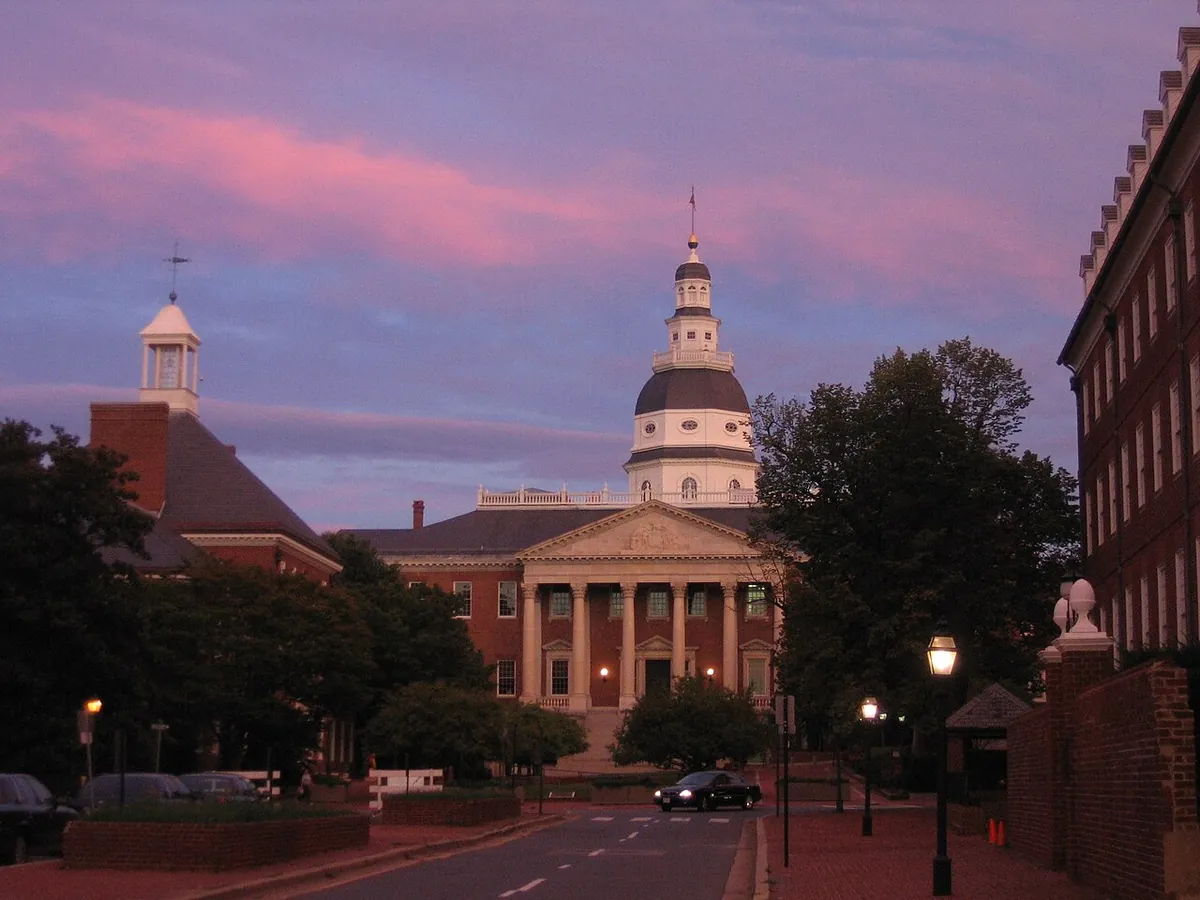
Annapolis is a small market with an outsized share of heritage-stock concentration. The Annapolis historic district contains one of the most intact pre-1800 Federal-period residential streetscapes in the country — the area around Maryland Avenue, Hanover Street, Prince George Street, East Street, and the State House square contains buildings dating to the 1730s through the 1810s, with substantial original wood sash and original hand-blown crown glass at densities comparable to Old Town Alexandria's pre-1850 stock. The U.S. Naval Academy campus contains additional pre-1880 stock with original glass, and the Eastport peninsula across Spa Creek mixes pre-1900 maritime-trade stock with post-1960 residential.
I work Annapolis on a small but consistent residential book of historic-district accounts — currently nine residences, all heritage. The clients are mostly preservation-active homeowners who have been through enough operators to know which technique works and which does not. The work is slow. It bills at the same restoration-trade hourly rate I bill Old Town Alexandria, and the per-account economics are healthy. The Annapolis market has supported the small heritage-specialist book for the entire twenty-two years of the operation, and I expect it will continue to.
The chemistry is straightforward. The work-defining variable in Annapolis is not water — it is glass-vintage and glass-condition, and the protocol stack is heritage technique on virtually every job. I do not send newer technicians to Annapolis. The two senior technicians who handle heritage work are the only ones on the Annapolis routes.
A note on Anne Arundel County beyond Annapolis. The county includes substantial post-1980 production-residential through Crofton, Severna Park, Davidsonville, and the Pasadena/Glen Burnie corridor. The chemistry stack on this stock is the same as Howard County or Prince George's County production-residential. The two markets do not feel related operationally — heritage Annapolis is a craft book, suburban Anne Arundel is a production book — and I treat them as separate operating contexts.
V. The Eastern Shore: salt-aerosol, brackish-bay, and the Chesapeake working calendar
The Eastern Shore is the Maryland equivalent of the Virginia Tidewater zone, and the operator-relevant chemistry runs in the same family. Eastern Shore municipal water varies by county, and no Eastern Shore town is a covered city with a published figure. The dominant operator variable east of the Bay Bridge is salt-aerosol, not mineral hardness, and the same two-pass wash protocol I described in my Virginia piece for Hampton Roads applies on Eastern Shore bayfront and oceanside stock.
I work Easton, St. Michaels, and Oxford on a small seasonal book of high-end residential accounts. The clients are mostly relocated Washington and Baltimore professionals with weekend or seasonal properties on the bay, plus a handful of full-time residents whose connection to the operation came through Bethesda or Annapolis referrals. The work is concentrated in May-June (opening-the-house visits) and October-November (closing visits), with one or two summer visits per residence depending on the homeowner's usage pattern. The seasonal-property dynamic structures the work differently from year-round residential — turnaround windows are narrow, the homeowner is often not present, and the property management relationships matter more than they do in Bethesda or Annapolis.
The brackish-bay residue problem I described for the Virginia Tidewater applies on Maryland Eastern Shore stock identically. Storm-driven spray events deposit dilute salt water plus suspended biological material on bay-facing glass, and the dried residue requires percarbonate prerinse and citric lift within two weeks of the event. Older deposits develop a fixed character that resists lifting and may need oxalic handling.
A note on the Ocean City and Atlantic-coast stock. I have not worked Ocean City or the Atlantic-coast resort towns. The seasonal-rental economy there structures the cleaning trade differently than year-round residential, and the chemistry is presumably similar to the Virginia Beach profile I described in the Virginia piece. Operators based on the Maryland Atlantic coast would be the right ones to write that section.
The Eastern Shore working calendar runs longer than the Northern Virginia or Baltimore calendars. Mild winters mean useful exterior cleaning days from December through February on most stock. Hot and humid summers mean July-August production is squeezed by thunderstorm and tropical-system activity. The May-June and October-November stretches are the high-production windows.
VI. Western Maryland and the Cumberland-Allegany groundwater flip
Western Maryland — Frederick, Hagerstown, Cumberland, and the Allegany and Garrett County panhandle stretching toward West Virginia — is a thin slice of the state operationally. The geology shifts from coastal-plain and Piedmont in the eastern part of the state to Ridge-and-Valley Appalachian terrain in the western part, and the groundwater chemistry flips accordingly.
I work western Maryland two or three times a year on residential referrals — usually a single Frederick or Hagerstown residence per trip, with occasional Cumberland work that comes through specific personal-connection referrals. The water flip is real and it is sudden. The route work that runs streak-free in Bethesda runs into scale problems within forty miles of crossing the I-270 corridor. The careful operator extending into western Maryland upshifts the citric prerinse protocol on every residential job.
The housing stock through western Maryland mixes substantial pre-1900 historic stock in Frederick city (with one of the better-preserved pre-1900 brick downtowns in the state outside of Annapolis or Baltimore), in Hagerstown historic district, and in Cumberland's Washington Street Historic District. The pre-1900 stock requires heritage technique. The post-1960 production-residential stock through the suburbs requires standard chemistry with the upshifted citric handling.
The Garrett County corner — Deep Creek Lake resort country, Oakland, and the Allegheny Plateau elevation country — I have not worked. The seasonal vacation-home economy there presumably structures the cleaning trade differently than year-round residential, and the climate is severe enough that exterior production is genuinely limited to roughly five months a year.
VII. Heritage stock: Federal Hill, Fells Point, Mount Vernon, the Annapolis historic district
The Maryland heritage-stock concentration is denser and more historically significant than the Virginia concentration in important ways. Maryland was settled earlier and its colonial-period and Federal-period building stock has survived in higher density than Virginia's, partly because Baltimore and Annapolis did not face the same Civil War destruction that Richmond and Norfolk did. The four primary heritage concentrations are Federal Hill, Fells Point, Mount Vernon, and the Annapolis historic district, with secondary concentrations in Bolton Hill, Mount Washington (Baltimore), Frederick, and the Eastern Shore towns (Easton, Chestertown, St. Michaels, Oxford).
Federal Hill in Baltimore contains pre-1820 rowhouse stock with substantial original glass survivability. The original glass through Federal Hill is mostly hand-blown crown — the same family of pre-mechanized glass production I described for Old Town Alexandria and that Cal describes for Memphis cotton-row commercial. The technique is the same: hand-finishing with cotton or microfiber, diluted alkaline wash chemistry, no acidic prerinse, patience.
Fells Point is the older concentration — pre-1800 maritime-trade stock with some pre-1750 buildings and original hand-blown crown glass in the oldest examples. The Fells Point work is the slowest and the most demanding heritage book in my Maryland routes. I have four Fells Point residential accounts and they all bill at the highest hourly rate in the operation. The clients understand.
Mount Vernon contains pre-1900 brownstone-style residential plus substantial pre-1900 institutional and ecclesiastical buildings (Mount Vernon Place United Methodist, the Washington Monument, the Peabody Institute, the Walters Art Museum) with significant leaded-glass and stained-glass features. I do not work the institutional buildings — those require specialized stained-glass restoration techniques that are outside my expertise — but the residential Mount Vernon work is on the same heritage protocol as Federal Hill and Fells Point.
The Annapolis historic district I covered in section IV. The protocols and the per-account economics are similar to the Baltimore heritage book.
Bolton Hill, Mount Washington, Frederick city, and the Eastern Shore towns all contain meaningful pre-1900 stock at lower density. The protocols are the same. Operators picking up heritage work in any of these markets need the same hand-finish technique and the same restoration-trade pricing discipline that I described for Old Town Alexandria in my Virginia piece.
A general note on Maryland heritage referral dynamics. The heritage-owning community in Maryland is small and well-networked — preservation society memberships, historic-district homeowner associations, the Maryland Historical Trust, the National Trust local committees all overlap meaningfully in their membership. A good experience on one heritage account in Baltimore or Annapolis can produce three or four downstream referrals within twelve months. A bad experience can foreclose the heritage book in a city for years. The community talks.
VIII. What Maryland teaches you that Virginia does not
The Virginia book runs across three geological zones with sharp protocol boundaries between them. The Maryland book runs across a similar three-or-four-zone structure but with looser protocol boundaries — the DC-Maryland suburbs share water chemistry with Northern Virginia, the Eastern Shore shares chemistry with Virginia Tidewater, and Baltimore's published 76–120 mg/L (moderately hard) is the one meaningful divergence from the Virginia stack. The state-level chemistry transition crossing from Northern Virginia to Maryland is gentler than the within-Virginia transitions from Northern Virginia to Richmond or from the Piedmont to the Shenandoah Valley.
What Maryland teaches you that Virginia does not is the depth of the heritage-stock concentration. Virginia has Old Town Alexandria, the Fan District, and Williamsburg. Maryland has Federal Hill, Fells Point, Mount Vernon, the Annapolis historic district, Bolton Hill, Mount Washington, Frederick, and a half-dozen Eastern Shore towns with significant pre-1900 stock. The total heritage-glass population in Maryland is larger than in Virginia by a meaningful factor, and the operator who builds a heritage book in Maryland will find the work supported by a broader and more interconnected client community than Virginia offers.
The other thing Maryland teaches you is the Baltimore-specific protocol stack. The Formstone-runoff problem, the rowhouse density that makes certain block-level routing efficiency possible, the Inner Harbor commercial dynamic with its institutional building-management overlay, the Patapsco-source water that lets residential glass hold up longer between visits — these are all Baltimore-only and they do not have direct analogs in any other Mid-Atlantic market. An operator who learns Baltimore well learns things they cannot learn anywhere else.
I have been working Maryland for twenty-two years and the book is still teaching me. The heritage portion in particular reveals new conditions and new techniques every season — a previously-unseen Formstone-runoff staining pattern, a newly-discovered piece of unusually intact pre-1800 crown glass, a redevelopment-converted commercial building with original cylinder fenestration nobody had noticed before. The state rewards careful operators because the heritage-stock density makes attention to detail economically meaningful in a way that production-residential markets do not match.
If you are working glass in Maryland — especially on the Atlantic coast or in Garrett County panhandle country where my own field knowledge is thin — write to the editors of this site. The work is too varied for any one operator to cover completely. The single most useful thing I do all year is keep learning the state. The single most useful thing other operators can do for the trade is share what they know about the parts of it I do not.
The big cities, in numbers
Patapsco-source water, moderately hard by its published range. Formstone facade runoff creates a Baltimore-only mineral staining pattern on rowhouse windows below treated facades. Federal Hill, Fells Point, Mount Vernon, Bolton Hill heritage stock with pre-1850 hand-blown crown glass density comparable to Old Town Alexandria.
Howard County DPW supply. Planned-community post-1967 production-residential plus 2000s+ coated-glass IGU concentration in Maple Lawn and Turf Valley.
WSSC Potomac-source supply. Mostly post-1985 production-suburban residential with coated-glass IGU concentration in newer developments.
Charles County mixed wells and Maryland American Water supply. Mostly post-1990 production-suburban.
WSSC Potomac-source supply. Mixed pre-1940 inside-the-Beltway streetcar-suburb stock (Takoma Park, Woodside, Forest Glen) plus post-2010 downtown high-rise mixed-use.
Frederick Municipal Utilities surface plus groundwater mix. Pre-1850 historic downtown with Federal-period stock comparable in density to Annapolis. Western Maryland karst-water transition zone.
Anne Arundel County DPW supply. Mixed post-1955 residential and commercial. BWI airport corridor commercial concentration.
WSSC Potomac-source supply. Mixed pre-1960 historic district stock plus post-2005 Rockville Town Center coated-glass mid-rise.
WSSC Potomac-source supply continuous with Tysons-Reston Northern Virginia profile. High concentration of post-2008 luxury teardown-and-rebuild coated-glass IGU residential. Among the most demanding homeowner expectations in the Mid-Atlantic.
Annapolis Public Works supply. One of the most intact pre-1800 Federal-period historic districts on the East Coast. Crown glass density rivals Old Town Alexandria and Madison, Indiana. State capital plus Naval Academy plus tourist economy.
Dedicated city pages in Maryland
Each city page carries its own water profile, neighborhood breakdown, cost range, and city-specific operating notes.
Rules for high-rise and rope-access window work
Maryland runs its own OSHA-approved program for private employers, which must be at least as effective as federal OSHA. The federal benchmark for rope work is 29 CFR 1910.27: owner-certified anchors rated to 5,000 pounds, gear checked every shift, a separate fall-arrest line for each worker, and no rope descent in storms or gusty wind.
OSHA, State Plans: which states run their own programs · OSHA 29 CFR 1910.27: Scaffolds and rope descent systems · checked September 2026 · How we check local rules
What lands on the glass
| CONTAMINANT | SEASON | SEVERITY |
|---|---|---|
| Formstone facade runoff (Baltimore rowhouse) | year-round, worsens after rain events | high in Baltimore City rowhouse neighborhoods |
| Cement-and-aggregate facade coating applied 1940s-1970s across Baltimore rowhouse stock leaches mineral runoff onto windows below the facade. Baltimore-only pattern. Requires extended citric dwell (3-4 minutes) and gentle agitation, never scraped. Worst on south-facing exposures. | ||
| Brackish-bay salt aerosol (Eastern Shore and Bay-front) | year-round on Bay-front stock, worsens summer through fall | high on waterfront Eastern Shore stock |
| Chesapeake Bay salt-aerosol composite differs from open-Atlantic salt. Brackish-water mineral fraction needs longer dwell than Ocean City Atlantic-coast salt. Standard protocol is wet-rinse pass plus extended soap dwell plus citric finish. | ||
| Spring pollen wave (pine, oak, cherry) | late March through early May | high statewide |
| Wet-only handling. Peak early-to-mid April. Pollen lifts cleanly with water plus light alkaline soap; do not scrape. Annapolis tidal-basin cherry-blossom adjacent properties hit hardest. | ||
| Potomac late-summer scale (WSSC corridor) | August through September | medium-high in WSSC suburbs |
| When the Potomac drops in late summer, WSSC supply mineral concentration rises and scale deposition on glass increases. Extended citric dwell required during these windows. Same pattern Tony Petruzzi documents for Northern Virginia DC-metro. | ||
| Western Maryland karst-aquifer mineral | year-round in Allegany and western Frederick County | high |
| Same sub-micron suspended-particulate variant that defines western Loudoun, Middle Tennessee, and southern Indiana karst water. Extended citric dwell (3-4 minutes) required. | ||
| Bay-corridor midge and mayfly residue | May through September | medium-high on Bay-front and tidal-creek stock |
| Tidal-marsh ecosystem supports heavy insect populations. Chitin-protein residue needs higher soap concentration and longer dwell. Heaviest on east-facing exposures along Eastern Shore. | ||
| Old Bay processing residue (Eastern Shore commercial) | crab-season May through October | low-medium on Eastern Shore seafood-processing commercial stock |
| Commercial seafood-processing exposures around Cambridge, Crisfield, and Tilghman Island carry a salt-and-organic composite that lifts cleanly with extended soap dwell. | ||
The year, in seasons
Mid-March through May is the heaviest booking pressure of the year. Pollen wave drives the residential surge across central Maryland. Eastern Shore seasonal-property opens accelerate late April. April through early May is peak production rate for WSSC corridor and Baltimore residential.
June through August is the production window. Eastern Shore brackish-bay salt-aerosol load makes Bay-front stock the highest-frequency-need work in the state. Late-summer Potomac scale episodes squeeze WSSC corridor in August-September.
September through early November is the cleanest production stretch statewide. Eastern Shore close-out work for seasonal properties peaks October. Western Maryland panhandle stretch is shorter and ends earlier.
Mild winters in Bay region and Eastern Shore allow genuine year-round exterior work in most years. Central Maryland (Baltimore-DC-suburbs) is mostly interior-only December-February. Western Maryland panhandle shuts down exterior work substantially December-March. Commercial interior work is the off-season backbone statewide.
The articles that matter most for Maryland
Border states with their own guides
Land-adjacent states each get their own water-and-window profile. If you're working a regional route or moving across the border, these are the natural next reads.
Common questions about window cleaning in Maryland
How hard is the water in Maryland?+
The three utilities we cover in Maryland that publish hardness report 58 to 213 mg/L (as CaCO₃). The middle of those cities sits near 136 mg/L, which is hard, meaning municipal water consistently leaves visible mineral spots and requires acid-rinse protocols on long-residence glass. Each city page gives its own utility's figure.
When is the best time of year to clean windows in Maryland?+
In Maryland, the working operator's calendar typically favors fall — september through early november is the cleanest production stretch statewide. eastern shore close-out work for seasonal properties peaks october. western maryland panhandle stretch is shorter and ends earlier. For a full seasonal breakdown, see the cleaning calendar section on this page.
How much does window cleaning cost in Maryland?+
Residential window cleaning in Maryland typically runs $8–18 per pane or $200–500 for a standard single-family house exterior, depending on metro pricing, story height, screen condition, and frame type. Use our cost estimator for a calibrated quote for your home.
Why do my windows look dirty so quickly in Maryland?+
The dominant residue problem in Maryland is western maryland karst-aquifer mineral (year-round in Allegany and western Frederick County). Same sub-micron suspended-particulate variant that defines western Loudoun, Middle Tennessee, and southern Indiana karst water. Extended citric dwell (3-4 minutes) required. Regular cleaning intervals tied to the season the contaminant peaks
Do I need a professional to clean my windows in Maryland?+
Single-story homes with accessible glazing can be cleaned by homeowners using basic squeegee technique and the right solution. Multi-story houses, post-2010 coated glass, hard-water markets, and screens-plus-tracks work usually pay for themselves with a professional. See our hiring checklist below.
What's special about cleaning windows in Maryland's climate?+
Summer thunderstorms statewide. Hurricane and nor’easter remnants affect Eastern Shore and Bay corridor September-October. Occasional severe winter storms with ice events in central Maryland. Heavy snow in western Maryland panhandle. These conditions shape what a cleaner needs to know about scheduling, technique, and timing. The cleaning calendar on this page reflects this rhyt
Where can I find a window cleaner in Baltimore, Maryland?+
Baltimore is the largest market in Maryland and has the deepest concentration of professional window-cleaning services. Our "Find a Cleaner" page takes waitlist sign-ups while the local pro directory is built; meanwhile, read the Baltimore section of this page for the city-specific water and cleaning context.
Tony Petruzzi
Regional contributor covering the Mid-Atlantic for Window Washing Guide. Coverage under this byline addresses the DC–Virginia–Maryland corridor, coated-glass commercial stock, and Old Town heritage glass, researched with the Giordano Inc. editorial team from practitioner interviews and published trade references.
READ MORE BY TONY PETRUZZI →